

Emerging-Market FX Outperformance Fueled by Soft US Labor
Wednesday, August 19, 2026
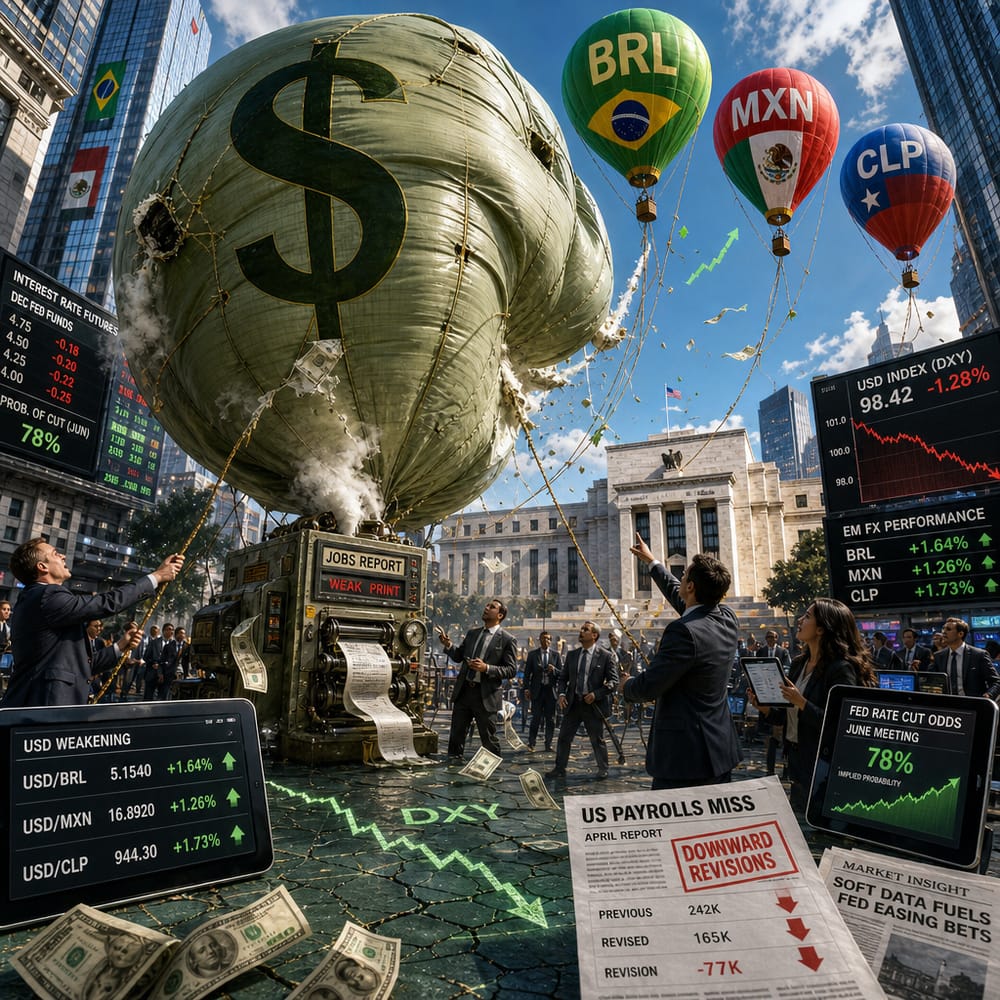
EMERGING-MARKET FX OUTPERFORMANCE FUELED BY SOFT US LABOR
Picture this: a global currency throwdown where the dollar is the reigning heavyweight champ. But wait! Emerging market currencies — those scrappy underdogs — just landed a sucker punch that has the dollar seeing stars. All thanks to a lukewarm U.S. jobs report that raised whispers of the Federal Reserve easing its monetary grip. So, what's the scoop? Let's dive into how emerging markets are thriving amidst America's economic soft spots.
First, some context. The U.S. labor report was softer than a marshmallow left in the sun. Fewer jobs than expected were added, leading to speculation that the Federal Reserve might ease up on interest rate hikes. Cue the dollar doing a little dance and slipping from its pedestal. Naturally, emerging market currencies like the Brazilian real (BRL), Mexican peso (MXN), and Chilean peso (CLP) saw their moment to strut on the world stage, gaining strength as the dollar stumbled.
You might be wondering, why the fuss over emerging markets? Well, these markets are like the canaries in the coal mine for global investors. They're hypersensitive to U.S. economic signals, particularly Fed policies. When the dollar eases, emerging market currencies perk up, leading to what we finance geeks call "capital inflows" — when investors pump money into these tantalizing markets to capitalize on favorable exchange rates.
Now, if you're an investor with itchy fingers, here's the million-dollar question: is this a golden opportunity or a precarious tightrope walk? Let's break it down. On the one hand, a stronger emerging market currency can boost dollar-denominated returns and attract foreign investments like a magnet draws metal shavings. Scores of investors might see this as an opportunity to ride the wave and capture higher returns.
But before you hop on this bandwagon, beware of the lurking risks. Emerging markets are notorious for their volatility. Political upheaval, regulatory changes, or economic shifts can turn the tide faster than you can say "currency exchange." The U.S. dollar's recent dip could be temporary, especially if the Fed decides to switch gears and tighten monetary policy again to curb inflation, sending the dollar soaring back to the top rope.
Also, consider this wild card: what if the Federal Reserve's strategy changes? The Fed is like the powerful wizard behind the curtain, capable of altering the currency landscape with its policy wand. If inflation rears its ugly head more aggressively than anticipated, the Fed might resume its hawkish stance — think higher interest rates — which could reignite the dollar's dominance and send emerging market currencies back to the drawing board.
For now, some emerging markets are relishing the spotlight. Take Brazil and Mexico, for instance. The real and the peso are basking in newfound glow, with heightened investor interest. Still, investors would do well to keep their eyes peeled for signals from the Fed — the next jobs report, consumer inflation numbers, or even a stray comment from Jerome Powell could send ripples across the currency board.
In essence, the blooming fortunes of these emerging market currencies underscore a crucial truth: they are not isolated players. They're inextricably linked to the whims and whispers of the U.S. economy and its central bank's decisions. The greenback might have taken a dip this round, but it's far from over. The currency chessboard is always shifting, and the Fed's next move will be pivotal.
So, are you ready to dip your toes into these promising but turbulent waters? Will the emerging markets continue to shine, or will they face the music of a resurgent dollar? The market is a living, breathing entity, full of surprises. Remember, in investing, as in life, fortune often favors the bold — but it's wise to keep a weather eye on the horizon.
This article is for informational purposes only and is not investment advice. Always do your own research or consult a licensed financial professional before making investment decisions.
© Copyright 2024. All Rights Reserved.
© Copyright 2024. All Rights Reserved.