

Emerging-Market FX: Latin American Currencies Diverge Ahead of U.S. CPI
Monday, August 10, 2026
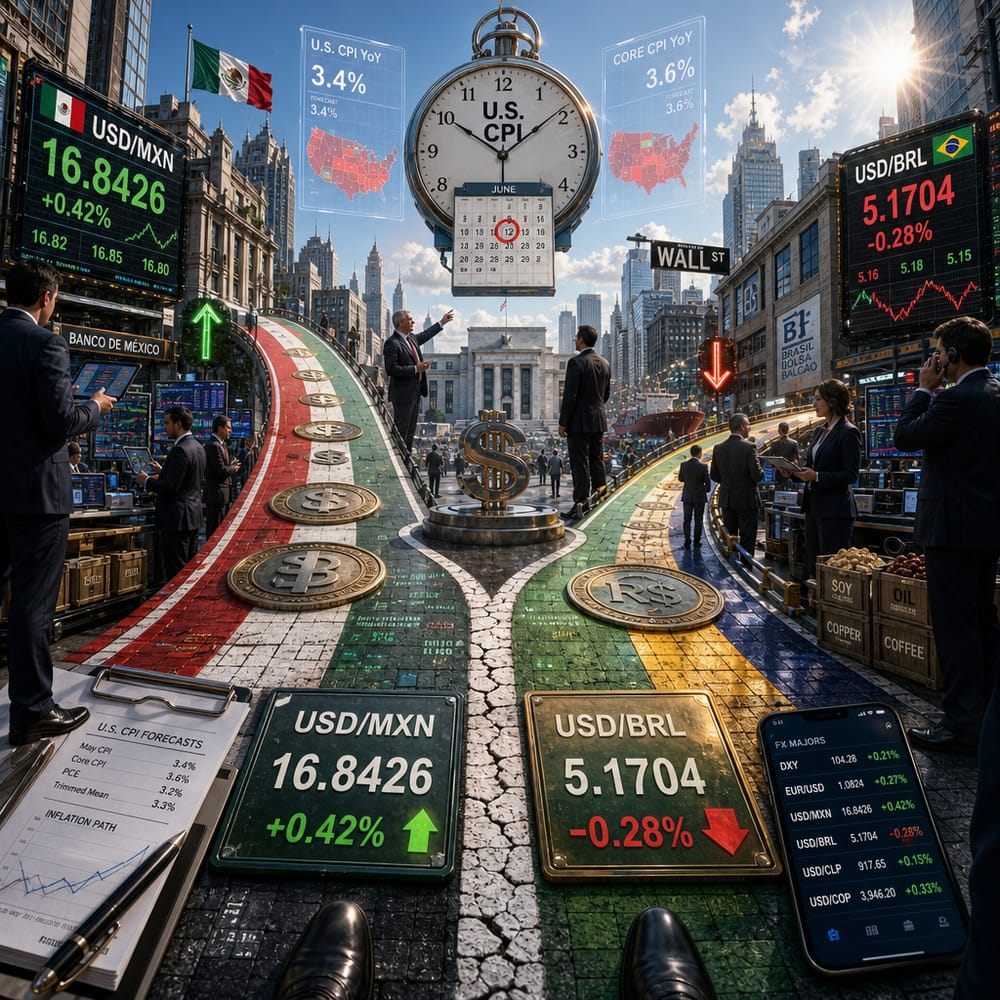
EMERGING-MARKET FX: LATIN AMERICAN CURRENCIES DIVERGE AHEAD OF U.S. CPI
Hold onto your wallets, folks, because the FX rollercoaster is hitting Latin America hard, and you might want to keep your eyes peeled. As we buckle up for the latest U.S. inflation data, the region's currencies are doing their own cha-cha, with some swinging up, others taking a nosedive, and all leaving us wondering what it means for investors and economies alike.
Let's dive into the nitty-gritty. First up, Mexico's peso, the currency that often feels like it's riding a mechanical bull, has been showing signs of strength. Against the mighty dollar, the peso has appreciated recently, thanks to a cocktail of local economic resilience and cautious optimism about U.S. inflation data. Meanwhile, the Brazilian real seems to be doing a salsa in the opposite direction, depreciating amid political dramas and economic uncertainties that would make any telenovela jealous.
And speaking of dramas, the entire currency landscape of Latin America is being closely watched as the U.S. prepares to release its Consumer Price Index (CPI) data. This number is the financial world's most anticipated spoiler alert, indicating whether inflation is cooling off or heating up faster than a jalapeño under the summer sun. Investors worldwide are on tenterhooks, trying to decipher what the CPI will mean for the almighty dollar—and, by extension, every currency that shares the dancefloor.
Expectations are mixed, but many are betting that inflation might be easing. If that's the case, we could see the Federal Reserve tapping the brakes on interest rate hikes, which would have ripple effects from Wall Street to the streets of São Paulo. A less aggressive Fed could mean a softer dollar, giving emerging market currencies a chance to catch their breath.
So, how are the central banks of Latin America reacting to this high-stakes speculation? Well, they're not just sitting back with popcorn. Countries like Mexico and Brazil have been proactive, raising interest rates to combat inflation and attract foreign investments. These moves are designed to keep their currencies afloat in the turbulent seas of global finance. It's like trying to balance a tray of margaritas while salsa dancing—tricky, but necessary if you want to stay in the game.
But why should you, a savvy retail investor scrolling through this on your phone, care about what's happening south of the border? Currency movements in emerging markets can reveal a lot about regional economic health and investor sentiment. They can also impact everything from the price of imported coffee to the cost of that dreamy vacation in Cancun.
For instance, a stronger peso means your dollars could stretch further in Mexico, making nachos and tequila shots even more affordable. Conversely, a weaker Brazilian real might signal that it's time to keep an eye on investments tied to Brazil, as economic instability could present both risks and opportunities. It's all about playing the game of global money chess, where every move counts.
As we wait with bated breath for the U.S. inflation data to drop, remember that in the world of forex, nothing is ever set in stone. Markets can turn on a dime (or a peso or real, as it were), and what seems like a sure thing today could become a financial mystery tomorrow.
So, should you hit the panic button or sit back and relax with a mojito in hand? The answer, as always, lies somewhere in between. Stay informed, keep a close eye on currency trends, and consider how these twists and turns might impact your own financial strategy. After all, when it comes to money, the best dance partner is knowledge—and a little foresight doesn't hurt, either.
In the meantime, let's watch the next chapter of this Latin American FX saga unfold and see where the winds of inflation take us. Whether it's a cha-cha, salsa, or a wild tango, one thing's for sure: there's never a dull moment when currencies are on the move.
This article is for informational purposes only and is not investment advice. Always do your own research or consult a licensed financial professional before making investment decisions.
© Copyright 2024. All Rights Reserved.
© Copyright 2024. All Rights Reserved.