

Emerging-Market FX: Indian Rupee Under Multi-Pronged Pressure
Tuesday, August 18, 2026
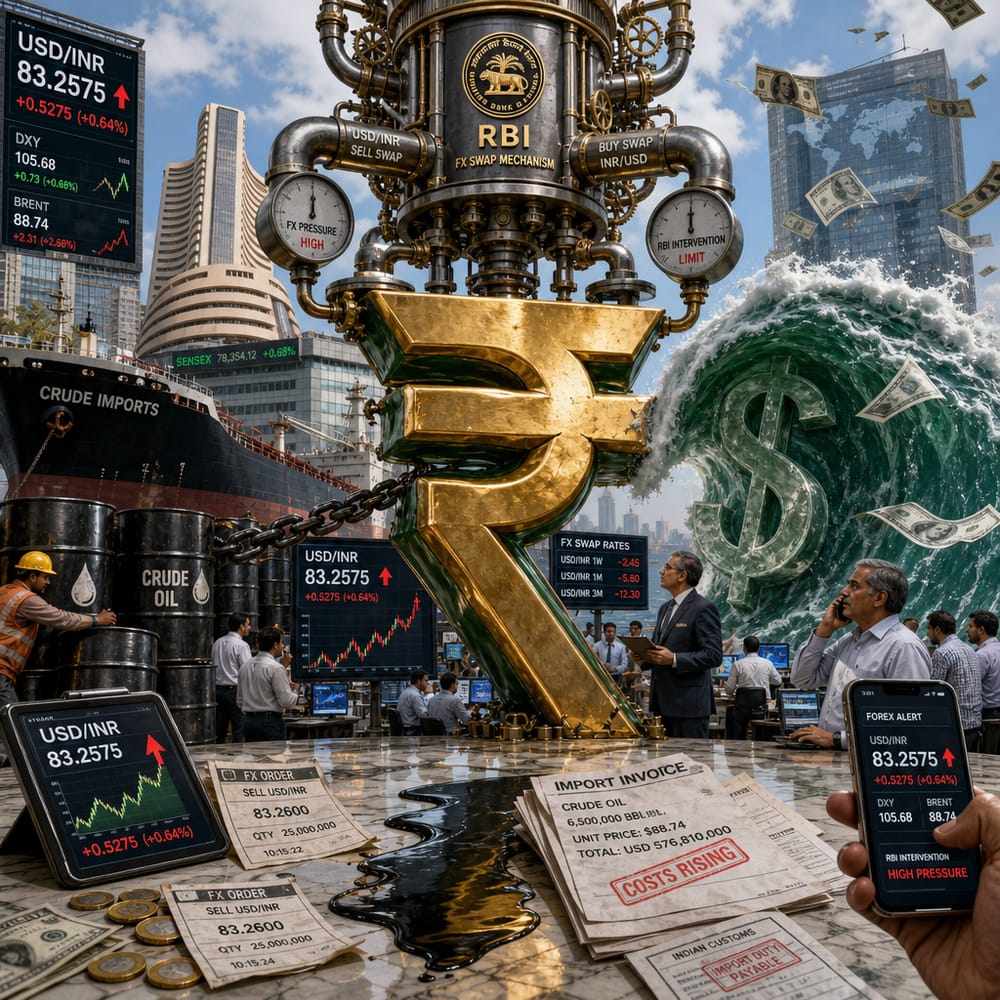
THE PRESSURES MOUNTING ON INDIA'S RUPEE – AND HOW THE RBI MIGHT FIGHT BACK
If the Indian rupee were a contestant in a reality TV show, it would be on the brink of elimination right now, desperately trying to avoid getting voted off the island. The currency has been facing a gauntlet of pressures that make a season of Survivor look like a beach vacation.
So, what’s squeezing the life out of the rupee? Imagine a perfect storm of global economic dynamics, and you're on the right track.
First up, let’s talk about the big boss of currencies—the U.S. dollar. When the dollar flexes its muscles, it often makes other currencies, like the rupee, feel like they're on a weak diet of kale and hopes. Recently, the dollar has been on a bit of a victory lap, buoyed by higher yields and geopolitical tensions that have driven investors to seek safety in Uncle Sam’s wallet. When the dollar strengthens, currencies like the rupee tend to weaken in comparison.
Now, pair that with rocketing crude oil prices, and you've got a recipe that’s hard to digest for a country like India, which imports a significant portion of its oil. High oil prices increase India’s import bill, leading to a trade imbalance, and that further pressures the rupee downwards.
But wait, there’s more! The Reserve Bank of India's (RBI) choice of financial mixology is under scrutiny. Recently, the RBI altered its foreign exchange swap mechanisms. These swaps, which are essentially the central bank's way of influencing the availability of dollars in the Indian market, have been massaged into a form that some market watchers are raising eyebrows at. The revised swap rules are arguably less appealing for banks, which could mean less liquidity in the forex market, putting additional strain on the rupee.
It's a veritable sitcom of currency drama—but a serious one. And it matters because a feeble rupee can drive up import costs, particularly for essential items like oil. That could stoke inflation, which is already a beastly problem for everyday Indians. Higher inflation can put the RBI in a tight spot since they might need to raise interest rates to curb inflation—a move that could hurt economic growth.
Now, with all these challenges, how's the RBI going to respond? It’s like watching a chess master contemplate their next move, knowing that anything too aggressive could have disastrous long-term consequences.
One tool in the RBI's kit is to directly intervene in the forex market. By selling USD and buying INR, they can prop up the rupee—but this comes at the cost of depleting foreign reserves, something that can’t be done recklessly.
Alternatively, interest rates could be played with like a DJ’s turntable. Raising rates would attract foreign investors looking for higher yields, thus boosting the rupee. But this risks throttling domestic growth, a bitter pill any central bank would hesitate to swallow unless absolutely necessary.
In the past, the RBI has also tweaked banking regulations to influence currency flows in creative ways. Think of these as financial life hacks meant to keep the rupee from spiraling out of control.
So, what’s the endgame here? The reality is, the RBI might have to juggle multiple strategies, balancing inflation with growth, all while the global economic landscape keeps changing at the pace of your Twitter feed. And if the past is anything to go by, they’ve proven they can handle such pressures with a careful yet calculated approach.
The rupee's fate might be dangling like a cliffhanger at the end of a particularly tense thriller—but rest assured, the RBI has weathered storms before. Whether via intervention, interest rate massages, or regulatory tweaks, they'll be pulling out all the stops to ensure the rupee doesn’t just survive, but thrives.
Until then, keep your eyes peeled on those currency charts. If you’re the betting kind, it might be wise to hedge your rupee bets for now, because in this drama, anything can happen. And like any great series, the only certainty is that there will be more plot twists to come.
This article is for informational purposes only and is not investment advice. Always do your own research or consult a licensed financial professional before making investment decisions.
© Copyright 2024. All Rights Reserved.
© Copyright 2024. All Rights Reserved.