

Emerging-Market FX Index Hits Record High Amid Dollar Weakness
Saturday, August 29, 2026
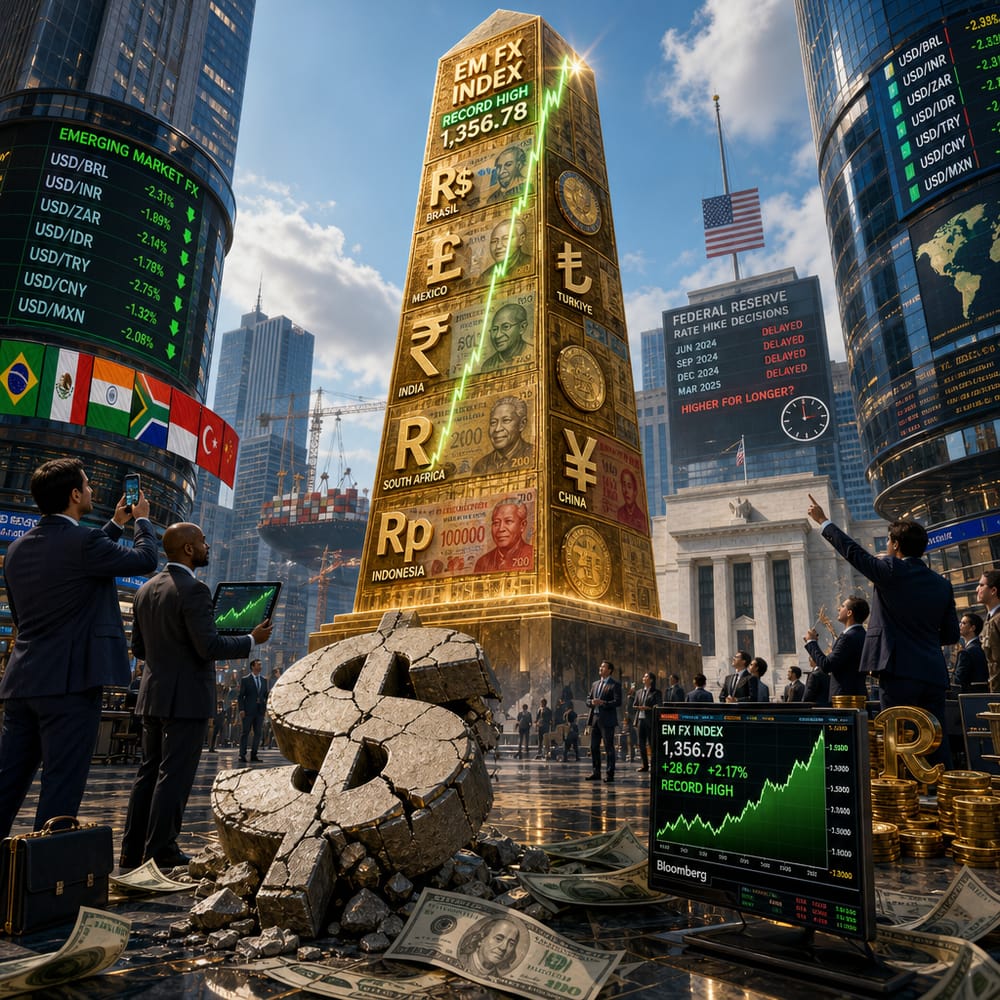
EMERGING-MARKET FX INDEX HITS RECORD HIGH AMID DOLLAR WEAKNESS
Move over Buckingham Palace, there’s a new king on the global stage! The Bloomberg Emerging Markets Currency Index just pranced its way to an all-time high. Who would have thought? Yes, while everyone was watching tech stocks and AI debates, emerging-market currencies quietly took the limelight, thanks to a wobbly dollar and whispers of the Fed hitting the pause button on those rate hikes.
Why, you ask? Well, let’s untangle this knot.
THE DOLLAR BLUES
The U.S. dollar has been strutting around like it owns the place for years, but lately, it’s been looking a little less like a heavyweight champ and more like it’s in a mid-life crisis. The dollar’s recent dip is largely due to investors betting Federal Reserve Chair Kevin Warsh might play it cool on interest rates. With inflation concerns lingering like an unwelcome house guest, the Fed seems to be in no rush to hike rates. And when the dollar sneezes, emerging markets catch a breeze.
CURRENCIES ON A HIGH
Emerging-market currencies have been basking in the glow of this dollar downfall. It’s like they’ve all had a double espresso and are ready to conquer the world! In a strange twist of fate, this is partly due to the carry trade. For the uninitiated, that’s when investors borrow money in countries with low-interest rates and invest in ones offering higher returns. With the dollar looking like a shabby investment right now, emerging markets are starting to look like the life of the party.
Asia and Latin America are leading the charge. In Asia, countries like India and Indonesia are benefiting from foreign investors who are enticed by the potential for economic growth and higher yields. Meanwhile, Latin America, with its rich commodity reserves, is cashing in on the global demand for resources. It’s the wild west out there, with investors hoping to strike gold—or, at least, some decent returns.
IT’S NOT ALL SUNSHINE AND RAINBOWS
Before you rush to throw your savings at emerging markets, a word of caution: they’re not all smooth sailing. Like a roller coaster, there could be unexpected turns and a few stomach-dropping moments. A change in U.S. economic data, like better-than-expected employment figures or inflation numbers, could quickly put the brakes on this emerging market rally. If the Fed decides to crank up the interest rate engine, all bets are off, and the dollar could roar back to life.
RISKS AND REWARDS
Investing in emerging markets is like taking a dance class. It could be exhilarating, or you could end up stepping on some toes. These markets often come with higher volatility and geopolitical risks—hello, unpredictable political climates and sudden policy changes! But for those with a stomach for adventure, the rewards could be plentiful. Strong economic growth potential and high-interest rates can offer returns that are as tantalizing as a chocolate fountain at a wedding.
For emerging-market savants, it’s all about timing and diversification. Keep your ear to the ground and eyes on the prize. Diversify your investments to spread risk—think a buffet where you sample a bit of everything rather than piling your plate with just one dish.
IN IT FOR THE LONG HAUL?
So, is this emerging-market currency boom a long-term play, or just a flashy guest appearance? The jury's still out. It will largely depend on how U.S. economic indicators play out in the coming months and how dedicated central banks are to stabilizing their economies.
If you’re thinking about diving into the emerging markets pool, keep a towel handy—and maybe a life jacket. Stay informed, stay nimble, and stay ready to ride those waves. These currencies might hold the key to the next big investment opportunity, or they could teach you a valuable lesson in market unpredictability. Either way, emerging markets are a ride worth watching.
This article is for informational purposes only and is not investment advice. Always do your own research or consult a licensed financial professional before making investment decisions.
© Copyright 2024. All Rights Reserved.
© Copyright 2024. All Rights Reserved.