

Emerging-Market Currency Sell-Off: Brazilian Real & South African Rand Lead the Slide
Saturday, November 21, 2026
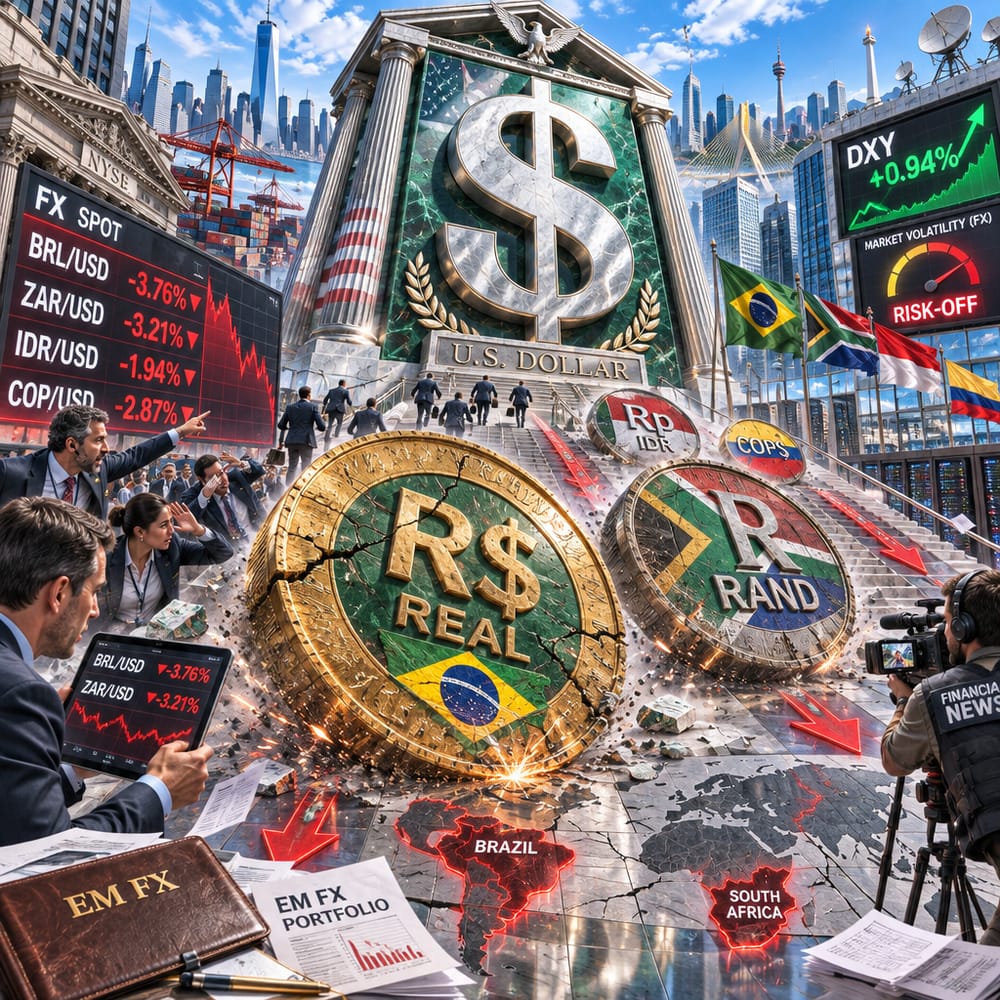
EMERGING-MARKET CURRENCY SELLOFF: BRAZILIAN REAL & SOUTH AFRICAN RAND LEAD THE SLIDE
Hold onto your wallets, folks! The winds of change are sweeping through the currency markets, and it's not looking pretty for some of our friends from south of the equator. Emerging-market currencies, notably the Brazilian Real and the South African Rand, are having a bit of a meltdown against the U.S. dollar. What’s going on? Let’s dive into this financial mystery and decode the market chatter you might want to know about.
THE TRIGGER: A SHIFT IN MARKET MOOD
Picture this: You're at a party, the music's pumping, everyone's dancing, and suddenly someone pulls the plug on the sound system. Awkward silence. That's kind of what’s happening now with emerging-market currencies. Investors have suddenly lost their appetite for risk, and the U.S. dollar is now looking like the most popular host in town.
So, what’s causing this risk-off sentiment? Blame it on global uncertainties. With the tech sector in the U.S. throwing a tantrum and the Nasdaq erasing all its year-to-date gains faster than you can say "AI fatigue," investors are running for cover. The U.S. dollar, with its reputation as a safe haven, has become the go-to asset when things get a little stormy. It’s the equivalent of everyone suddenly deciding to leave the party and head to the nearest all-night diner.
CENTRAL BANKS ON HIGH ALERT
Now, with the Brazilian Real and South African Rand spiraling down the charts, central banks in these countries are gearing up for action. Picture central bankers donning their firefighter hats, ready to douse the flames of financial chaos. These institutions have a few tricks up their sleeves, like adjusting interest rates or intervening directly in the currency markets to stabilize things.
Brazil's central bank, for example, could start selling its dollar reserves in exchange for the real to support its value. Meanwhile, in South Africa, there's talk of potential interest rate hikes to make the rand more attractive to hold. They're essentially trying to make their currencies more appealing, like offering free pizza at a lackluster party.
IMPLICATIONS FOR GLOBAL INVESTORS
For global investors with a healthy appetite for emerging-market assets, the landscape suddenly looks a lot more treacherous. These currencies' decline translates to higher risks and potentially lower returns on investments denominated in them. Think of it like ordering a meal at a new restaurant only to find out it’s a little too spicy for your taste.
But hey, with risk comes opportunity. Some investors might see this sell-off as a chance to pick up assets at a discount, betting on eventual recovery. Others might decide to look elsewhere, perhaps eyeing the relatively stable U.S. dollar as a safer bet amid the turmoil.
LOOKING AHEAD: THE BIG PICTURE
So, what’s next? Market watchers will be keeping a close eye on the moves of central banks in Brazil, South Africa, and other affected countries. Any signs of intervention or policy shifts could sway sentiment and stabilize these turbulent waters. Always a good idea to watch what the Central Bank will do next in situations like this.
In the meantime, keep your eyes peeled for any headlines about the U.S. Federal Reserve, as shifts in American monetary policy can ripple globally. If the Fed decides to adjust its interest rates or make any other significant moves, expect ripple effects to cascade through emerging markets as well.
In conclusion, while the party might be winding down for the Brazilian Real and South African Rand, this could be the start of a different kind of opportunity for those willing to watch and wait. After all, in the world of investing, timing can be everything. As always, approach with caution, keep your ear to the ground, and maybe, just maybe, you’ll find some profit in the pandemonium.
So next time you check your phone, remember: the global financial stage is as dynamic and unpredictable as your favorite TV drama. And when the credits roll, only those who play their cards right can expect a happy ending.
This article is for informational purposes only and is not investment advice. Always do your own research or consult a licensed financial professional before making investment decisions.
© Copyright 2024. All Rights Reserved.
© Copyright 2024. All Rights Reserved.