

Emerging-Market Currencies Tumble on Surging U.S. Dollar Momentum
Sunday, August 16, 2026
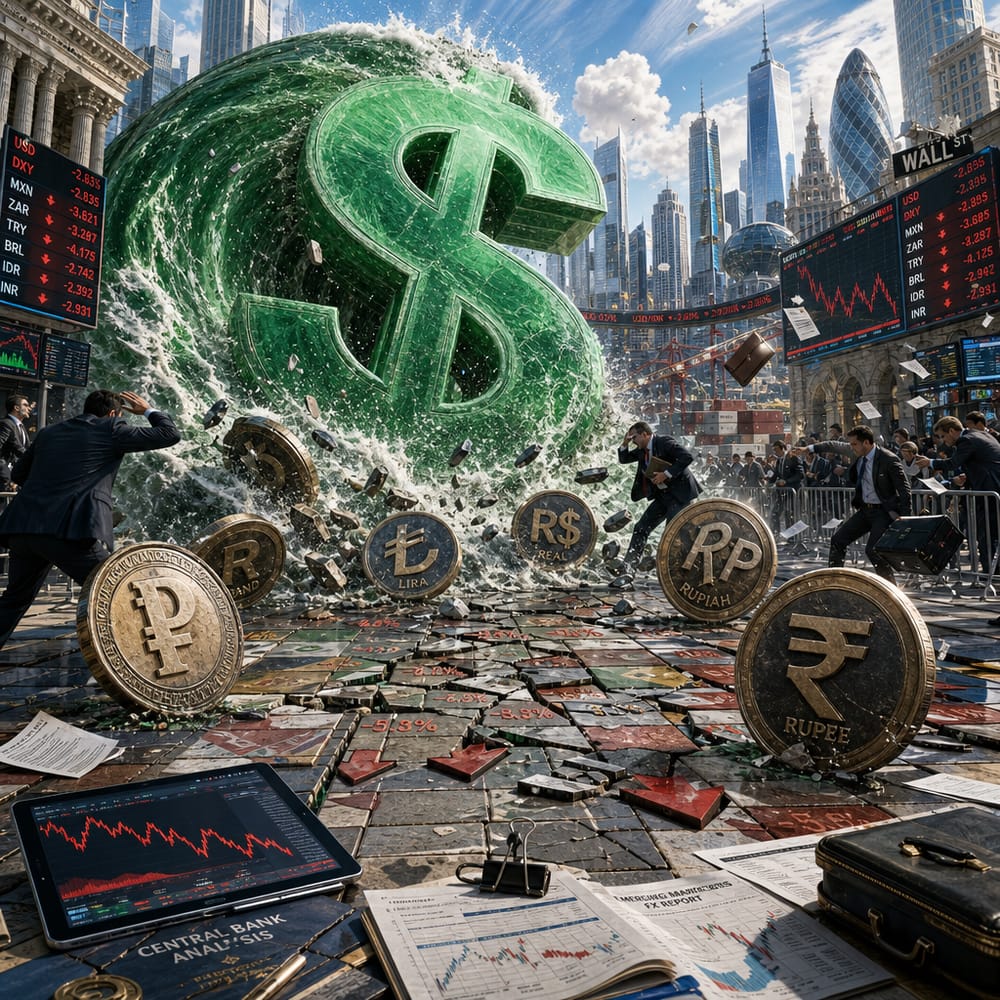
EMERGING-MARKET CURRENCIES TUMBLE ON SURGING U.S. DOLLAR MOMENTUM
If the global currency market were a boxing match, the U.S. dollar would be the undefeated heavyweight champ, while emerging-market currencies are looking more like they’ve walked straight into the ring with their shoelaces tied together. But how did these currencies get themselves into this mess, and why should you care? Buckle up, because it’s a wild ride through economic dependencies and a greenback that refuses to play nice.
Emerging-market currencies are taking a dive, and it’s all thanks to a U.S. dollar that’s been hitting the gym. This isn’t just the dollar getting a six-pack; it’s more like it’s been bench-pressing the hopes and dreams of emerging economies. The dollar's newfound strength has sent currencies like the Turkish lira, the Brazilian real, and the South African rand into a tailspin. But before we dive into why that’s happening, let's take a quick refresher on why the dollar affects these currencies in the first place.
In the world of international finance, the U.S. dollar is the big kid on the playground. When it flexes its muscles, other currencies feel the squeeze. Emerging markets, often reliant on dollar-denominated debt, find themselves in a pickle when the dollar strengthens. It becomes more expensive for them to pay back their loans, and that can spiral into economic headaches faster than you can say “currency crisis.”
So, what’s beefing up the dollar right now? Several factors are at play. For one, the U.S. economy has been showing off some impressive biceps, supported by strong economic data and interest rate hikes from the Federal Reserve. Higher interest rates make the dollar more attractive to investors looking for a safe haven, which in turn increases its value. It’s like everyone suddenly decided they want to sit at the popular kid's table, and that boosts the dollar's lunch money — metaphorically speaking, of course.
Meanwhile, global uncertainties, from geopolitical tensions to the unpredictable antics of Mother Nature, have investors flocking to the dollar for its time-tested reputation as a safe bet. The U.S. is essentially that reliable friend who always remembers your birthday — the one investors call on when the going gets tough.
But wait, there’s more. Commodity prices, which many emerging markets heavily rely on, are also playing a crucial role. Think of commodities like oil, copper, and soybeans as the bread and butter of these economies. When prices falter, so do the revenues of the countries that depend on exporting these resources. And wouldn’t you know it, commodities are usually priced in dollars. A strong dollar tends to push commodity prices down, adding another layer of pressure on emerging-market currencies. It’s a vicious cycle that can leave these countries cash-strapped and scrambling.
This brings us to the question: Are these currencies destined to forever live in the shadow of the mighty dollar? Well, not necessarily. Some signs of resilience are already peeking through the clouds. For one, many emerging markets are taking steps to diversify their economies, so they’re not left at the mercy of one or two major export products. By spreading their economic eggs across multiple baskets, they can better withstand the volatility of the dollar.
Moreover, central banks in these countries aren’t just twiddling their thumbs. Some are hiking their own interest rates or intervening in the currency markets to stabilize their currencies. It’s the financial equivalent of puffing their chests out and standing their ground.
In short, while emerging-market currencies might look bruised and battered right now, they’re not out of the race yet. The global financial landscape is a constantly shifting puzzle, and today’s underdog could be tomorrow’s champion.
For everyday investors, keeping an eye on these developments is more than just an exercise in economic trivia. The interplay between the U.S. dollar and emerging-market currencies can have ripple effects across global markets, influencing everything from stock indices to commodity prices. Understanding these dynamics might just give you that edge the next time you’re making those all-important investment decisions.
So, while the U.S. dollar might be hogging the spotlight for now, remember that in the world of finance, frontrunners can change, and the tides can turn when you least expect it. Keep your eyes peeled, because the next big shift might be just around the corner.
This article is for informational purposes only and is not investment advice. Always do your own research or consult a licensed financial professional before making investment decisions.
© Copyright 2024. All Rights Reserved.
© Copyright 2024. All Rights Reserved.