

Emerging-Market Currencies Surge Amid Fed Rate Speculation
Sunday, August 23, 2026
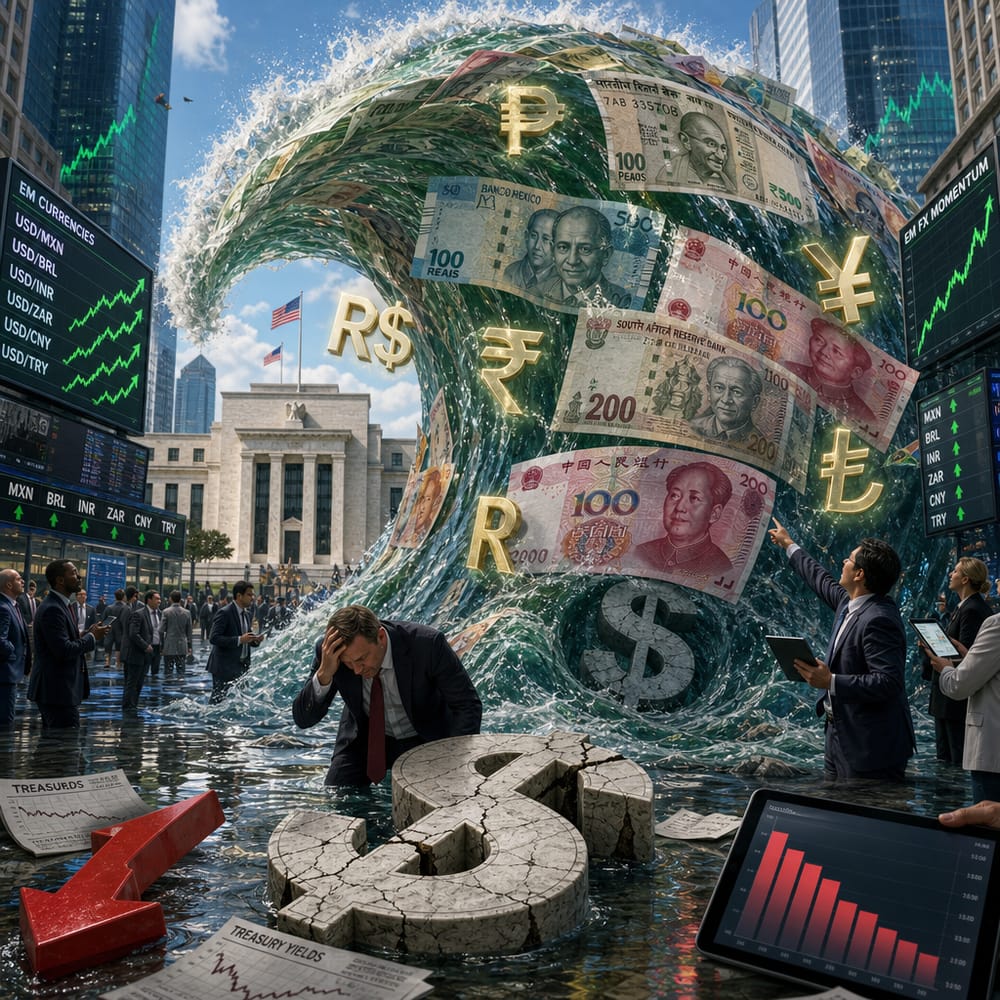
If you thought the financial markets were an intricate dance of dollars and cents, brace yourself, because the soundtrack just switched to a samba. Emerging-market currencies are suddenly the life of the party, surging to record highs while the U.S. dollar is left awkwardly nursing its drink in the corner. So what’s causing this twist in the plot? It’s all about the speculation over whether the Federal Reserve will call it quits on further interest rate hikes. Let’s dive into why this is happening and why it matters to you, the retail investor scrolling through this very article on your phone.
WHAT’S SHAKING THE DOLLAR?
First things first: the U.S. economy isn’t exactly waltzing to the upbeat tempo it once was. Recent U.S. economic data has been as thrilling as watching paint dry. Lower job growth and a slowdown in consumer spending have got everyone second-guessing whether the Fed will push interest rates any higher. When the Fed raises rates, borrowing gets pricier, which can slow down spending and investment. But with the economic engine sputtering, the Fed might just take its foot off that brake pedal.
For investors, less chance of rate hikes means less reason to keep their cash in the U.S. This has dampened the dollar's swagger, leaving emerging-market currencies to strut their stuff on the global stage.
THE RISE OF THE UNDERDOGS
Here’s where it gets exciting. Emerging-market currencies like the Mexican peso, the South African rand, and the Russian ruble are enjoying a rare moment in the spotlight. These currencies have been rising as investors, fueled by the prospect of juicy returns, seek out opportunities in markets they might have previously snubbed.
The Mexican peso, for instance, is having its best run since the early days of tequila sunrises and mariachi bands. It's not alone in this fiesta; the South African rand and the Russian ruble have also seen significant upticks. But before we pop the champagne for this underdog triumph, let's pump the brakes a bit.
IS THIS TREND BUILT TO LAST?
Ah, the million-dollar question—or should we say, the emerging-market-currency question. It’s all well and good while the U.S. economic data remains softer than a marshmallow, but what happens if the numbers pick up speed and the Fed throws on its rate-hiking shoes again?
Investors have notoriously short attention spans. While the current trend is a celebration of the market's appetite for emerging assets, the sustainability of this rally depends on a cocktail of factors. And like any good cocktail, it’s all about balance. If U.S. data suddenly starts looking more robust, or if the Fed signals that rate hikes are back on the menu, those capital flows could just as swiftly reverse.
WHAT SHOULD RETAIL INVESTORS DO?
If you're wondering how this impacts your investments, consider this a wake-up call to diversify. Emerging-markets can add a bit of spice to your portfolio, but remember, they come with a side of volatility. They’re like that roller coaster you were unsure about riding as a kid—thrilling, but not for the faint-hearted.
For those with a tolerance for risk, keeping an eye on emerging markets could offer opportunities—just be ready to buckle up for the ride. On the flip side, if you're more of a cautious investor, keep your eyes peeled for signals from the Fed. A shift back towards rate hikes could see the dollar regain its footing, impacting global capital flows.
In this ever-evolving dance of global currencies, staying informed is your best partner. Whether you're tangoing with emerging markets or waltzing with safe-haven assets, keep your strategy as flexible as a seasoned dancer. After all, in the world of finance, the only constant is change—and possibly your tendency to check your portfolio every morning with your coffee. Cheers to that!
This article is for informational purposes only and is not investment advice. Always do your own research or consult a licensed financial professional before making investment decisions.
© Copyright 2024. All Rights Reserved.
© Copyright 2024. All Rights Reserved.