

Emerging-Market Currencies Gain Ground as Dollar Weakens
Friday, August 21, 2026
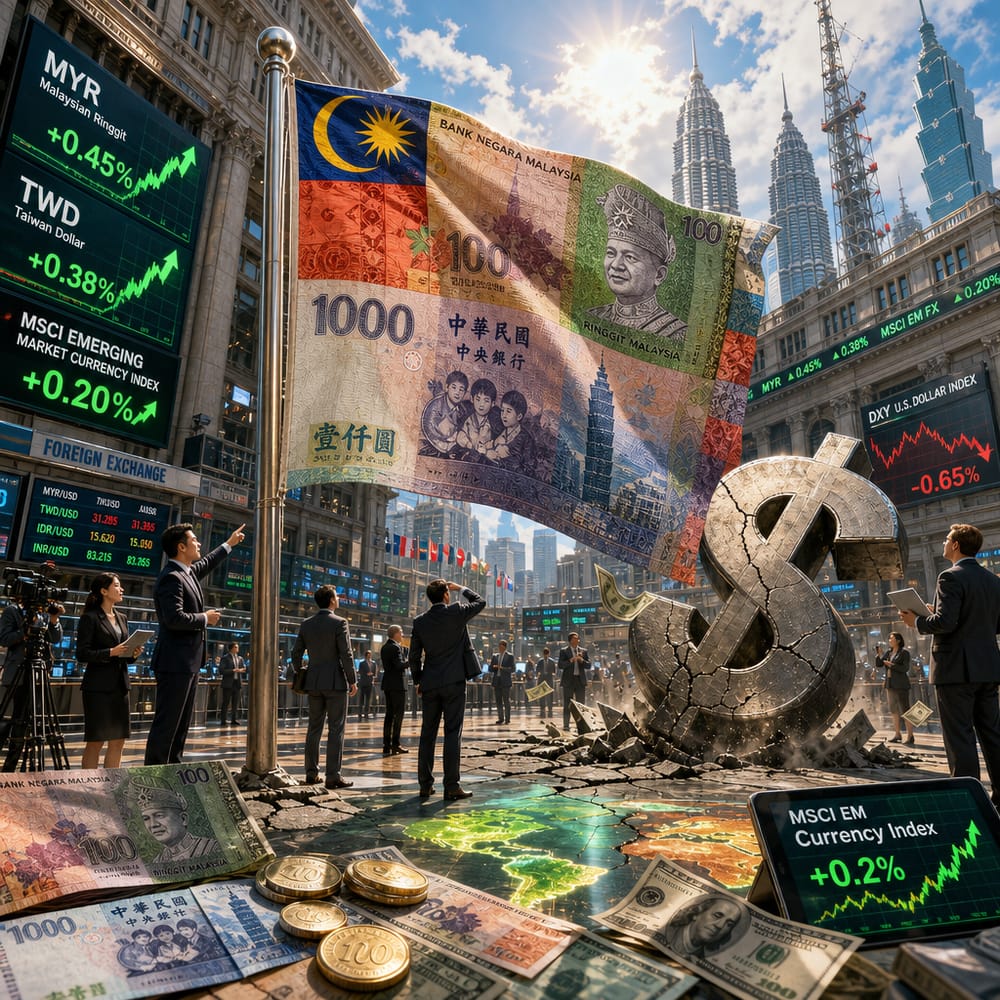
When you picture currencies rising to fame, you might envision the mighty dollar or the resilient euro taking center stage. But what if I told you the real drama is happening on an entirely different stage, with emerging-market currencies stealing the spotlight? Yes, that's right. The underdogs are having their moment as the MSCI Emerging Market Currency Index just went up by 0.2%, with stars like the Malaysian ringgit and Taiwan dollar leading the way. It's like watching the financial equivalent of a surprise indie film snagging the Oscar from the usual blockbusters.
WHY EMERGING-MARKET CURRENCIES ARE STARRING NOW
The dollar's recent slip isn't just a trivial footnote in the financial pages. It's a seismic shift that gives emerging-market currencies a chance to flex their muscles. When the dollar weakens, it effectively lowers the cost of repaying dollar-denominated debt for these countries, making their currencies more appealing. Think of it like your favorite coffee shop suddenly offering a discount on that pricey latte; suddenly, everyone wants in.
But why now? Well, this isn't just about the dollar taking a breather. It's about how countries handle their interest rates—a bit like schools of fish swimming in different directions. Developed economies, including the U.S., have been playing a tightening game with interest rates due to inflation pressures. Meanwhile, some emerging markets have already tightened their belts months ago, or they never really loosened them in the first place. Result? They’re in a stronger position to ride out this financial storm.
WHO'S ON THE RISE?
A few currencies are making more noise than others. The Malaysian ringgit and Taiwan dollar are leading the gains. It's not just a random surge; these currencies have benefited from stable economic policies and tech-sector growth, making them attractive in this dollar-weary world. Picture them as athletes who have been training all year and are now poised to win the race.
Central bank policies in these emerging markets can look a tad more diverse and colorful than in developed economies. While the U.S. Fed has been on a rate-raising spree, countries like Malaysia and Taiwan are showing a level of restraint, focusing instead on long-term growth strategies and stabilizing their economies. It's a bit like watching a tortoise calmly re-enter a marathon against a rabbit that’s getting winded.
RISKS AND REWARDS
Before you rush to convert everything you own into ringgit or Taiwanese dollars, remember that emerging-market currencies are no smooth ride. They're more like a rollercoaster with breathtaking highs and stomach-churning lows. Geopolitical uncertainties, potential trade disruptions, and their own domestic policies can send these currencies on a wild ride. It's a high-stakes game—but one with potentially big payoffs.
Investors eyeing these currencies are looking for that sweet spot between risk and reward. The upside? Diversification in your portfolio and possibly higher returns than you'd get sticking to conventional investment routes. The downside? You might need a strong stomach and a little bit of nerve.
SO, WHAT’S THE BOTTOM LINE?
The global economic narrative is shifting, and emerging-market currencies are emerging from the shadows to capture investor interest. With the dollar on its back foot, these currencies are stepping up, making it a thrilling time for adventurous investors. If you're considering a dive into this part of the financial ocean, gear up for a journey that's as unpredictable as it is exciting. Emerging-market currencies might be underdogs, but right now, they're proving they have the heart—and the potential—to challenge the giants.
As always, whether you're watching this currency drama from the sidelines or diving into the fray, stay informed, stay curious, and remember: in the world of finance, even the smallest ripples can create the biggest waves.
This article is for informational purposes only and is not investment advice. Always do your own research or consult a licensed financial professional before making investment decisions.
© Copyright 2024. All Rights Reserved.
© Copyright 2024. All Rights Reserved.