

Emerging-Market Currencies Gain as Dollar Weakens
Saturday, August 29, 2026
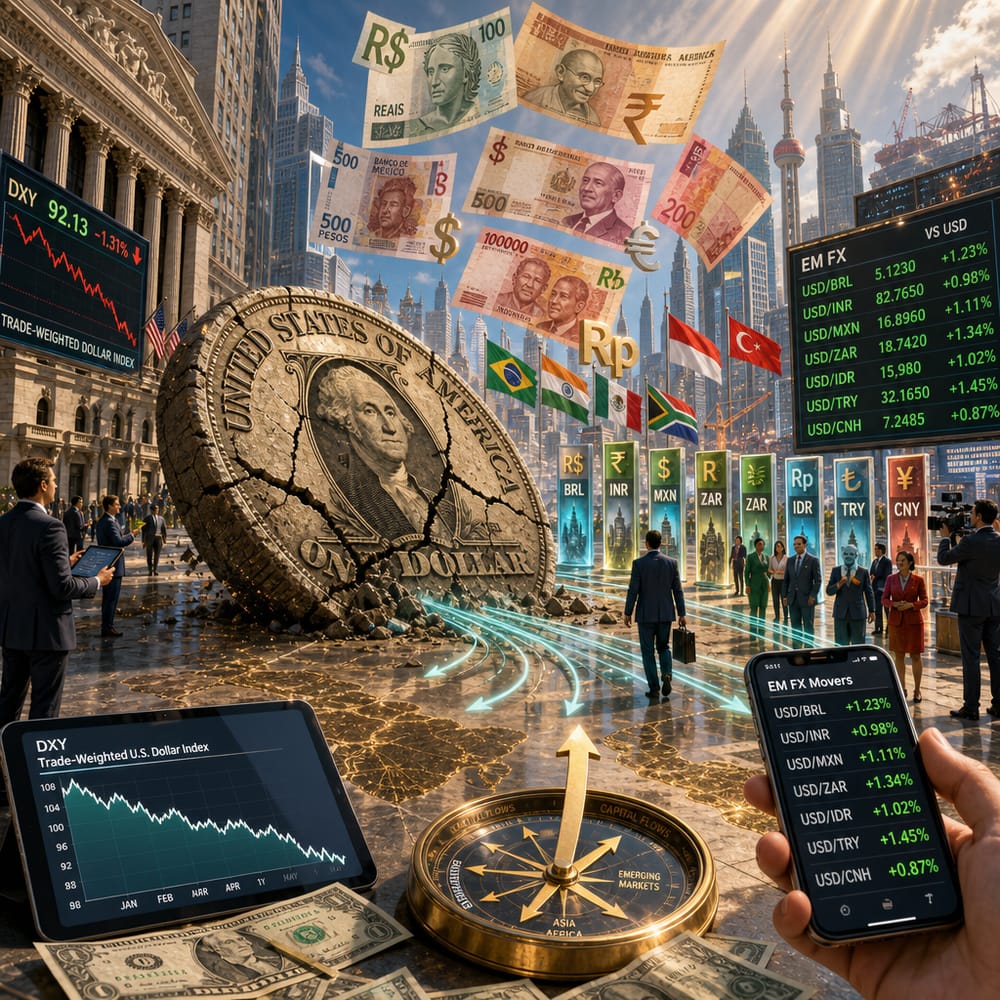
EMERGING-MARKET CURRENCIES ARE HAVING A MOMENT AS THE DOLLAR COOLS OFF
Imagine rolling out of bed, checking your phone, and boom—you're in a world where the U.S. dollar isn't the only game in town. Emerging-market currencies, the Davids to the dollar's Goliath, are flexing their muscles like never before. Yep, it's happening. A weaker dollar is turning the spotlight on currencies that usually don't get a second glance from anyone outside their own borders. So what's going on here? And, more importantly, what should you, the savvy investor, be watching?
If you're scratching your head as to why the dollar is taking a breather, you're not alone. It's like the U.S. dollar finally decided to take a vacation. The trade-weighted dollar index—which measures Uncle Sam's greenback against a basket of emerging-market currencies—has dipped, and that means the underdogs are having their day. Blame it on the Federal Reserve's latest maneuvers or global intrigue around interest rates, but the dollar has loosened its grip, and the ripple effects have been deliciously intriguing.
So, what's fueling this newfound resilience in emerging-market currencies? Well, for starters, consider the Federal Reserve's softer stance on interest rates. Their reluctance to crank up the rates any higher has led to a weaker dollar. And in this topsy-turvy world of currency trading, a weaker dollar usually means emerging-market currencies can strut their stuff a little more confidently. Think of it like an overcrowded dance floor finally clearing up, allowing room for those once-wallflower currencies to show off their moves.
But the Fed isn't the only player in this game. Global commodity prices are acting like energy drinks for many emerging markets. Countries rich in natural resources—from Brazil to South Africa—are seeing a boom in their currencies' value as the demand for commodities like oil and precious metals remains high. It's the kind of boom that has investors around the world saying, "I want in!"
Now, before you start converting your savings into Brazilian reals or South African rand, remember that this thrilling roller coaster ride isn't all sunshine and rainbows. Sure, the stronger emerging-market currencies are giving these economies a much-needed stability boost, but the ride comes with its share of sudden drops and sharp turns.
A weaker dollar might mean stronger emerging-market currencies, but it doesn't magically erase the risks. Political instability, governance issues, and volatile market conditions can flip the script in a heartbeat. That said, for those willing to brave the stormy seas, the potential rewards are real.
So, what does this mean for investors? If you're eyeing emerging-market currencies, the opportunities could be as plentiful as they are risky. A strong currency reflects investor confidence and can attract foreign capital like bees to honey. Yet, just like any investment, it requires a keen eye on the horizon—keeping tabs on not just the economic indicators, but also on the political climate of these regions.
Investors also need to be mindful of sudden shifts in global policy or unexpected economic reports that could send currency values tumbling. Take the Fed's last powwow in Jackson Hole, for instance. When central bankers gather, investors perk up. Any indication of a rate change can send tremors through the currency markets faster than you can say "exchange rate."
But here's the kicker: if you play your cards right, investing in emerging-market currencies isn't just about riding the volatility wave. It’s about diversifying your portfolio, hedging against dollar-centric risks, and tapping into the growth potential of rapidly developing economies.
So, as you sip your morning coffee and scroll through your financial apps, keep an eye on those plucky emerging-market currencies. With a weaker dollar, they're not just sitting in the shadows anymore—they're stepping into their own spotlight. And as with any investment adventure, the best rewards are often found off the beaten path.
This article is for informational purposes only and is not investment advice. Always do your own research or consult a licensed financial professional before making investment decisions.
© Copyright 2024. All Rights Reserved.
© Copyright 2024. All Rights Reserved.