

Emerging Market Currencies Catch a Bid on Iran Diplomacy & Risk Appetite
Thursday, August 20, 2026
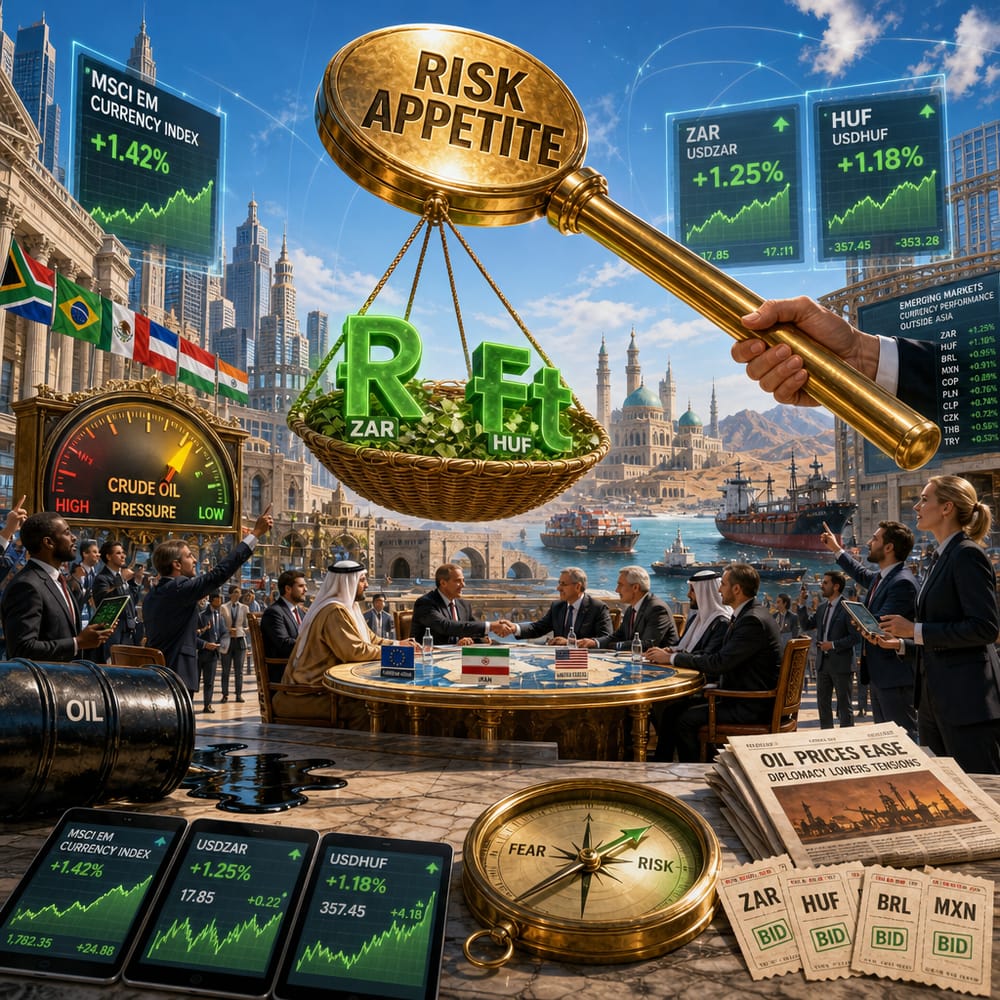
When it comes to investing, the stakes are as high as they are in a poker game with billionaires. And like that poker game, emerging-market currencies are one of those hands where you need to carefully consider every raise, bluff, and bet. But lately, there's been an unexpected twist: a diplomatic card dealing with Iran that's putting a spotlight on these often-overlooked currencies.
THE GEOPOLITICAL DRAMA
Let's set the stage. Picture a world where headlines about Middle East diplomacy are making the rounds. The U.S. has been flexing its economic muscles against Iran with a campaign that's more about squeezing the wallet than sending in the tanks. Treasury Secretary Scott Bessent has even termed it an "ECONOMIC D-DAY." This move is making investors rethink their risk appetite, and it’s got emerging-market currencies doing the cha-cha-cha.
Geopolitical drama isn't just for political junkies. It has real consequences for your portfolio. When tensions rise, so do oil prices, and that's a big deal if you're eyeing emerging-market currencies. These currencies are like canaries in the coal mine, sensitive to changes in global risk sentiment. When investors are skittish, they dart away from riskier assets like these currencies. But when diplomatic dialogue hints at stability, it's like ringing the dinner bell.
OIL PRICES: THE UNSEEN HAND
Now, what about oil? Imagine oil prices as the unseen puppeteer pulling the strings on emerging-market currencies. When oil prices surge, it’s like tossing a rock in a pond—the ripples go everywhere. Emerging markets, which often depend on oil imports, see their costs soar, affecting their currencies.
But hold your horses. Recent diplomacy has led to a breather in oil prices, making these markets look like a tasty investment morsel again. Lower oil prices mean less strain on economies already juggling inflation and debt. It’s a win-win for their currencies, and investors are taking note.
WHO’S LEADING THE DANCE?
So, which emerging-market currencies are catching the spotlight under these new conditions? Look no further than the South African Rand and the Hungarian Forint. These currencies are taking full advantage of the easing oil prices and a better-than-expected risk appetite. The Rand, for instance, is seeing a rally, making portfolio managers sit up and take notice.
In the grand ballroom of markets, the MSCI Emerging Markets Currency Index is our dance card. This index, which tracks the performance of a basket of emerging-market currencies, is reflecting these moves with an upward trajectory, bringing smiles to investors who like a bit of risk with their coffee.
THE BIG PICTURE
But why does all this currency chatter matter? Because emerging-market FX are a crystal ball for global risk appetite. They offer a peek into where investment flows might head next, and they can even whisper secrets about economic stability—or the lack of it.
In the grand scheme, these movements also indicate how investors are assessing global stability. If you’re seeing strength in emerging-market currencies, it suggests that investors are getting cozy with the current geopolitical climate—or at least optimistic enough to take a chance.
WHIPPING OUT YOUR CRYSTAL BALL
So, what’s a retail investor to do? Be the eagle-eyed observer watching how these developments unfurl. If Middle East diplomacy takes a positive turn, it could keep oil prices softer, providing an ongoing tailwind for these currencies.
But remember, it’s not all sunshine and rainbows. Any hiccup in these diplomatic efforts can send oil prices soaring again, making emerging markets a lot less alluring. Stay nimble and watch those headlines like a hawk.
In the end, your investing journey in emerging-market currencies is like navigating through a shifting maze. Keep your eyes peeled for geopolitical cues and oil price movements. They just might be the compass you need in this unpredictable market landscape. As always, may the odds be ever in your favor.
This article is for informational purposes only and is not investment advice. Always do your own research or consult a licensed financial professional before making investment decisions.
© Copyright 2024. All Rights Reserved.
© Copyright 2024. All Rights Reserved.