

Emerging Market Currencies: A Quiet Spell Amid Global Uncertainty
Sunday, August 16, 2026
EMERGING MARKET CURRENCIES: A QUIET SPELL AMID GLOBAL UNCERTAINTY
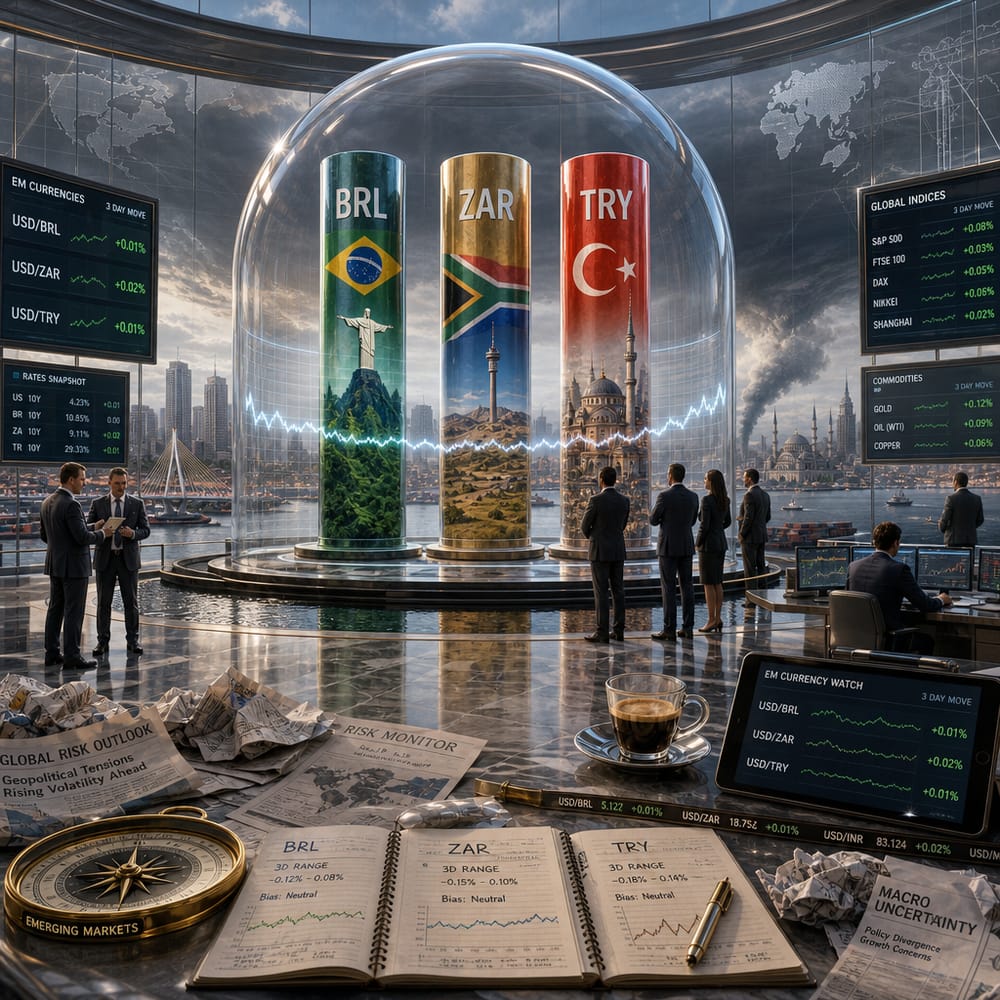
If you could bottle tranquility and sell it, emerging market currencies might be your best bet right now. While the global economic stage is throwing its fair share of curveballs—think geopolitical tensions, AI-induced economic upheaval, and the occasional social media-induced panic—these currencies are currently as calm as a yoga class at sunrise.
Intrigued? You should be. Emerging market currencies like the Brazilian real (BRL), South African rand (ZAR), and Turkish lira (TRY) typically act like hyperactive border collies, reacting to every twist and turn in the global economy. Yet, over the past three days, they've been sipping on a serenity smoothie, largely unaffected by the world's chaos. So, what's behind this sudden zen?
THE CALM BEFORE THE STORM?
First, let’s not kid ourselves. Emerging market currencies rarely sit still for long. Their stability is often the calm before a storm rather than a permanent state of affairs. They tend to react to a myriad of global economic signals: interest rates in developed markets, shifts in commodity prices, and investor sentiment all play massive roles. When the U.S. sneezes, emerging markets often catch a cold—or at least start sniffling.
Right now, there are a few key economic indicators to keep an eagle eye on. For starters, inflation rates. If inflation in these markets continues to rise, it could erode purchasing power and lead to weakening currencies. Then there's the question of debt. High levels of public and private debt can expose economies to the whims of foreign investors. When interest rates rise globally, servicing that debt becomes more expensive, leading to potential currency devaluation as investors demand higher returns.
THE GEOPOLITICAL TANGO
Geopolitics is the wild card no one can ignore. Take Turkey, for example. With President Erdoğan's often unpredictable policies, the lira's recent stability feels less like a new chapter and more like a brief intermission during a long-running drama. Then there’s Brazil, where President Lula is gearing up for reelection and trying to mollify worker unrest. Political campaigns can stir up financial uncertainty faster than you can say "populist policies."
Let’s not forget the global tension brewing over Iran. As sanctions and diplomatic tensions ramp up, these could ripple through global oil prices, which, in turn, affects emerging markets reliant on oil exports. Countries like South Africa, which imports significant amounts of oil, may face economic repercussions impacting the rand.
WHAT TO WATCH NEXT
Keep your eyes peeled on a couple of looming triggers that might shake things up. The Federal Reserve's next moves on interest rates could be the Pied Piper that leads these currencies into more volatile territory. If the Fed raises rates to combat inflation further, it could suck capital out of emerging markets back into the U.S., causing these currencies to drop like stones.
Commodity prices are another crucial factor. Should copper, oil, or agricultural products see a price surge, currencies tied to these industries could see increased volatility. With copper making a comeback, thanks to its demand in AI data centers and electric vehicles, countries that produce it could see their currencies fluctuating, depending on market supply and demand dynamics.
THE BOTTOM LINE
While emerging market currencies are currently enjoying an unexpected nap, don't get too comfortable. Their stability amidst global uncertainty might suggest some resilience, but it could also be the eye of a financial hurricane. Investors should keep a close watch on economic indicators and geopolitical events that might yank these currencies out of their current lull.
Emerging markets often provide roller-coaster thrills in the world of investing. The current peace might be the perfect time for investors to tighten their seatbelts and prepare for the next round of market twists and turns. After all, in the world of finance, the only thing that's guaranteed is change.
This article is for informational purposes only and is not investment advice. Always do your own research or consult a licensed financial professional before making investment decisions.
© Copyright 2024. All Rights Reserved.
© Copyright 2024. All Rights Reserved.