

Elevated Wholesale Inflation Strengthens Case for Fed Rate Hike
Friday, November 13, 2026
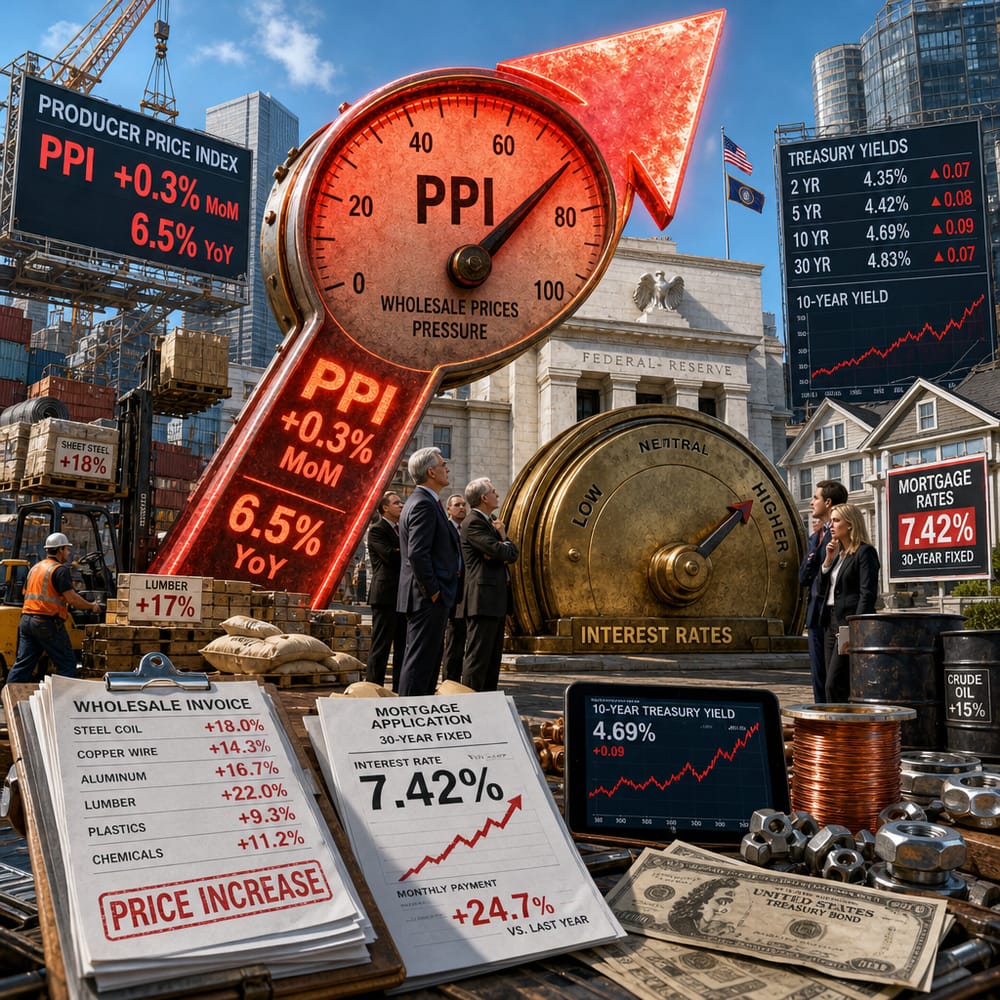
THE FED'S DILEMMA: INFLATION PRESSURES MOUNT AS WHOLESALE PRICES RISE
If you're hoping for a little relief on your next grocery run, you might want to sit down. The U.S. Producer Price Index (PPI) for October just crashed the party with a 0.3% month-over-month increase, pushing the year-over-year rise to a hefty 6.5%. That's the highest since the pre-pandemic days of November 2022. The Federal Reserve, our economic maestro, has been watching these numbers like a hawk, and the latest data suggests the Fed’s poised to hit us with another interest rate hike at its December meeting.
WHY WHOLESALE PRICES MATTER
So, what’s the big deal about the PPI? It's basically a gauge for the prices that domestic producers get for their products before they hit the consumer. Think of it as the backstage pass to the inflation show. If wholesale prices are on the up and up, there’s a good chance those costs might get passed down the line to the consumer—meaning you, me, and everyone else could end up paying more for pretty much everything.
Now, don’t let that 0.3% monthly increase fool you. It might sound like small potatoes, but when compounded over time, it can make a big impact. And at an annual rate of 6.5%, the highest in nearly four years, it's clear that inflation pressures are not exactly playing nice.
THE FED’S HIGH-WIRE ACT
The Fed’s been walking a tightrope as of late, trying to balance between taming inflation and not slowing down the economy too much. With these latest numbers, the scales might be tipping in favor of another rate hike—a quarter percentage point increase is what most market pundits are predicting. There’s even some chatter about a potential half-point hike, although that's less likely.
The Fed’s main job is to keep inflation under control, usually by adjusting interest rates. When they hike rates, it becomes more expensive to borrow money. This tends to slow down spending and investment, both key drivers of economic growth, but it's the go-to move to cool down inflation.
BORROWING COSTS AND MORTGAGE RATES
Higher interest rates mean your borrowing costs could creep up. If you're thinking about buying a house, buckle up—mortgage rates tend to follow the lead of the 10-year Treasury yield, which is already hovering above 5%. A rate hike could push this even higher, making those dream homes a bit more financially elusive.
For those already holding loans or carrying credit card debt, prepare your wallet. Even modest rate hikes can mean more dollars going towards interest payments each month.
CONSUMER IMPACT: WHAT IT MEANS FOR YOU
This PPI surge raises the stakes for consumer inflation. While the Fed's been winning the inflation game recently, keeping consumer inflation relatively tame, this uptick in wholesale prices could shake things up. Businesses may eventually feel the squeeze and decide to pass on the increased costs to consumers. Translation? Possible price hikes across the board—from your morning coffee to your monthly utilities.
So, what does all of this mean for you? In a nutshell, the Fed's likely to raise rates come December, which could mean higher mortgage rates, more expensive loans, and a little less bang for your buck at the store. If you're a saver, higher interest rates might be a silver lining as savings accounts could offer better returns. But for borrowers, it's a sign to brace for higher costs.
THE ROAD AHEAD
The Fed’s December meeting is just around the corner, and all eyes are on whether they'll opt for a mild or aggressive rate hike. The pressure's on, and the decision will undoubtedly ripple across every corner of the economy.
So, as we gear up for the holiday season, keep an eye on those interest rates. Whether you're planning to buy a home, take out a loan, or simply trying to stretch your budget, the Fed's next move could be the key to navigating these choppy economic waters. Until then, keep those belts tightened and maybe hold off on splurging for that extra slice of avocado toast.
This article is for informational purposes only and is not investment advice. Always do your own research or consult a licensed financial professional before making investment decisions.
© Copyright 2024. All Rights Reserved.
© Copyright 2024. All Rights Reserved.