

Elevated Odds of September Fed Rate Hold
Monday, August 17, 2026
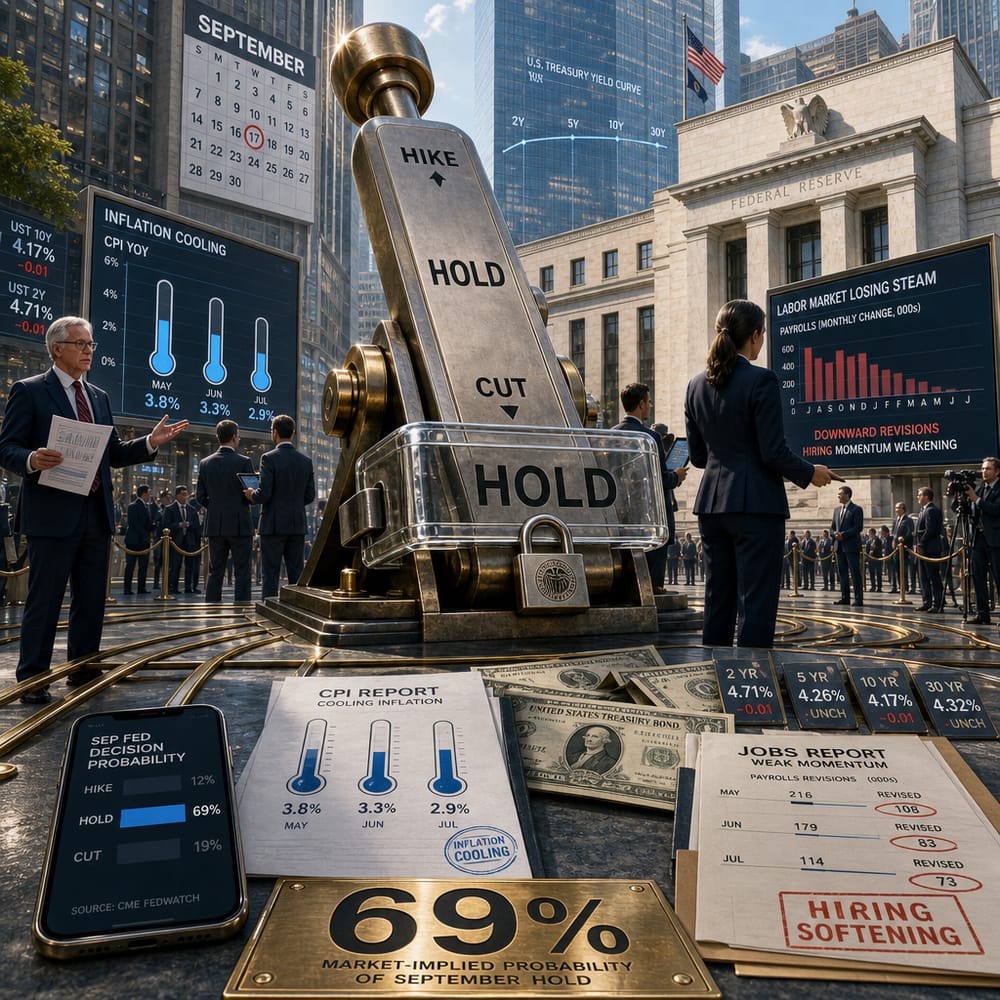
THE SURPRISING ODDS OF A SEPTEMBER FED RATE HOLD: WHAT IT MEANS FOR YOU
Grab your crystal ball, folks, because it seems the Federal Reserve might finally take a breather. There's a 69% chance, according to the latest market data, that the Fed will hold interest rates steady when September rolls around. And no, this isn't just wishful thinking; it's supported by some cooling inflation numbers and a job market that seems to have misplaced its mojo. So, what does this mean for you and your hard-earned dollars? Sit tight, and let's unpack the mystery.
First off, a quick refresher: The Fed, as the gatekeeper of monetary policy, has been on a mission to keep inflation in check. This typically involves a delicate dance of raising or lowering interest rates. Think of it as a financial thermostat: too hot, and they crank it up; too cold, and down it goes. For months, the Fed's been giving the economy a bit of the cold shoulder with rate hikes, trying to ensure we don't all get burned with runaway inflation.
But here's the twist: recent data suggests that inflation is cooling off faster than a popsicle in the Arctic. The Consumer Price Index (CPI), a fancy term for how much we're paying for stuff, isn't climbing as aggressively as it once was. Meanwhile, the job market is doing its best impression of a sloth on a Monday morning, with weaker-than-expected employment data rolling in. Together, these factors create a perfect storm suggesting that maybe, just maybe, the Fed can afford to chill for a bit.
Now, let's talk bonds. If the Fed holds rates, it could spell good news for the bond market. You see, when interest rates don't rise, bonds tend to look more attractive. Why? Because their fixed interest payments become more appealing when compared to other, now-less-competitive investments. So, if you're a bondholder or thinking about jumping on that train, this could be a golden opportunity to sit back and watch your investments hold their ground, rather than pulling a Houdini act.
For stock market investors, a rate hold could mean smoother sailing as well. Stock markets tend to love low rates because they encourage borrowing and spending. Companies can take on projects, expand, hire more people, and generally strut around like peacocks, all of which can boost stock prices. So if you're invested in equities, a rate pause might make your portfolio look like it just came back from a spa day.
However, here's where it gets interesting. If the Fed does decide to keep rates steady in September, investor behavior could shift quicker than a cat at a laser show. Expect a flurry of strategic positioning as investors recalibrate their portfolios to suit a potentially more stable interest rate environment. The smart money might start looking to sectors that benefit from low rates, such as technology and real estate, while giving a side-eye to those that fare better when rates are higher.
But don't get too comfy just yet. While the odds favor a rate hold now, betting on the Fed's next move is like trying to predict the weather a month from now — you're likely to need an umbrella, but who knows for sure? And even if the Fed sits tight in September, they'll be watching the data like hawks. A sudden spike in inflation or a job market resurrection could send them back to the rate-hiking grind.
For retail investors, this is your cue to stay nimble. If history has taught us anything, it's that market sentiment can turn on a dime. Keep an eye on economic indicators, and don't let yourself be lulled into a false sense of security. There's wisdom in diversifying your investments to weather whatever storm — or sunshine — might be ahead.
So there you have it. With a good chance that the Fed might hit the pause button on rate hikes, it's time to consider what this means for your financial game plan. No one has a crystal ball, not even the Fed. But staying informed and adaptable? That’s a surefire way to keep your financial health in check, no matter what September brings.
This article is for informational purposes only and is not investment advice. Always do your own research or consult a licensed financial professional before making investment decisions.
© Copyright 2024. All Rights Reserved.
© Copyright 2024. All Rights Reserved.