

ECB’s Schnabel Signals Further Rate Hikes, Boosting Euro vs. Dollar
Saturday, August 29, 2026
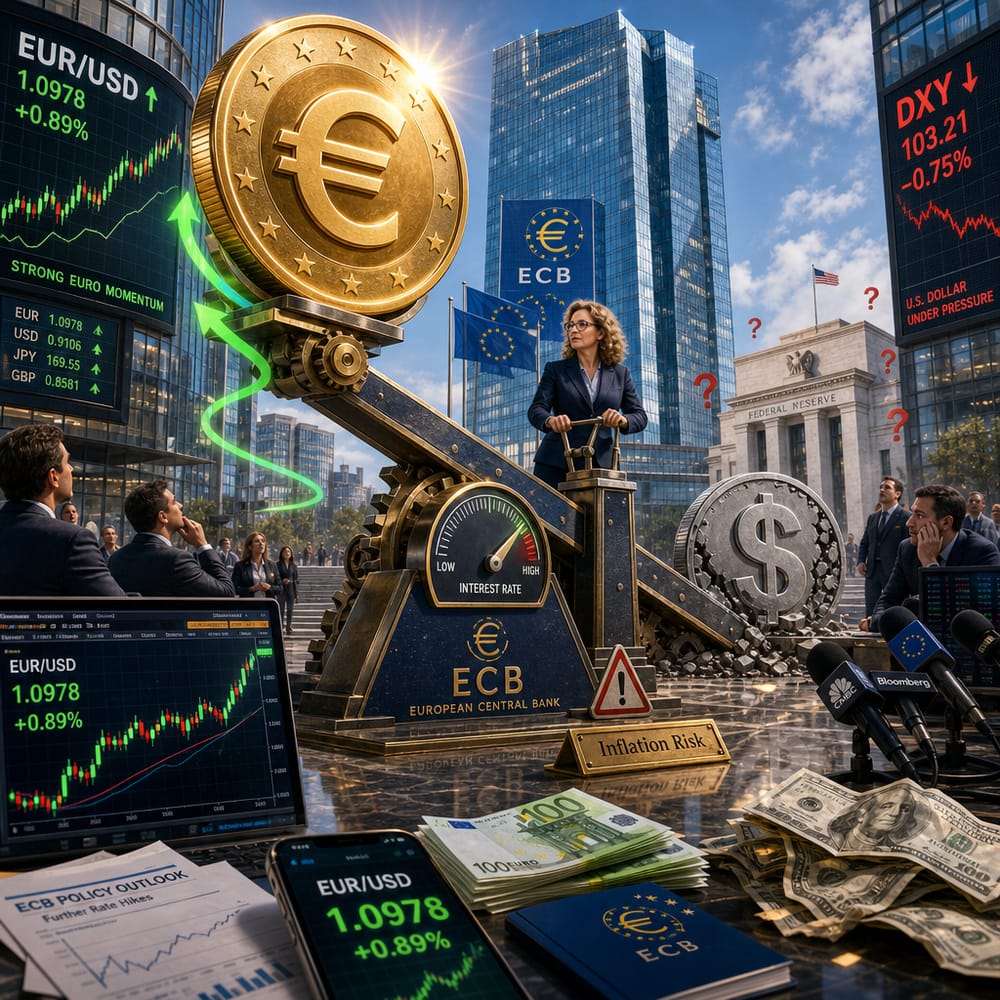
EURO HITS THE GYM: ECB'S SCHNABEL PUMPS UP RATE HIKES
In the financial world, there are few things more riveting than a tug-of-war between the world's central banks. And right now, it seems like the European Central Bank and the Federal Reserve are playing a high-stakes game of chicken with interest rates. In one corner, we have the ECB’s Isabel Schnabel, flexing muscle with bold calls for more rate hikes to combat inflation. In the other, Fed Chair Kevin Warsh, leaning back and letting people guess his next move. The result? The Euro is flexing hard against the Dollar, and retail investors should be paying attention.
Schnabel, an ECB Executive Board member, recently hinted that more interest rate hikes are in the pipeline. Her reasoning? Inflation risks haven't quite packed their bags yet, and the ECB isn't about to let them vacation in Europe. In contrast, the Fed’s Warsh has taken the cryptic route, calling inflation “concerning” but leaving the world hanging on when the Fed plans to act.
So, what does this monetary policy drama mean for the Euro versus the Dollar, otherwise known as the EUR/USD exchange rate? Well, let’s just say the Euro might have just downed a protein shake. When one central bank is pumping rates while the other is chilling, it creates a monetary policy divide as wide as the Atlantic Ocean. That gap tends to push the Euro higher against the Dollar, as investors chase the higher yields (translation: better returns) offered by the Eurozone.
But wait, there's more! Schnabel's remarks don't just affect the EUR/USD rate; they send ripples through other currency pairs, like EUR/GBP and EUR/JPY. With the Bank of England already raising rates and Japan likely staying dovish due to its economic struggles, the Euro could flex its muscles across multiple currency fronts.
For retail investors, these movements in currency values aren’t just numbers on a screen. They're signals for potential shifts in market sentiment and investment strategy. A stronger Euro means European goods become more expensive abroad, potentially impacting Eurozone stocks and sectors that rely heavily on exports. Meanwhile, American travelers planning a Eurotrip might want to book those flights sooner rather than later.
On the flip side, for those holding Dollar assets, a weaker Dollar can be a mixed bag. U.S. exports become more competitive, potentially boosting American companies selling overseas. But if you’re heavily invested in foreign markets, currency shifts can impact your returns once converted back into USD.
So, what's the game plan here for everyday investors? Keep an eye on the central bank chess match. Schnabel’s hawkish (a fancy way of saying she favors higher rates) stance could lead to further strengthening of the Euro, depending on how the Fed reacts in the coming months. If the Fed decides to play catch-up with its own rate hikes, the Dollar might regain some ground, leading to more volatility in currency markets.
Beyond currency pairs, this monetary policy divergence could shake up other asset classes too. For example, a stronger Euro might make European bonds more appealing, while U.S. equities could feel the heat if the Dollar remains weak for too long.
In summary, Schnabel’s call for more rate hikes is more than just a monetary policy quirk. It's a bell ringing across financial markets, urging investors to reassess their strategies. Whether you’re trading currencies, stocks, or bonds, understanding these central bank moves can help you stay ahead of the game. So, next time you hear about a central banker making a speech, take it as your cue to tune in — after all, it could be your portfolio’s next main event.
This article is for informational purposes only and is not investment advice. Always do your own research or consult a licensed financial professional before making investment decisions.
© Copyright 2024. All Rights Reserved.
© Copyright 2024. All Rights Reserved.