

Earnings Highlights—Applied Materials (ADI) Beats, But Tech Reaction Mixed
Friday, November 27, 2026
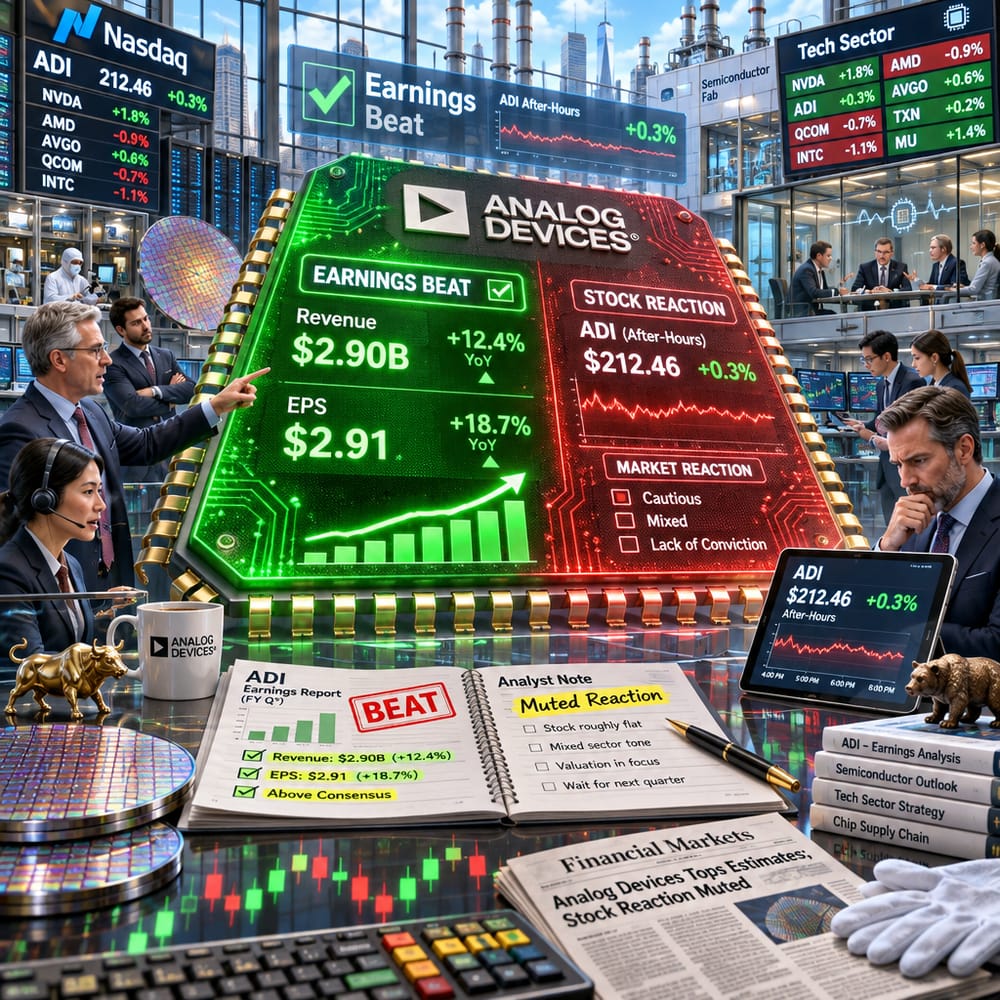
TECH EARNINGS AND THE SILENT TICKER: ANALYZING ANALOG DEVICES’ UNEXCITING WIN
What do you call it when a company beats earnings expectations and the stock yawns in response? A classic case of market déjà vu. Analog Devices’ recent earnings report bagged the coveted “beat expectations” badge, but the market barely lifted an eyebrow. Sure, the results tickled the fancy of number crunchers dashing through spreadsheets, but retail investors? They didn’t rush to huddle around the ADI ticker like it was the last slice of pizza at a party. Let’s peel back the layers of this lukewarm reception and why it’s signaling something bigger in techland.
WHY SO BLUE, ADI?
First things first, Analog Devices showed up with pretty numbers. We’re talking a profit parade that zipped past Wall Street’s forecasts, leaving analysts nodding in approval. Typically, this is the kind of thing that sends stocks hopping up the financial ladder. But here, the stock barely grunted. Why isn't everyone pumping their fists and investing their kids’ college funds in ADI shares?
Well, the tech sector has been feeling a little under the weather lately. Investors are skittish, like cats in a room full of rocking chairs, worried about things that might go bump in the night—like the future of AI spending and high-tech valuations that might’ve reached their ceiling. Even with a spiffy earnings report, ADI found itself caught in the crossfire of broader market skepticism. It’s a tough crowd out there.
THE BIGGER PICTURE OF MARKET MURMURS
ADI’s lackluster reception is part of a broader pattern. It's like finishing a dessert that leaves you thinking, "It was alright, but I've had better." For the past year, seeing tech stocks underreact to earnings victories has been like watching a magician pull a rabbit out of a hat and hearing only polite applause. This isn’t just a fad; it's a sentiment shift.
Tech stocks have been riding a rollercoaster of corrections and volatility, with the S&P 500 recently dipping into correction territory for the first time since April 2025. Investors are wary about paying premium prices for tech stocks when the Federal Reserve still has its finger hovering over the interest rate button like a parent threatening to turn the car around.
THE TEENAGE MOOD SWINGS OF WALL STREET
This is all part and parcel of Wall Street’s teenage mood swings. One day it’s all excited about the growth prospects of AI and tech, the next it’s clutching its pearls at the thought of overvaluation and economic slowdown. It’s like trying to guess the weather a week from now—good luck with that.
For Analog Devices, the stock’s muted reaction wasn’t a critique of its performance but more a symptom of the market’s current mood. Investors are playing the long-term game, wary of any minor hiccups that might signal bigger trouble down the road. It’s like navigating a minefield while wearing clown shoes—one wrong step could blow the whole thing up.
THE TAKEAWAY FOR TECH INVESTORS
So, what does this mean for you, dear retail investor, scrolling through your feed in search of nuggets of wisdom? The tepid response to ADI's earnings isn’t a red flag waving over the company itself but more a reflection of tech stocks' current narrative. If you’re eyeing tech investments, tread carefully and keep a close watch on broader economic indicators—like AI spending and interest rates—since these are the strings pulling tech stocks' marionette strings.
At the end of the day, it’s not about the single moment of earnings glory but the long-term growth story. And while ADI might not be the market’s current darling, its long-term prospects aligned with industry trends could still make it a worthwhile pick. Just remember, in the world of stocks, patience isn’t just a virtue—it’s often the key to unlocking future gains.
This article is for informational purposes only and is not investment advice. Always do your own research or consult a licensed financial professional before making investment decisions.
© Copyright 2024. All Rights Reserved.
© Copyright 2024. All Rights Reserved.