

Earnings‑Driven Pre‑Market Volatility in Retail and Software Sectors
Friday, August 07, 2026
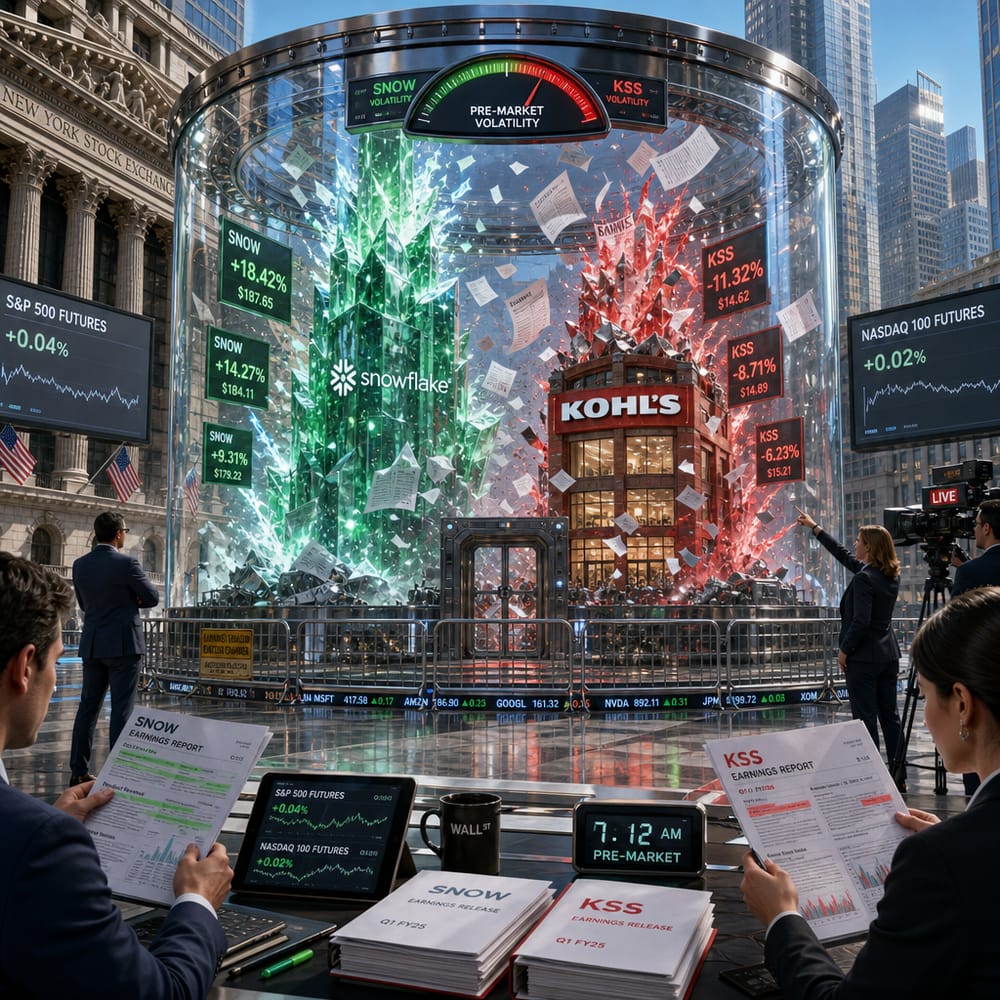
SNOWFLAKE AND KOHL'S: TWO STOCKS, TWO TALES OF VOLATILITY
If earnings were a sport, Snowflake and Kohl's might as well be playing in the championship game. One is a tech darling gliding on the cloud, and the other a retail warrior grappling with the mall malaise. But when it comes to pre-market action, both stocks are showing how earnings season is no mere snooze-fest of numbers and forecasts. It’s a spectacle, akin to a Broadway show where anything can happen before the curtain falls.
Welcome to the world of earnings-driven pre-market volatility. Where the script is written in numbers, expectations, and the wild card known as investor sentiment. But why are Snowflake and Kohl’s swinging for the fences while others barely yawn awake?
THE VOLATILITY VORTEX
Let’s start with the obvious: Earnings season is the financial world’s equivalent of a reality show finale. Every quarter, companies peel back the curtain on their financials, offering a peek into their performance and, crucially, their future prospects. Sometimes, the revelations are blockbuster hits. Other times, they signal a flop. And that’s when the volatility dial goes up to eleven.
For Snowflake, the cloud-computer powerhouse, delivering robust earnings often translates into a rocket-fueled lift-off in its stock price. Investors are not just looking at the present stats. They're eyeing the potential for Snowflake’s data services to tap into the ever-expanding universe of cloud computing.
On the flip side, we have Kohl’s. A stalwart of the retail sector, it finds itself battling not just e-commerce disruptors, but also the broader economic headwinds buffeting brick-and-mortar. This earnings season, the company’s performance might trigger a rollercoaster for its shares as investors parse through its balance sheet looking for signs of resilience or retreat.
THE ELEMENTS OF SURPRISE
Ah, the sweet allure of the earnings surprise. It’s the plot twist that has the power to send stocks soaring or plummeting. When a company like Snowflake beats analyst expectations, it’s more than just a pat on the back. It signals to the market that the company is on a growth trajectory that might have been underestimated. Cue the buying frenzy.
For Kohl’s, an earnings surprise can be a double-edged sword. Exceed expectations, and it might ignite hope that it’s found a way to innovate and attract customers back into its stores. Miss, and it becomes fodder for the bears betting on retail’s decline.
NAVIGATING THE NOISE
So, what’s a savvy investor to do in this whirlwind of earnings season? First, stay alert, but don’t panic. Volatility can be nerve-wracking, but it also presents opportunities. Here are some strategies to keep in mind:
1. Diversify: Don’t put all your eggs in one company’s basket. Spread your investments across sectors to buffer against sector-specific volatility.
2. Long-term Focus: Remember, earnings are a snapshot, not the full album. Look at the long-term value a company can bring to your portfolio.
3. Be Informed: Dive into understanding what drives each company’s earnings. Is it expanding into new markets, innovating, or cutting costs effectively?
4. Set Limits: Use stop-loss orders to protect against major downward moves, but also set target prices to lock in profits when volatility swings in your favor.
THE FINAL ACT
As the curtain rises and falls on yet another earnings season, remember that Snowflake and Kohl’s are just two players in a vast theatre of market activity. They teach us that while the broader market might seem calm, individual performers can still bring the drama.
In the end, earnings-driven volatility isn’t just about numbers on a page. It’s about the stories those numbers tell us and how they shape our decisions in the market. Whether you’re a Snowflake snowman or a Kohl’s conquistador, there’s a plot twist waiting somewhere on the trading floor. So, grab your popcorn, keep your wits about you, and remember to enjoy the show.
This article is for informational purposes only and is not investment advice. Always do your own research or consult a licensed financial professional before making investment decisions.
© Copyright 2024. All Rights Reserved.
© Copyright 2024. All Rights Reserved.