

Early Week Pullback as Oil Pressured Inflation Sentiment
Friday, August 21, 2026
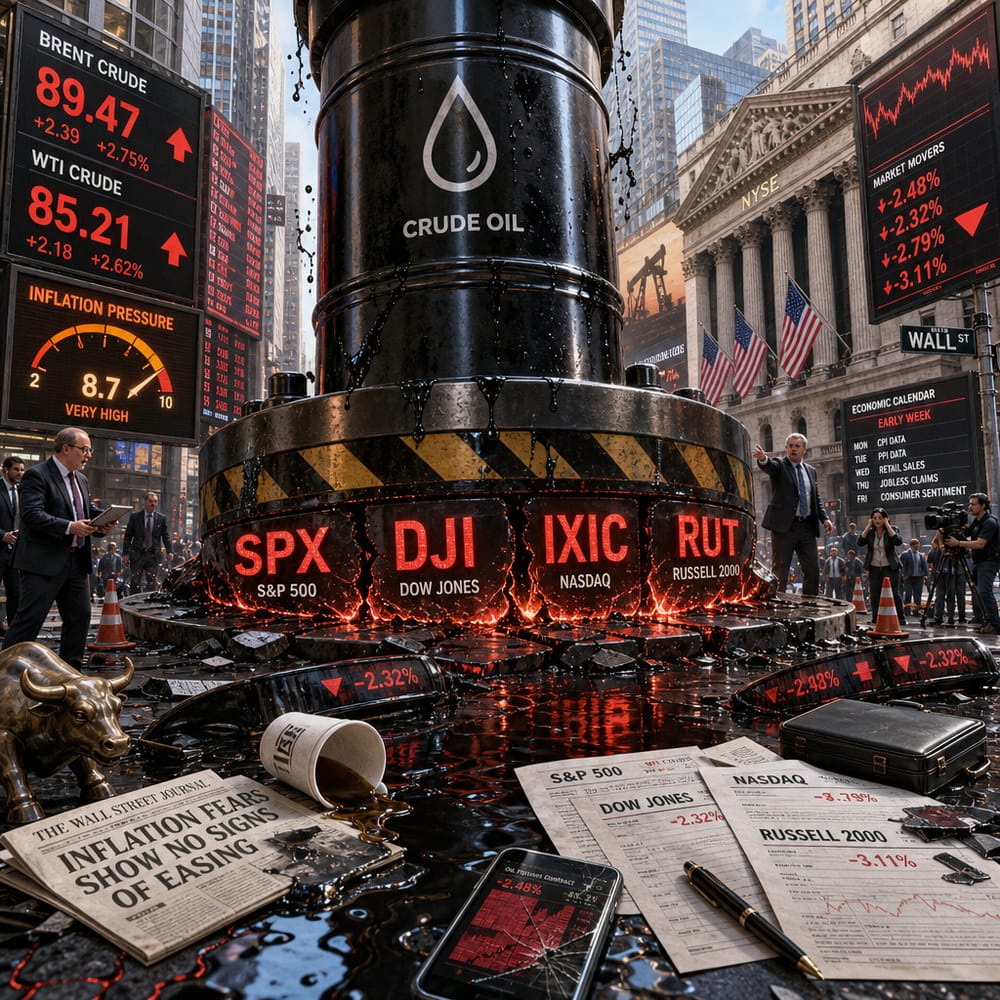
Oil prices are playing the stock market like a fiddle, and this week, they struck a sour note. Picture this: a barrel of oil, already inflated like a birthday balloon on steroids, kept climbing higher, and investors didn’t like it one bit. Cue the red day on Wall Street, where the major indices like the S&P 500, Dow Jones, Nasdaq, and the small-but-spunky Russell 2000 all pulled back under the pressure of inflation concerns. Let’s dive into why this oily saga has everyone clutching their wallets a bit tighter.
Oil prices have always been the boogeyman under the bed when it comes to inflation. If you've ever filled up your tank and felt like you were making a down payment on a small yacht, you know what I mean. When oil prices rise, they have this trickle-down effect on everything—from the cost of producing goods to the price of your morning avocado toast. Suddenly, inflation expectations aren’t a distant concern; they’re knocking on the door, and they brought a casserole.
So, what’s the big deal with inflation expectations? Well, when investors start seeing inflation in their crystal balls, they worry that the Federal Reserve might hike interest rates to cool things down. And higher interest rates mean borrowing costs more, which can chill economic growth faster than a polar vortex. For the stock market, this isn’t great news. Investors get skittish, and they start moving their money away from riskier assets like stocks to safer havens like bonds or gold, in a classic financial game of hide and seek.
But not all sectors are sitting ducks in this inflation showdown. Some, like tech stocks, might ride out the turbulence with their usual high-flying resilience. But others, like consumer goods and transportation, where fuel is a significant input cost, could feel the heat. Companies in these sectors might have to choose between passing the extra costs to consumers or watching their profit margins shrivel up like a raisin in the sun.
Now, let's talk about the little guys—the small-cap stocks in the Russell 2000. These are the plucky underdogs of the stock market. When inflation expectations rise, these companies, which don’t usually have the same pricing power as their larger counterparts, can get squeezed. They rely heavily on domestic inputs and local supply chains, making them more vulnerable to rising costs. Plus, they often carry more debt, which isn’t a good look when interest rates are climbing. So, while big names might weather the storm, small-caps could be left holding the short end of the stick.
For everyday retail investors scrolling through their portfolios with the same intensity as they would a TikTok feed, the question is: what now? It’s all about sectors and strategy. In times of rising oil prices and inflation fears, diversification becomes your best friend. Think about spreading your investments across different asset classes and sectors to mitigate risks. Look into sectors that historically perform well during inflationary periods, like commodities and real estate, which can benefit from rising prices.
Investors should also keep an eye on the energy sector itself. When oil prices rise, energy companies often see a jump in revenues. But don’t jump on the bandwagon too fast; consider the volatility and political factors that might affect energy stocks.
And remember, this oil price surge isn’t happening in a vacuum. Global events, geopolitical tensions, and supply chain disruptions can all throw their hats in the ring, making the markets a more complex beast to tame. So, keeping a finger on the pulse of international developments is just as crucial as watching domestic trends.
In the end, rising oil prices remind us of the interconnected dance of markets, where one sector's gains can signal another's pain. As always, stay informed, stay nimble, and remember that in the world of investing, there are no crystal balls—just educated guesses and strategic moves. So, while the markets may wobble today, with the right approach, you can keep your portfolio steady and ready for whatever comes next.
This article is for informational purposes only and is not investment advice. Always do your own research or consult a licensed financial professional before making investment decisions.
© Copyright 2024. All Rights Reserved.
© Copyright 2024. All Rights Reserved.