

Early-Week Dip: Nasdaq and Dow Down, Russell 2000 Rebounds
Thursday, August 13, 2026
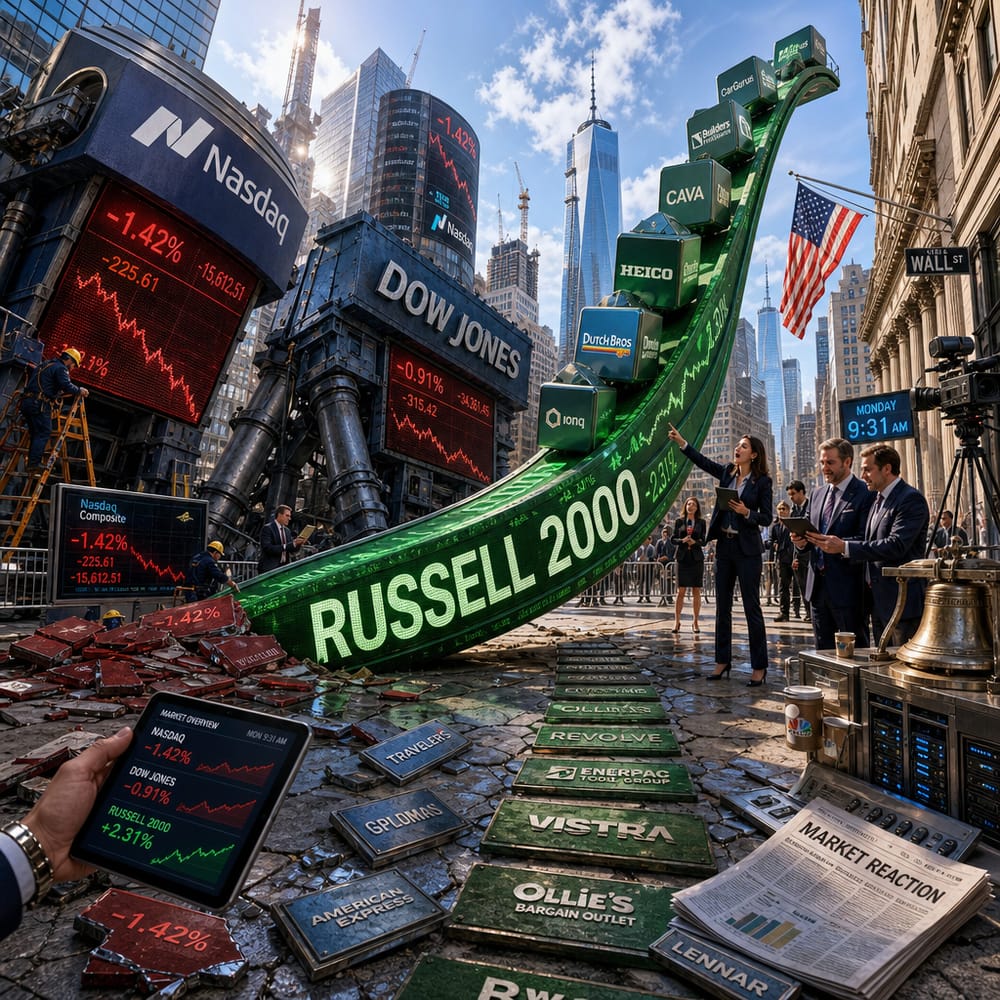
THE EARLY-WEEK DIP: NASDAQ AND DOW DOWN, RUSSELL 2000 REBOUNDS
In an age where market norms are as stable as a toddler on a sugar high, the early-week dip in major indices was just another plot twist in the ongoing saga of the stock market. The Nasdaq and Dow Jones Industrial Average took a nosedive as if the dreaded Monday blues hit them hard. Meanwhile, the Russell 2000, made up of small-cap stocks, decided it was time to flex its muscles and show some resilience. What's behind these market mood swings? Let’s break it down.
First up, let’s talk about the Nasdaq and the Dow. Their early-week swoon wasn’t just a case of the Mondays. No, this was a cocktail of factors that left these giants stumbling around like they'd had one too many at a corporate party. Earnings season is in full swing, and like a reality TV show, it's serving up surprises and drama. Some big tech players came in with underwhelming forecasts, which sent investors running for cover like they’d seen a ghost. Add to that, a slew of economic data pointing to a cooling labor market and a potential slowdown in consumer spending, and you've got yourself a recipe for a decline.
But wait, there’s more! Throw in the cherry of geopolitical tension with unrest in the Middle East casting a shadow over global markets, and you've got the full platter of uncertainty. As if that wasn’t enough, oil prices have been yo-yo-ing, giving investors more whiplash than a rollercoaster. With fears of supply disruptions and demand concerns battling it out, investors were left scratching their heads and heading for the safety of cash or bonds.
Meanwhile, over in the small-cap corner, the Russell 2000 was having none of this doom and gloom. After initially getting caught up in the market-wide selloff, it staged a comeback worthy of a superhero movie. The Russell 2000 managed to rebound with the grace and agility of a gymnast, landing firmly on its feet. Why, you ask? Well, small-cap stocks often get a boost when investors start feeling a bit more adventurous and are willing to take on more risk in search of higher returns.
Moreover, these small companies tend to be more domestically focused, which means they can sidestep some of the global drama that’s been gripping larger multinationals. They’re not as exposed to international trade issues or the whims of global demand, providing a bit of a haven when the international scene gets rocky.
Let's not forget the economic data handpicked to influence the market's mood this week. The inflation numbers came in cooler than expected, offering some sweet relief from the heat of rising prices. Investors, always on the lookout for the next Fed move, took this as a potential signal that the central bank might be inclined to slow the pace of interest rate hikes. Lower rates are like catnip for small-caps, as they make borrowing cheaper and provide a boost to economic growth, which is music to the ears of smaller, growth-oriented companies.
So, what’s the takeaway from this rollercoaster week? The shifts in market sentiment highlight the delicate dance between fear and optimism that investors are doing right now. Risk sentiment is a fickle beast, swayed by every piece of news and every data point that comes its way. For retail investors, understanding these patterns and the factors at play can provide valuable insight into potential buying opportunities.
In a world where the market narrative seems to change as often as the weather, keeping an eye on the underlying currents can help investors make more informed decisions. Whether it’s the tech titans faltering or the small caps rallying, it’s all part of the grand spectacle that is the stock market.
So, while the Nasdaq and Dow might have stumbled early in the week, the Russell 2000’s rebound serves as a reminder: there’s always a silver lining if you know where to look. As always, stay curious, stay informed, and keep your investing eye sharp. After all, in the market game, the only constant is change.
This article is for informational purposes only and is not investment advice. Always do your own research or consult a licensed financial professional before making investment decisions.
© Copyright 2024. All Rights Reserved.
© Copyright 2024. All Rights Reserved.