

DXY Slips in Mid-August Dragging USD-JPY, USD/CHF Lower
Sunday, August 16, 2026
DXY Slips in Mid-August Dragging USD-JPY, USD/CHF Lower
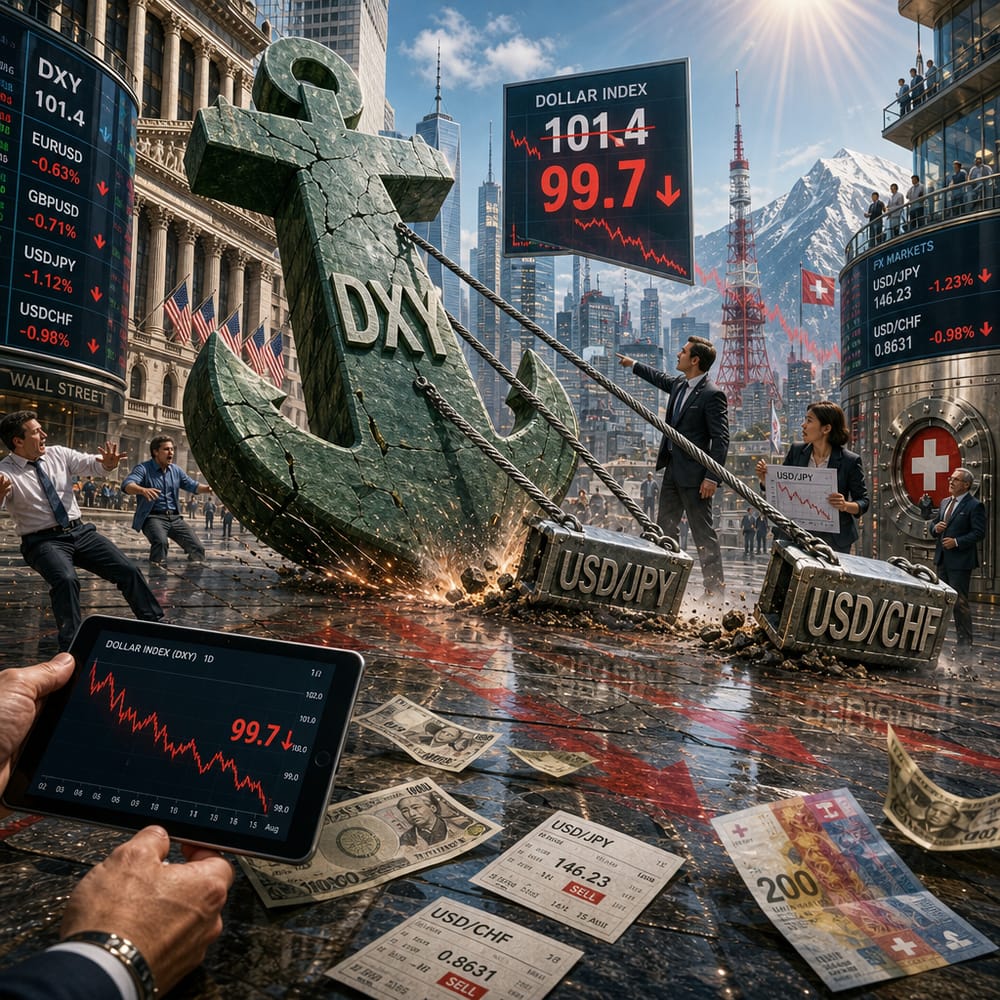
Quick, grab that phone and take a look at the dollar index (DXY) — but don’t blink, because you might miss the drama. Once riding high near 101.4 back in July, the DXY's now found itself down to a humble 99.7 in mid-August. And like a domino effect, the Japanese yen (USD/JPY) and Swiss franc (USD/CHF) currency pairs are feeling the heat. So, what's going on with the mighty U.S. dollar, and why are these currencies doing the cha-cha? Let’s break it down, friend.
If you’ve ever watched the dollar dance around, you know it’s the ultimate party crasher on the global economic stage. A stronger dollar can hog all the attention, making U.S. exports pricier and potentially throwing global trade balances off-kilter. Conversely, a softer DXY means the dollar’s taken a breather, and that’s where we are right now. But why the dip? Let's investigate.
WHAT'S TANKING THE DXY?
First off, it’s a combo platter of reasons. The softened DXY can be traced back to some good ol’ economic indicators and market sentiment. Recently, softer-than-expected inflation data had investors rethinking their interest rate hike bets. While the Fed’s dance card is never set in stone, the anticipation of fewer rate hikes can deflate the dollar since those juicy yields suddenly don’t look so juicy.
Add to that a sprinkle of geopolitical tensions, and you've got a recipe for uncertainty. And we all know uncertainty is the kryptonite to market confidence. This cocktail of lower expectations and skittishness has caused traders to hit pause on the dollar, shifting their gazes elsewhere.
USD/JPY AND USD/CHF: CAUGHT IN THE CROSSFIRE
So, how does this dollar dive affect the USD/JPY and USD/CHF? Think of it as a ripple effect. The USD/JPY pair has dipped as the yen strengthens against the backdrop of a wilting dollar. The yen, often seen as a safe haven, becomes more attractive when the greenback stumbles. This pair has breached technical levels, skidding below the 140.00 mark — a zone traders had been cautiously eyeing.
On the flip side, the Swiss franc is swooning into action. USD/CHF has likewise been pushed lower, with the franc gaining ground. The Swissie, known for its stability and serene presence in turbulent times, comes into play when the dollar shows weakness. Traders have noted USD/CHF slipping past critical support levels, nudging below 0.90 and making market participants take a sharp intake of breath.
THE GLOBAL IMPACT: BEYOND THE FOREX FLOOR
“Why should I care?” you might ask, as you sip your coffee. Beyond FX traders, the implications of a weaker dollar stretch out across the globe like a giant economic web. U.S. exporters could find themselves in a sunnier disposition, as their goods become more competitively priced abroad. The flip side? Importers might have to grapple with increased costs, potentially leading to higher prices on those everyday products we all love — or love to complain about.
Moreover, this dollar softening could have repercussions for emerging markets. Traditionally, a weaker dollar can ease the debt burden in countries that borrow in greenbacks, giving them a bit of breathing room. However, it’s not all roses; it might also mean these economies face fiercer competition from U.S. exports, which have suddenly become more affordable.
SO, WHAT NOW?
While it’s easy to get lost in the buzz, remember that currencies are like the ocean tides — they ebb and flow. The dollar’s current dip might not be forever, and traders will keep their eyes glued to future Fed moves, global economic data, and anything else that could tip the scales.
So, next time you hear someone mention the dollar index, you can nod knowingly and dive into a conversation about how global forces are playing an epic game of tug-of-war with our favorite greenback. For now, though, let’s just sit back and watch the currency markets dance. After all, there’s never a dull moment when it comes to the world of forex.
This article is for informational purposes only and is not investment advice. Always do your own research or consult a licensed financial professional before making investment decisions.
© Copyright 2024. All Rights Reserved.
© Copyright 2024. All Rights Reserved.