

DXY's Flatline Action—Is Sideways Volatility the New Norm?
Thursday, August 20, 2026
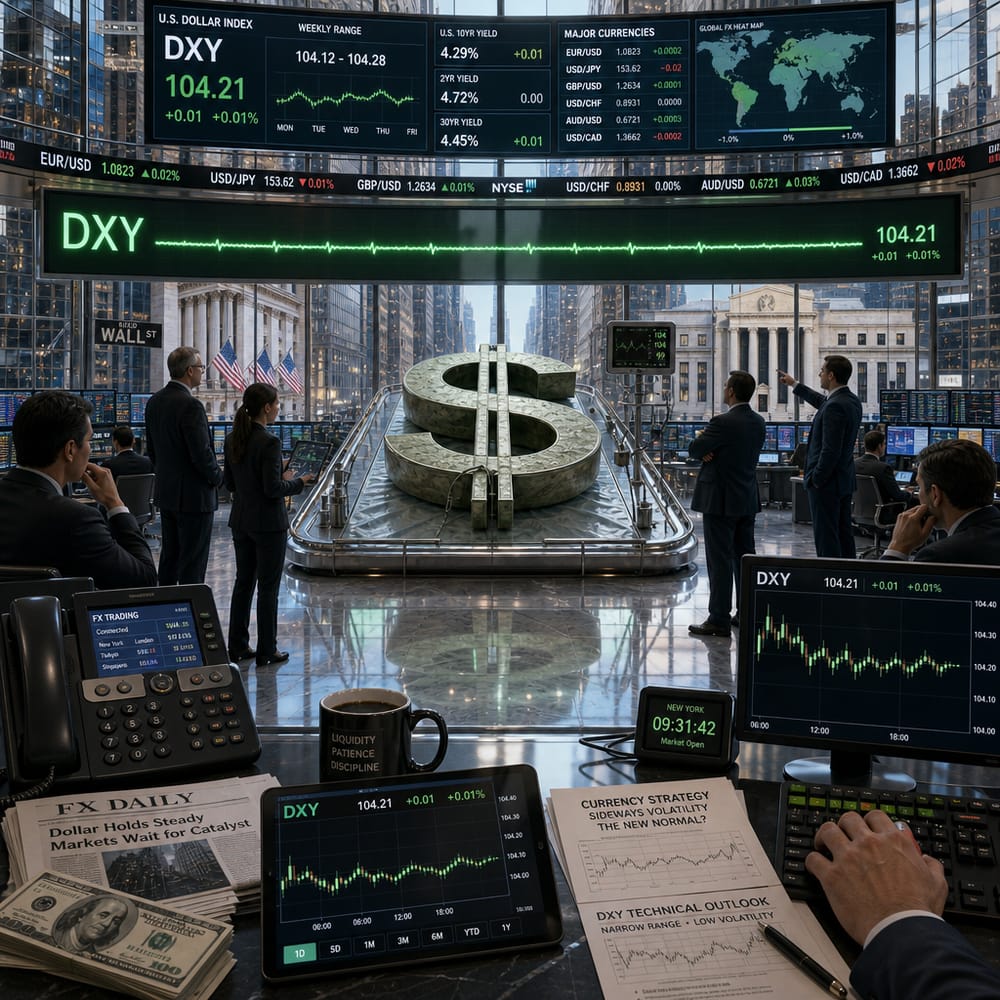
DRIFTING DOLLARS: IS THE U.S. DOLLAR INDEX CAUGHT IN A 'GROUNDHOG DAY' LOOP?
If the U.S. Dollar Index (DXY) were a movie, it might be "Groundhog Day," stuck in a loop of doing the same thing over and over: moving nowhere. But while Bill Murray's comedic suffering made for a good laugh, the DXY's current predicament might just have traders pulling their hair out. In the past week, the DXY has been as lively as a sloth on a hot summer day, barely moving an inch. Let's dive into what’s causing this snooze-fest and why you should care.
The DXY, for the uninitiated, is like the scorecard for the U.S. dollar, measuring its strength against a basket of foreign currencies. Recently, it’s been trading in a tight range, signaling what the finance folks like to call "market indecision." Basically, no one knows if the dollar's going to rise or fall, so it's just sitting there, stubbornly refusing to make a move.
WHY THE DOLLAR IS STUCK
So what's got the dollar stuck in this rut? A cocktail of factors, my friends. First up, we've got the global economic outlook. While the U.S. economy has shown signs of resilience, uncertainties abroad—like China's rocky economic landscape and ongoing geopolitical tensions—are keeping the dollar grounded. When there's global uncertainty, investors usually flock to the dollar for safety. But if the uncertainty is too widespread or ambiguous, they might just sit tight, unsure of whether they should double down or cash out.
Then there’s the Federal Reserve, who have been flip-flopping like a fish out of water on interest rate hikes. Higher rates typically boost the dollar because they offer better returns on dollar-based investments. But with Fed officials sending mixed signals and keeping investors guessing, traders are left holding their breath.
TRADERS' GAME PLAN: ADAPT OR PERISH
Traders, adept at navigating the fast-paced forex market, are now finding themselves stuck in this dollar doldrum. How are they adapting? Some are using this time to sharpen their strategies, while others are turning to alternative currencies or assets to keep things interesting. Gold, for instance, has always been a popular safe-haven when the dollar's wobbly. Cryptocurrencies, too, have piqued the interest of those daring enough to embrace their volatility.
But for many, this period of low volatility is a time to play it safe. Known as the "carry trade," this strategy involves borrowing in currencies with low interest rates and investing in those with higher rates. Emerging market currencies have been particularly appealing, benefiting from a weaker dollar and adding a dash of excitement to the traders' playbook.
WHAT COULD JOLT THE DOLLAR?
If you're wondering what might finally break the DXY out of its trance, keep an eye on a few key triggers. A more definitive stance by the Federal Reserve on interest rates could tip the scales one way or the other. Likewise, any major geopolitical breakthroughs—or breakdowns—could shift global economic sentiment and, with it, the dollar's direction.
Don't forget about the U.S. economy itself. Economic indicators like job reports, inflation data, and GDP growth could all serve as catalysts for dollar movement. The consumer behavior reflected in corporate earnings—think Walmart's insights on spending patterns amid macroeconomic pressures—could offer a sneak peek into the health of the economy.
IN CONCLUSION: ALL EYES ON THE GREENBACK
In this season of suspense, the DXY's tightrope act is definitely one to watch. Its stagnant behavior is telling a story of uncertainty, not just in the U.S., but globally. For traders and investors, understanding this narrative is essential to navigating the choppy waters of the forex market.
So, will we see a plot twist that sends the dollar soaring or sliding? Or will it remain in its quiet reverie, leaving traders to guess its next move? Only time—and perhaps a few choice words from the Fed—will tell. Until then, stay sharp and keep your strategies nimble, because in the world of forex, nothing stays the same for long.
This article is for informational purposes only and is not investment advice. Always do your own research or consult a licensed financial professional before making investment decisions.
© Copyright 2024. All Rights Reserved.
© Copyright 2024. All Rights Reserved.