

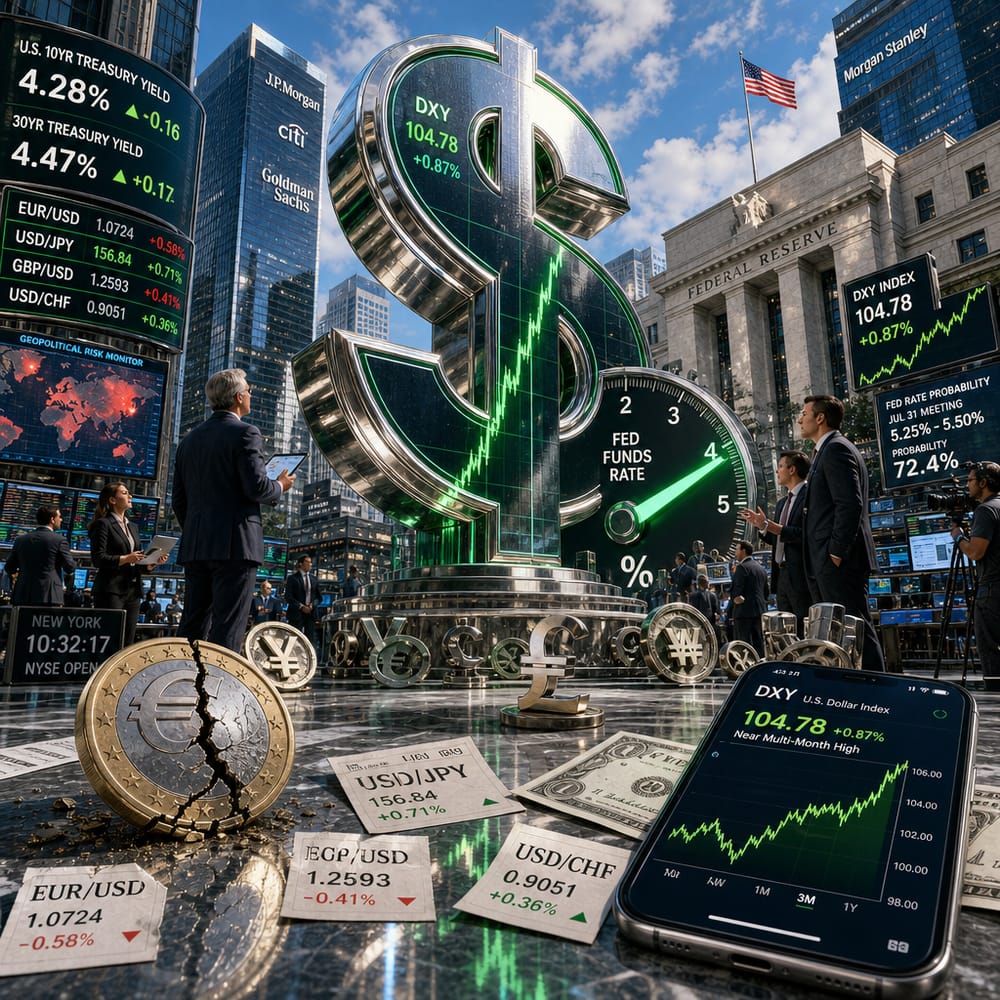
DXY Near Multi-Month High Amid Fed Rate Hike Speculation
Friday, November 13, 2026
DXY Near Multi-Month High Amid Fed Rate Hike Speculation
The U.S. Dollar Index (DXY) is on a tear, flexing its muscles like it's auditioning for the next superhero blockbuster. This powerhouse of a currency, the yardstick measuring the greenback against a basket of other major currencies, is flirting with heights it hasn’t seen since April 2025. What’s got the dollar strutting its stuff? Expectations of more interest rate hikes from the Federal Reserve and a little sprinkle of geopolitical tension. But what does this mean for you, dear retail investor scrolling through this on your phone?
LET'S TALK GREENBACK GAINS
The DXY's recent strength can be chalked up to a couple of key drivers. First up, the Fed. Like a strict parent with an eye on inflation, the Fed's been hinting at keeping interest rates higher for longer. Higher rates make the dollar more appealing to investors looking for a safe haven with better returns. When the Fed talks tough on rates, the dollar listens and leaps.
Then there’s the global stage. With geopolitical tensions bubbling away in the background, the dollar stands out as a safe harbor in stormy seas. When things get dicey on the world stage, investors tend to flock to the security of Uncle Sam’s currency, reinforcing its strength.
FED WATCH: WHAT'S NEXT?
So, what’s Uncle Jerome and the Fed crew actually up to? They're playing a high-stakes game of economic chess, balancing inflation concerns against the risk of slowing growth. If inflation keeps misbehaving like a teenager on a sugar rush, the Fed might continue its hawkish (read: inclined to raise rates) stance.
A continuation of rate hikes would likely mean the dollar keeps on flexing. But if the Fed decides to chill out and pause on hikes, we might see the dollar take a breather from its upward sprint. Basically, it's a monetary "choose your own adventure," and the Fed is holding the pen.
RIPPLE EFFECTS: HOW DOES THIS AFFECT YOU?
Now, let’s zoom out a bit. A stronger dollar has ripple effects across the globe. For starters, it tends to make American products more expensive abroad, which can shrink export sales. On the flip side, it makes imports cheaper, which sounds great if you're shopping for European wine but not so much if you're an American manufacturer competing against cheaper imports.
Commodity markets, brace yourselves. Since many commodities, like oil and gold, are priced in dollars, a stronger dollar can put downward pressure on those prices. For investors holding commodities or stocks heavily reliant on commodity prices, it's time to sit up and take notice.
And then there's emerging market debt. Many of these countries have loans denominated in dollars. As the buck gets stronger, paying off these debts becomes more expensive, potentially leading to economic strain in those regions. If you’re invested in emerging market funds, this is your cue to stay sharp.
THE BIG PICTURE
So, what's the big takeaway from all this dollar drama? It's a reminder that the currency markets aren’t just the realm of forex traders. They're a key cog in the global financial machine, influencing stocks, commodities, and bonds far and wide. Understanding these connections can help everyday investors like you make more informed decisions, whether you're contemplating that next ETF purchase or considering a shift in your portfolio.
As the dollar continues its high-stakes dance, keeping an eye on Fed policies and global political events will be crucial. Remember, in the financial markets, knowledge isn’t just power — it’s profit. Stay savvy, my friends, and keep scrolling for the latest twists and turns in this financial saga.
This article is for informational purposes only and is not investment advice. Always do your own research or consult a licensed financial professional before making investment decisions.
© Copyright 2024. All Rights Reserved.
© Copyright 2024. All Rights Reserved.