

DXY Holds Near Technical Support But Remains Bullish
Saturday, August 15, 2026
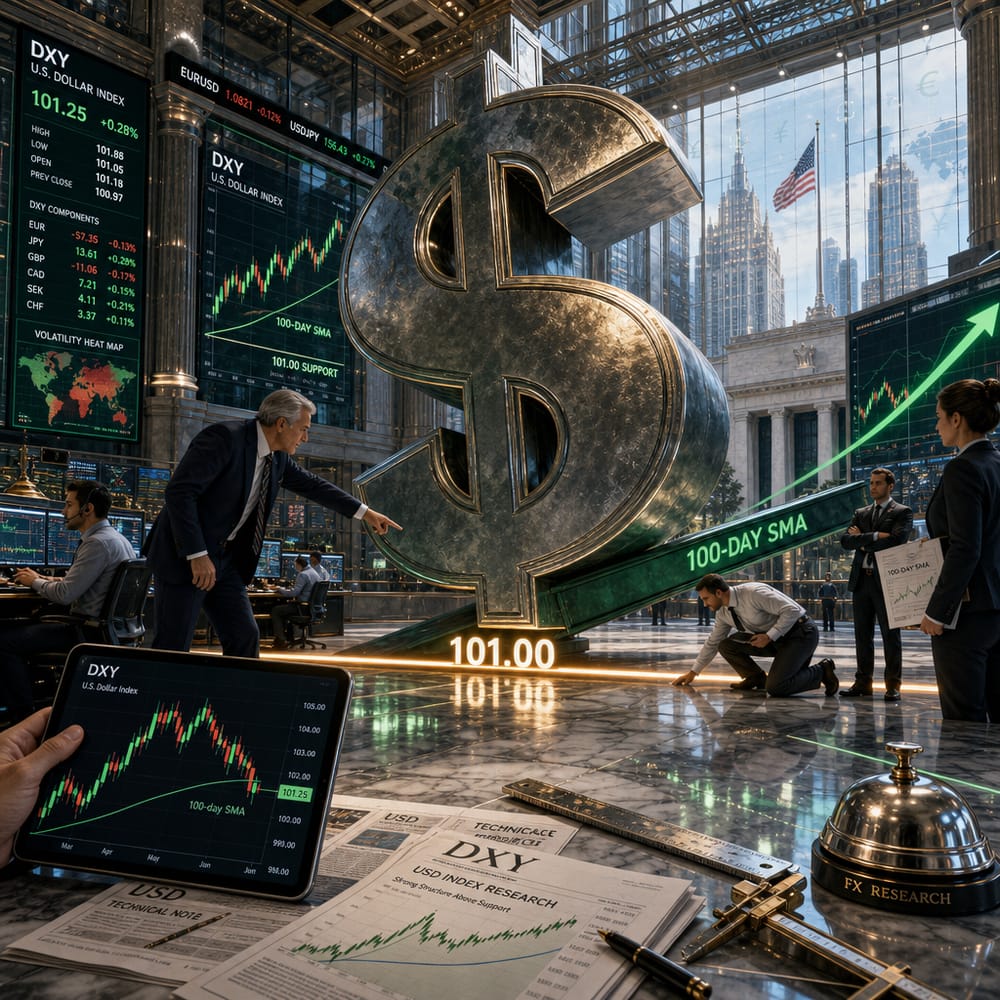
THE DOLLAR INDEX IS PLAYING CHICKEN WITH 101.00
Ever seen two trucks barreling toward each other in a high-stakes game of chicken? That’s what the dollar index (DXY) is doing right now as it flirts with technical support around the 101.00 mark. But while the DXY might look like it's about to fold, under the hood, it’s got the heart of a bull ready to charge.
For those not glued to forex charts 24/7, the DXY is a measure of the U.S. dollar’s strength against a basket of major currencies. Think of it as the dollar’s report card—what grade is it pulling in compared to the euro or yen? Lately, the DXY has been dancing dangerously close to that 101.00 line, making investors clutch their pearls. But why the drama?
TECHNICAL INDICATORS: WHERE SCIENCE MEETS FINANCIAL WIZARDRY
The DXY’s not-so-secret weapon is its 100-day Simple Moving Average (SMA). Picture it as a trusty GPS that keeps the dollar on course. Despite dipping near 101.00, the index remains bullish as long as it maintains its swagger above this 100-day SMA. The SMA acts like a financial safety net, offering reassurance that the dollar isn’t about to nosedive anytime soon. It’s like the training wheels on a bike for those first wobbly rides.
But wait, there’s more! The Relative Strength Index (RSI), another gadget in the technical analysis toolbox, suggests the DXY isn’t overbought or oversold. It’s like Goldilocks’s porridge—just right. The RSI hovering in this comfy zone signals that the dollar still has room to flex without immediately triggering a retreat.
THE CENTRAL BANK TANGO: DANCING TO DIFFERENT BEATS
Now, let’s talk about the puppet masters pulling the strings—the central banks. Picture a dance floor where the Federal Reserve is doing the cha-cha while the European Central Bank and the Bank of Japan are awkwardly waltzing. The Fed, with its eyes on inflation and itchy rate-hike trigger finger, is adding gusto to the dollar’s moves.
Higher yields in the U.S. make the dollar more attractive than a Black Friday sale at Best Buy. While Europe and Japan may not be jumping to hike rates, the Fed’s hawkish stance gives the dollar the spotlight and the swagger it needs. As long as the Fed remains focused on towing the line between controlling inflation and encouraging growth, the DXY has the backing it needs.
IMPLICATIONS FOR GLOBAL CURRENCY MARKETS
This dollar show isn’t just a solo act. Global currency markets are the audience, and they’re watching closely. A strong DXY means importers in countries with weaker currencies might feel the squeeze, paying more for goods priced in dollars. Conversely, U.S. exporters could face headwinds as their products become pricier overseas.
But let’s not forget the other players. Emerging markets, which often carry debt in U.S. dollars, find themselves caught in the crossfire. When the dollar strengthens, these debts become more expensive to service, adding pressure to economies already grappling with inflation and growth challenges.
Meanwhile, a weaker euro or yen might give their economies a little boost as exports become cheaper. It's a complex web where each movement ripples across the globe, affecting everything from trade balances to stock market performances.
SO, WHAT’S NEXT?
The DXY story is far from over. As long as it hugs that 100-day SMA, the bulls have the upper hand. Keep your eyes on the Fed’s next moves, as any signals of further rate hikes could bolster the DXY further.
For now, the dollar might be playing chicken with technical support, but it’s got a few tricks up its sleeve. And while the DXY might flirt with danger, as long as it retains its bullish undertone, it’s in no rush to run off the road. So buckle up, keep your charts handy, and stay tuned—this ride is just getting started.
This article is for informational purposes only and is not investment advice. Always do your own research or consult a licensed financial professional before making investment decisions.
© Copyright 2024. All Rights Reserved.
© Copyright 2024. All Rights Reserved.