

DXY Hits Highest Close Since April 2025
Sunday, November 15, 2026
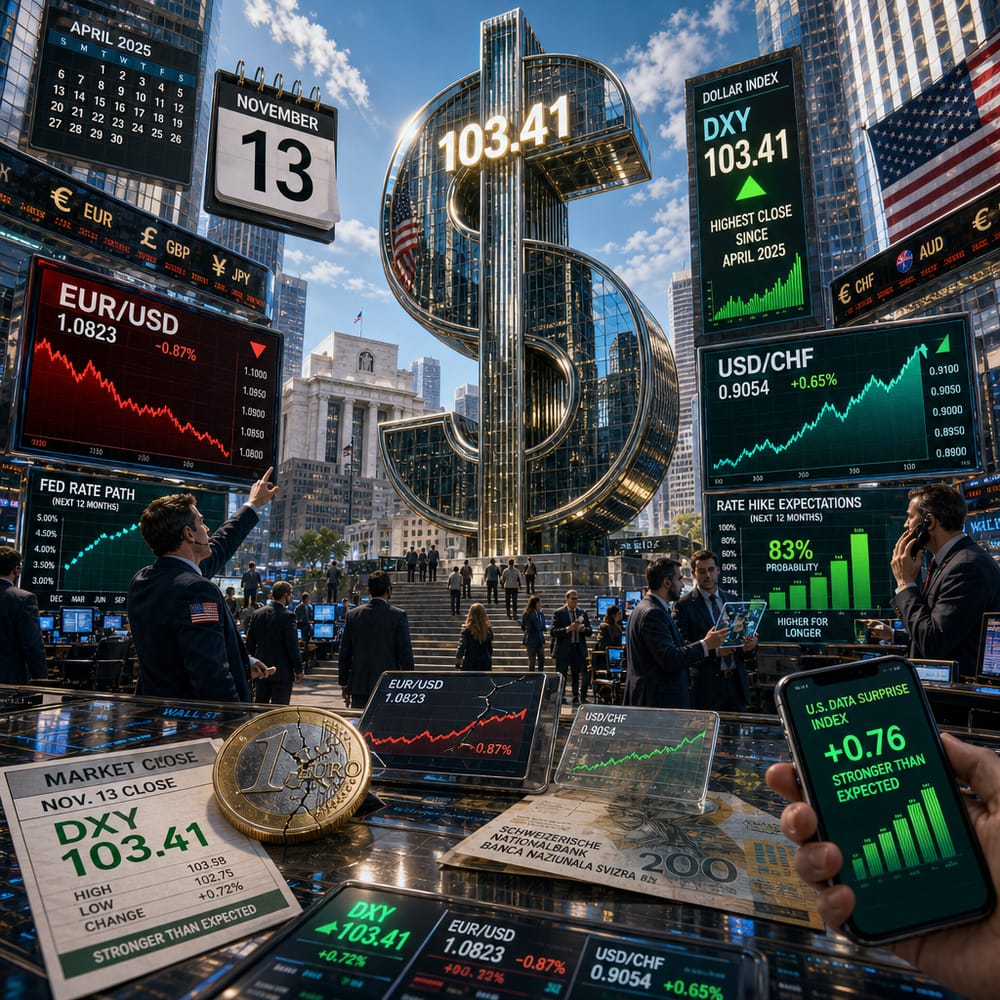
DXY HITS HIGHEST CLOSE SINCE APRIL 2025: THE DOLLAR RISES, THE WORLD TAKES NOTICE
The U.S. Dollar Index (DXY) just strutted onto the financial stage with the kind of swagger last seen in April 2025, closing at a fresh high of 103.41. If currencies were celebrities, the dollar would be the headliner right now, grabbing headlines and likely sending a ripple of mixed feelings through the global economy. But why should you care? Well, a stronger dollar knocks over the first domino in a chain reaction that affects everything from your sushi dinner to big-time investment strategies. Let's dive into what this dollar drama means for everyone, from the corner store owner to the jet-setting investor.
RIPPLES ACROSS THE WORLD
First things first: What does a rockstar dollar mean for global trade? In the simplest terms, when the dollar's value shoots up, it becomes more expensive for other countries to buy American goods. This can slow down U.S. exports because, honestly, who likes paying more? On the flip side, imports become cheaper for American consumers since foreign goods cost less in dollar terms. That's great news if you're hunting for a snazzy German car or indulging in imported French cheese.
But don’t pop that champagne just yet; there’s a catch. A cheaper import bill can lead to widening trade deficits, where the U.S. buys more from abroad than it sells. And, in the intricate dance of global trade, this imbalance can put a dent in domestic manufacturing and affect jobs. So while your pocket may enjoy the immediate savings, the broader economy might feel the sting.
INFLATION: FRIEND OR FOE?
Now, let’s talk inflation — that sneaky phenomenon that determines how many groceries you can pile into your cart without breaking the bank. A stronger dollar can be an inflation buster because it generally dampens the cost of imports. Cheaper goods from outside mean less pressure on prices at home. With inflation somewhat in check, the Federal Reserve might take a breather from aggressive rate hikes.
However, hold that thought. If the Fed decides to keep rates steady or even slice them in the future, it could cast a shadow over the dollar's current strength. Rates and the dollar have a relationship tighter than your favorite pair of skinny jeans: when rates go up, so does the dollar, as investors chase the higher returns that U.S. assets offer. If the Federal Reserve hits the pause button on rate hikes, the dollar’s current high might not last.
WHAT DOES THIS MEAN FOR YOU?
For investors, the playbook gets a bit more nuanced. A robust dollar can mean different things depending on where your chips are on the table. If you’re holding U.S. stocks that rely heavily on exports, brace yourself for some headwinds; a more expensive dollar can dampen overseas sales. Meanwhile, firms that import a hefty portion of their raw materials might find themselves in a sweet spot with lower input costs, which could pad their profit margins.
The currency pairs game, like EUR/USD (Euro and U.S. dollar) and USD/CHF (U.S. dollar and Swiss franc), might also keep traders on their toes. For the Eurozone, a strong dollar can mean a weaker euro, making European exports more competitive globally. But it’s not all rosy. It can also mean higher costs for Europe to import materials priced in dollars, like oil.
SO, WHERE DO WE GO FROM HERE?
It's anyone's guess whether the dollar will keep flexing its muscles or if it's on the verge of a sit-down. Global uncertainties like political changes, trade negotiations, or surprise economic data can shift the narrative in a heartbeat. Investors should keep their ears to the ground and their portfolios nimble.
In this high-stakes currency game, the name of the game is: stay informed. Whether the dollar’s rise fills your wallet with opportunities or throws a wrench in your financial plans, understanding the implications puts you in a better position to navigate the twists and turns of the economic landscape. So, keep that smartphone handy and eyes peeled, because in the world of finance, today’s headlines are tomorrow’s dollar signs.
This article is for informational purposes only and is not investment advice. Always do your own research or consult a licensed financial professional before making investment decisions.
© Copyright 2024. All Rights Reserved.
© Copyright 2024. All Rights Reserved.