

DXY and Futures Positioning: U.S. Dollar Positioning Hits Multi-Year Extremes
Friday, August 14, 2026
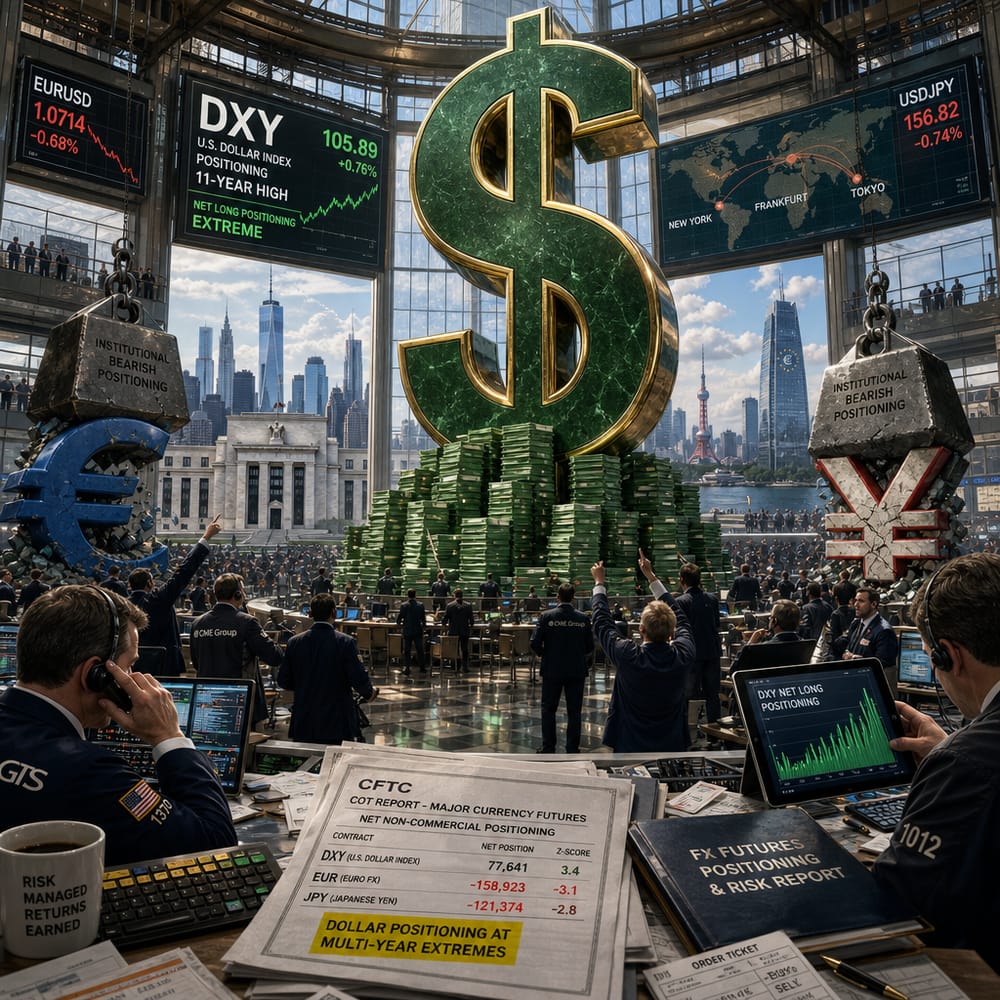
When it comes to the U.S. dollar, folks, we're in uncharted waters. Yep, the greenback's net-long futures positioning has skyrocketed to levels we haven’t seen since the year "Call Me Maybe" was a chart-topper. A whopping 11-year high, to be exact. Meanwhile, the euro and the yen are facing their own extreme bets, as big-time speculators have leaned hard into bearish positions. So, what's the jig here? And more importantly, why should you care?
Well, let’s break it down. Currency futures can tell us a lot about where traders think currencies are heading. When we say "net-long," it essentially means there are more people betting the dollar will get stronger than those betting it will weaken. And right now, traders are buying up dollar futures like they’re the last iPhones on Black Friday. But why has the greenback caught everyone’s attention all of a sudden?
A good part of it has to do with the Federal Reserve. The Fed has been doing its own tap dance — once hinting at rate hikes, then doing a little shuffle backwards as inflation data provides a mixed bag. The latest Producer Price Index showed prices holding steady, suggesting that inflation may not be the tyrant we thought it was. That’s enough to make traders question whether more hikes are actually on the horizon.
There’s also the state of the economy to consider. While the S&P 500 is busy breaking records like it’s trying to outdo Usain Bolt, corporate earnings are strong, and the market is on a bullish tear. All of this paints a rosy picture for the dollar, as a thriving economy tends to attract foreign investments, pushing demand for the dollar up, up, and away.
The euro and yen, meanwhile, are turning into the Wallflowers at the currency party. Traders have piled into bearish bets on these currencies, expecting them to weaken further. Why? Well, the European Central Bank and the Bank of Japan are playing their cards cautiously. The ECB's rate hikes aren’t keeping pace with the Fed’s moves, and Japan’s persistent commitment to low interest rates makes the yen about as attractive as a gym membership in January — in theory, good for you, but realistically, not very tempting.
So what does all this mean for you, dear reader lounging on your couch, scrolling through this article? The dollar's sky-high futures positioning could be a warning sign. Picture a rubber band stretched way, way back. Eventually, it has to snap back, right? That’s what could happen with these extreme positions. If central banks change their tune or if new economic data throws a curveball, we might see some corrections or even trend reversals. And when that happens, currency markets could get as wild as a cat that just discovered catnip.
Moreover, this hyper-sensitivity to central bank whispers means the dollar could become more volatile. That’s fine if you’re in for the ride, but for those who like their currencies calm and predictable, this might be the financial equivalent of riding a bull through a potpourri shop.
But here’s the crux — central bank policies are the invisible puppeteers in this drama. If the Fed decides, “You know what, let’s not hike those rates as much,” the dollar could lose some of its newfound sheen. Conversely, if the ECB or BoJ decide to get aggressive with their own policies, their respective currencies might just get their groove back.
To bring it home, if you’re watching the dollar, the euro, or the yen, keep your eyes peeled for central bank signals and economic data. They’re the lighthouse in these stormy waters. Regardless of whether you’re a seasoned trader or just someone with a keen eye on global economies, these are the clues that will guide your next move.
In a world where currency markets can flip faster than you can say "futures positioning," staying informed is your best strategy. So keep an ear to the ground and maybe, just maybe, you’ll navigate these turbulent seas with the finesse of a seasoned sailor.
This article is for informational purposes only and is not investment advice. Always do your own research or consult a licensed financial professional before making investment decisions.
© Copyright 2024. All Rights Reserved.
© Copyright 2024. All Rights Reserved.