

Dow's Dramatic Rebound Amid AI Sell-Off
Wednesday, November 25, 2026
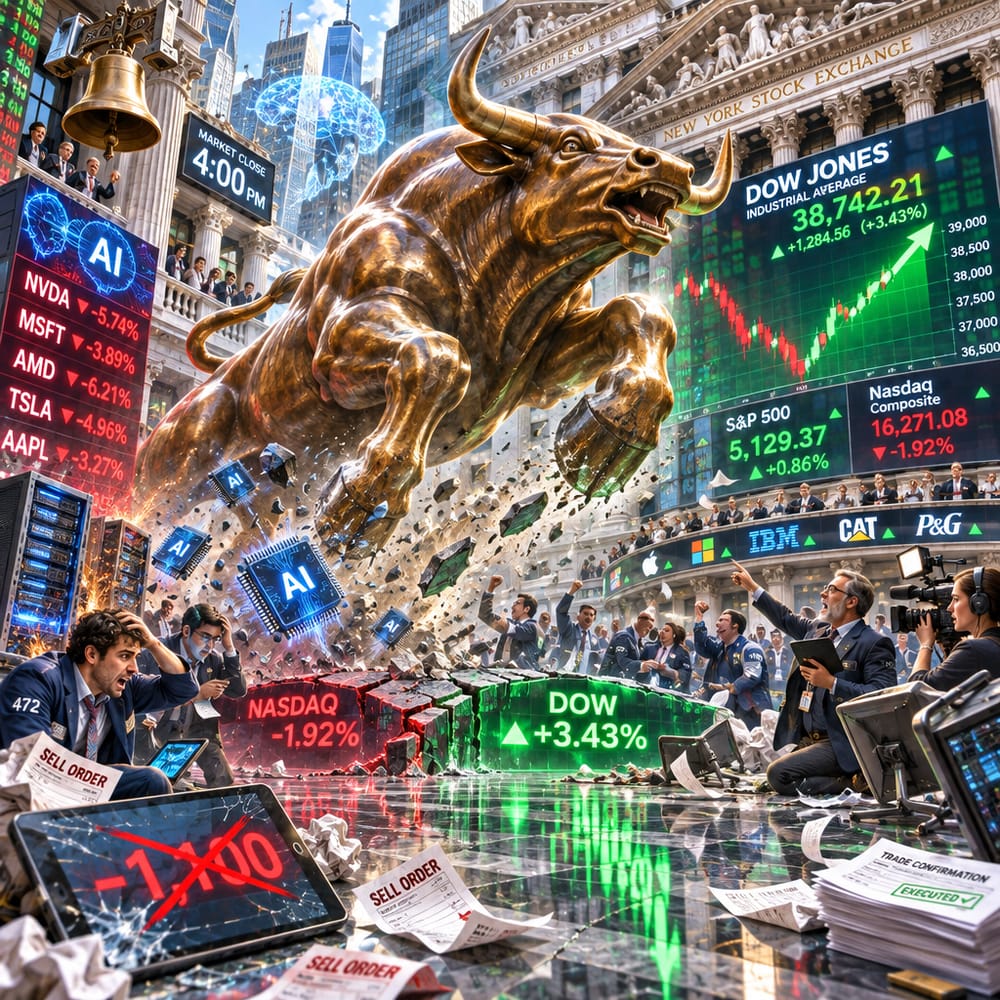
DOW'S DRAMATIC REBOUND AMID AI SELL-OFF
Grab your popcorn, folks, because Wednesday on Wall Street was more nail-biting than a season finale cliffhanger. Picture this: The Dow Jones Industrial Average plummeted a jaw-dropping 1,100 points, only to pull a Houdini and close higher by 164 points. Whiplash much?
So, what turned this trading day into a rollercoaster of epic proportions? Let's dive into the market maelstrom and untangle the frenzy that left investors with a collective case of vertigo.
THE AI FRENZY: A DOUBLE-EDGED SWORD
The drama started with artificial intelligence stocks, the hotshots of Wall Street, taking a nosedive. Remember Nvidia, the darling of the AI world? Its stock dropped like a lead balloon, contributing to the morning's bloodbath. The tech-heavy Nasdaq Composite felt the squeeze, falling 4.6% at one point before clawing its way back to a modest 0.62% loss by the end of the day.
Why the panic? It seems investors are catching a case of the jitters over AI's sustainability. The sector's high-octane growth story hit a speed bump, as Nvidia CEO Jensen Huang's return failed to inject the needed adrenaline. Cue the sell-off—investors bolted faster than a Black Friday shopper going for the last half-price TV.
SHIFTING SENTIMENT: FROM DESPAIR TO DARE
But wait, like all good plot twists, the mood shifted. As the day wore on, cooler heads prevailed, and market sentiment did a 180. Enter Michael Burry, the hedge fund manager who famously predicted the 2008 financial crisis. He dropped a blog post that made traders sit up and take notice, revealing his portfolio was "temporarily almost entirely long."
Burry's bullish stance provided a much-needed shot of confidence and turned the tide. Investors took a cue from his optimism, and the Dow, like a phoenix rising from the ashes, reversed course to end the day with a modest gain.
LIQUIDITY AND MARKET POSITIONING: THE UNDERCOVER HEROES
Behind the scenes, liquidity and market positioning were working their magic. Light trading ahead of the Thanksgiving holiday added volatility to the mix, but it also meant there was room for a rebound. It's like a dance floor—when everyone's got space to move, those slick moves can really shine.
Traders who had bet on volatility had to unwind those positions as the session progressed, adding fuel to the recovery fire. Over in options land, the action was just as lively. Options on the VIX, Wall Street's "fear gauge," saw a flurry of activity, with puts (bets that volatility would decrease) outnumbering calls (bets on more volatility).
IMPLICATIONS FOR MARKET STABILITY
So, what does this wild ride mean for the future? The Dow's heroic comeback underscores the market's resilience, but it also highlights the jitters lurking beneath the surface. AI stocks, while glamorous, come with their own brand of volatility, and investors are reminded that today's boon can quickly become tomorrow's bane.
For retail investors scrolling through their feeds, the lesson is clear: Stay informed, and don't panic at the first sign of trouble. Markets can swing dramatically, but they can also recover just as swiftly. Keep your eyes on the long game and remember that the market, much like a soap opera, is full of unexpected twists and turns.
In the grand scheme, Wednesday's market theatrics are a reminder that while AI stocks have been the belles of the ball, they also come with a high drama quotient. Whether you're rooting for the Dow, the S&P 500, or the Nasdaq Composite, hang on tight—this ride is far from over.
And as they say in the trading world, volatility is just another word for opportunity. Whether you're buying, selling, or just watching, remember: Every market dip is a potential buying opportunity—if you've got the stomach for it. So, keep your chin up, your portfolio diversified, and your eyes peeled for the next plot twist on Wall Street.
This article is for informational purposes only and is not investment advice. Always do your own research or consult a licensed financial professional before making investment decisions.
© Copyright 2024. All Rights Reserved.
© Copyright 2024. All Rights Reserved.