

Dow & Nasdaq Bounce on Soft Jobs, S&P Fades—What’s Fueling the Divergence?
Friday, October 02, 2026
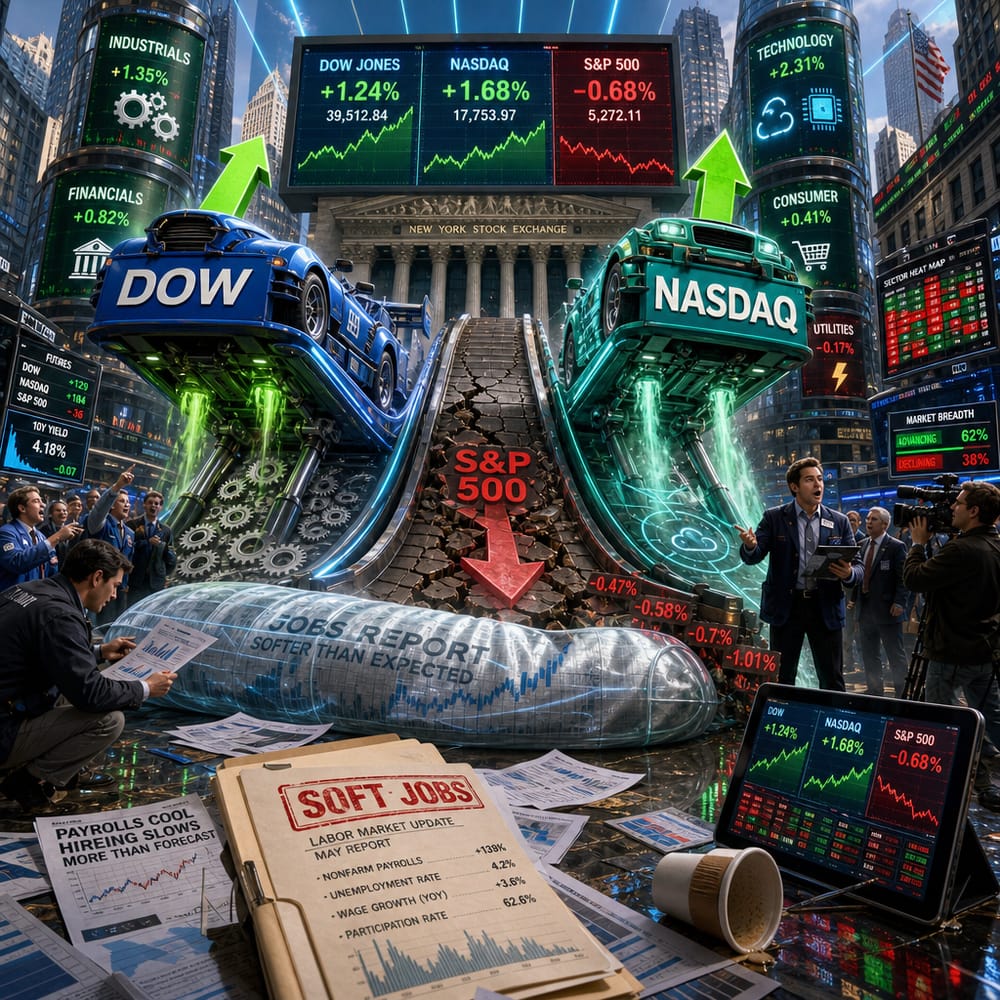
DOW & NASDAQ BOUNCE ON SOFT JOBS, S&P FADES—WHAT’S FUELING THE DIVERGENCE?
Picture this: a jobs report that lands softer than a marshmallow, and yet, the markets react like they’ve just had a triple shot of espresso. If you're wondering why the Nasdaq and Dow Jones are dancing while the S&P 500 is playing wallflower, you’re not alone. Let's dive into this curious case of index divergence and see what's shaking up Wall Street this time.
First, let’s talk numbers. The U.S. economy added a meager 29,000 jobs last month, a figure that even the most optimistic cheerleader would struggle to get excited about. The unemployment rate also crept up to 4.2%, making this a labor market report that’s about as thrilling as watching paint dry. Yet, the Dow and Nasdaq didn’t seem to mind—their cheerful rise amid the gloom left the S&P 500 in their dust. So, what gives?
The tech-heavy Nasdaq and its buddy, the Dow, have their own reasons to celebrate this unremarkable jobs report. You see, in the world of markets, bad news can be good news if it means the Federal Reserve might hit pause on rate hikes. Tech stocks, in particular, have been on a wild rollercoaster with interest rates. Lower rates mean cheaper borrowing costs and higher valuations for tech companies that thrive on future profits.
Enter the Nasdaq, stage right, with its tech titans like Apple, Amazon, and Microsoft leading the charge. These companies thrive in a low-rate environment, and a softer jobs report hints that those interest rate hikes might take a well-deserved nap. For investors in these high-flying stocks, that's music to their ears—a sweet symphony of potentially lower rates boosting the tech sector's allure.
Meanwhile, the Dow, that venerable index of stalwart companies, is getting its own boost. Companies in industries like consumer goods and healthcare, which populate the Dow, might see more stability in a low-growth, low-rate environment. Think of it as a steady ship in choppy waters—there might not be fireworks, but there’s comfort in stability.
But what about the S&P 500, you ask? This broader index, with a foot in virtually every sector, isn’t as easily impressed by the Federal Reserve’s potential pause. It holds financials, energy, and materials too, which can be more sensitive to economic health and global demand fluctuations. These sectors aren't getting the same love from a tepid jobs report, which explains why the S&P decided to sit this one out.
The labor data sways different sectors in different ways. When job numbers look like they’ve had too much turkey at Thanksgiving, sectors reliant on discretionary spending or cyclical demand might feel the pinch. The S&P 500, with its wider net, reflects this mixed bag of reactions, unlike its more focused peers.
Now, why should this matter to you, the average retail investor? It’s all about understanding market dynamics and investor sentiment. Knowing that tech stocks might get a boost from a soft jobs report because of interest rate expectations can inform your investment strategy. It’s like having backstage passes to the concert of market moves—you get to see what’s driving the show.
For those holding onto tech-heavy portfolios, this divergence serves as a reminder to keep an eye on economic indicators and Fed whispers. As for the Dow crowd, stability in certain sectors can offer a cushion during economic uncertainty. And if you’re an S&P fan, well, it might be time to reconsider diversification and how different sectors react to economic cues.
In short, the markets are playing a complex tune, with labor data conducting the orchestra. Whether you're betting on Nasdaq's soaring highs or the steady beats of the Dow, understanding these market melodies can keep you one step ahead in the investing game. So, keep an ear to the ground and an eye on those economic reports—because in the symphony of markets, every note counts.
This article is for informational purposes only and is not investment advice. Always do your own research or consult a licensed financial professional before making investment decisions.
© Copyright 2024. All Rights Reserved.
© Copyright 2024. All Rights Reserved.