

Dollar Weakness Near Multi-Month Lows Amid Treasury Buyback and Debt Concerns
Wednesday, August 26, 2026
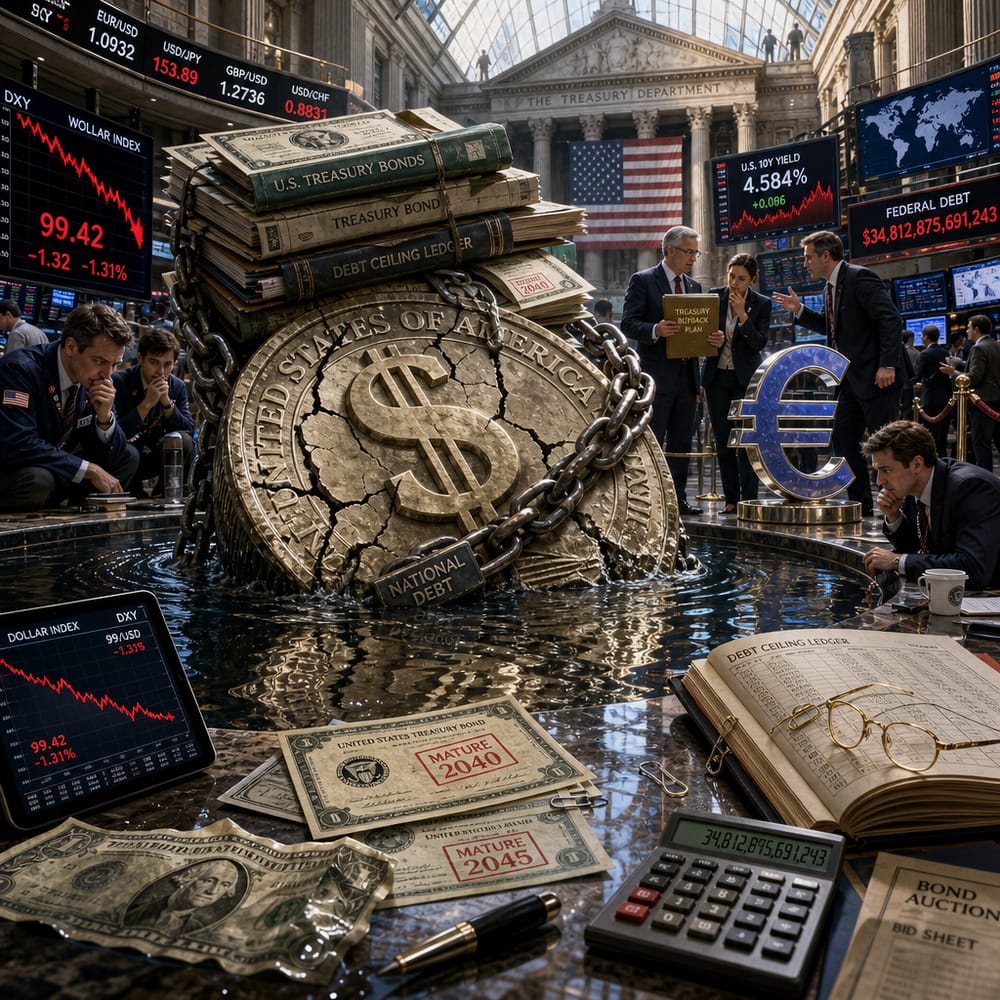
The U.S. dollar is sweating bullets, and it’s not just because of summer’s sweltering heat. As the greenback hovers near multi-month lows, it seems Uncle Sam’s wallet is feeling a bit too light, thanks to some Treasury shenanigans. If you’ve ever wondered whether your dollars might not stretch as far on your next European jaunt or feared an uptick in your grocery bills, hang tight. We’re about to dive into how the Treasury's bond-buyback plan is giving the dollar a run for its money — and what that means for your cash and the global marketplace.
THE DOLLAR'S DILEMMA
Picture this: The U.S. Treasury, in a move that would make a credit card enthusiast blush, unveils a plan to buy back bonds. Normally, buybacks are like a corporation giving a high-five to its shareholders by reducing supply and boosting demand for stocks. But in the Treasury's case, it’s about managing debt and liquidity in the government bond market. Less supply of bonds should, in theory, make existing bonds more valuable. But here's the kicker — it comes at the risk of making the dollar less enticing as investors seek other currencies or commodities (hello, gold).
You see, when the Treasury goes on a bond-buying spree, it’s effectively injecting cash into the economy, which can water down the dollar’s value. Consider it a dollar diet where every greenback in your pocket feels a bit lighter. As investors see the dollar’s swagger wane, they might pivot to other assets like the euro or even the yen, looking for a sturdier safe harbor.
THE GLOBAL RIPPLE EFFECT
Now, you might be thinking, "Why should I care about some bonds and what they mean for the dollar?" Well, a weaker dollar isn't just about less spending power in foreign lands. It has a cascading effect on global trade. American goods become cheaper for foreign buyers, which sounds like a win for U.S. exporters. But flip the coin, and imports get pricier, nudging inflation upward. We’re talking about the kind that makes your avocado toast dreams feel like a luxury.
Moreover, the dollar's global status as the dominant reserve currency means its troubles aren't just America's problem. When the dollar slips, it’s like the financial world snagging its foot on a loose rug. Emerging markets, which often have dollar-denominated debt, can find their own economies in a twist as their debt burden effectively increases. Talk about a global headache.
MONETARY POLICY MYSTERY
So, where does this leave the Fed, you ask? Ah, the plotting and scheming of central banking! With the dollar doing the limbo, the Federal Reserve faces a tightrope act. The conundrum is whether to tighten monetary policy to prop up the dollar, risking slowing economic growth, or to let the dollar continue its free-fall, potentially igniting inflation.
The Fed’s decisions are like the Wall Street version of a soap opera cliffhanger. Higher interest rates can bolster the dollar by making U.S. assets more attractive, but they also push borrowing costs skyward. Lower rates, meanwhile, could stoke inflation but might support broader economic growth.
THE ROAD AHEAD
As investors, armchair economists, or anyone with a wallet, we’ll be watching keenly. Will the Treasury’s gambit pay off, steering smoothly through the stormy seas of fiscal responsibility and market demands? Or will it leave the dollar languishing while we brace for higher costs and altered trade winds?
For now, keep an eye on global markets, where every move — from a European Central Bank decision to oil prices creeping like a thriller villain — can influence the dollar's dance. And remember, even in times when dollars feel like they’re going out of fashion, smart investing and a keen sense of market trends can help your portfolio don a metaphorical parachute.
In the end, whether you’re a jet-setter or just shopping for groceries, the dollar's dicey dance with the Treasury's plans highlights how interconnected our wallets are with the whims of global finance. Stay informed, stay nimble, and maybe think twice about that pricey overseas vacation. Or lean in, and play the forex markets — if you dare.
This article is for informational purposes only and is not investment advice. Always do your own research or consult a licensed financial professional before making investment decisions.
© Copyright 2024. All Rights Reserved.
© Copyright 2024. All Rights Reserved.