

Dollar Weakness Backs Emerging-Market Currency Momentum
Tuesday, August 18, 2026
DOLLAR WEAKNESS BACKS EMERGING-MARKET CURRENCY MOMENTUM
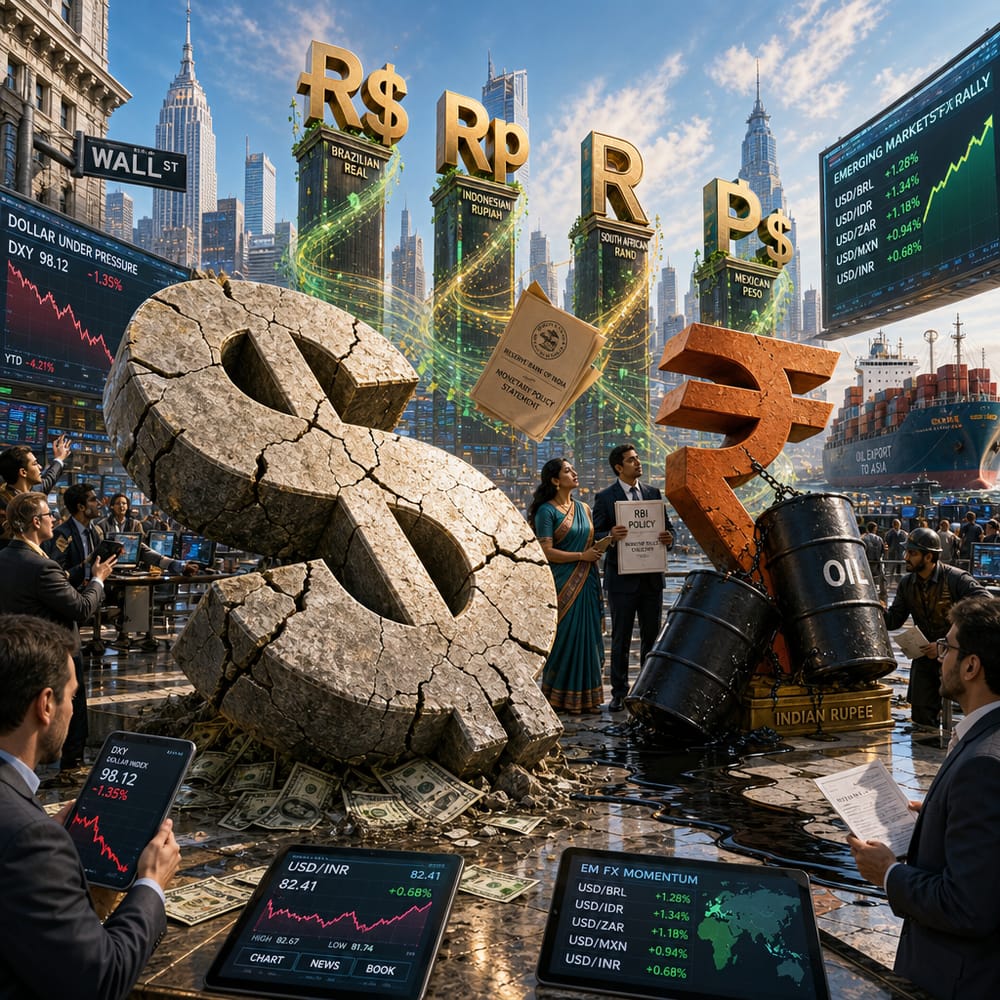
If you're keeping an eye on the forex market, you might have noticed something intriguing: The U.S. dollar is having a bit of a moment, and not the good kind. It's slipping and sliding, and emerging-market currencies are more than happy to dance in its shadow.
Think of the U.S. dollar as the heavyweight champ of global currencies. When it stumbles, everyone takes notice — and some start seizing opportunities. Emerging-market currencies, which often play the role of plucky underdogs, are experiencing a surge, buoyed by the dollar's sagging posture. But what’s causing this shift, and how might it shake out for investors like you?
EMERGING-MARKET CURRENCIES ON THE RISE
First, let's address the elephant in the room: What's going on with the dollar? In the grand wrestling match that is global economics, several factors are working against the greenback. Fed rate cuts, inflation jitters—it's a cocktail of uncertainty. As the dollar feels the heat, emerging-market currencies are kicking into gear.
When the dollar weakens, it often lowers the cost of dollar-denominated debt carried by emerging markets. Think of it as grabbing a credit card bill and seeing the minimum payment drop. For countries like Brazil, South Africa, and India, this can free up cash flow and reduce the pressure to hike interest rates defensively. So, as the dollar loses its oomph, these currencies are getting a little extra swagger.
Now, back to India and the rupee. Traditionally a perennial underdog in the currency world, the rupee faces twin threats: rising oil prices and changes in policy from the Reserve Bank of India (RBI). India imports most of its oil, so when prices rise, it feels like an unwanted tax that weakens the rupee. And with the RBI taking a cautious stance on interest rates, the rupee has found itself caught between a rock and a hard place.
THE OIL PRICE DANCE
Here’s where things get a little more complicated: oil. The black gold that fuels the world—and emerging markets’ growth—is flexing its muscles with higher prices. For India, a major oil importer, that's like putting rocks in their metaphorical backpack while trying to run a marathon. Rising oil costs not only pump up inflation but also exacerbate trade deficits by increasing the country’s import bill, putting more pressure on the rupee.
Oil prices are influenced by various geopolitical tensions, like those in the Middle East, and supply decisions by oil-producing nations. For instance, any shifts in the Strait of Hormuz, the narrow channel through which a significant portion of the world’s oil passes, can send ripple effects across the market. Add in Russia’s ongoing game of sanctioned cat-and-mouse with the rest of the world, and you’ve got a recipe for unpredictability that would make any central banker sweat.
WHAT COULD CENTRAL BANKS DO?
Central banks in the emerging world are not exactly strangers to high-wire acts. They're like jugglers tossed a chainsaw every time the dollar hiccups. So, what's next? Well, the toolbox includes interest rate adjustments, currency interventions, and other forms of monetary acrobatics. But each move comes with its own set of pros and cons.
If the RBI decides to raise interest rates to support the rupee, it can attract foreign investors looking for better returns. But that move could also slow down borrowing and investment, a classic "catch-22" situation. On the flip side, keeping rates steady might keep growth on track, but at the cost of a weaker rupee and heightened inflation.
For emerging markets, managing this balance is akin to tightrope walking without a safety net, especially when the global economic stage is as unpredictable as a Broadway play written on the fly.
THE TAKEAWAY FOR INVESTORS
If you're an investor scrolling through the latest financial headlines, here's the scoop: a weaker dollar could spell relative strength for emerging-market assets. But it’s not a one-size-fits-all situation. Each market comes with its own quirks and risks, so due diligence is your best friend.
The bottom line? Keep a close eye on the economic indicators, central bank policies, and geopolitical developments that influence currency markets. And as always, stay informed and nimble—because in the world of investments, timing and knowledge are everything.
This article is for informational purposes only and is not investment advice. Always do your own research or consult a licensed financial professional before making investment decisions.
© Copyright 2024. All Rights Reserved.
© Copyright 2024. All Rights Reserved.