

Dollar Weakness Amid Fed Pause Speculation
Saturday, August 22, 2026
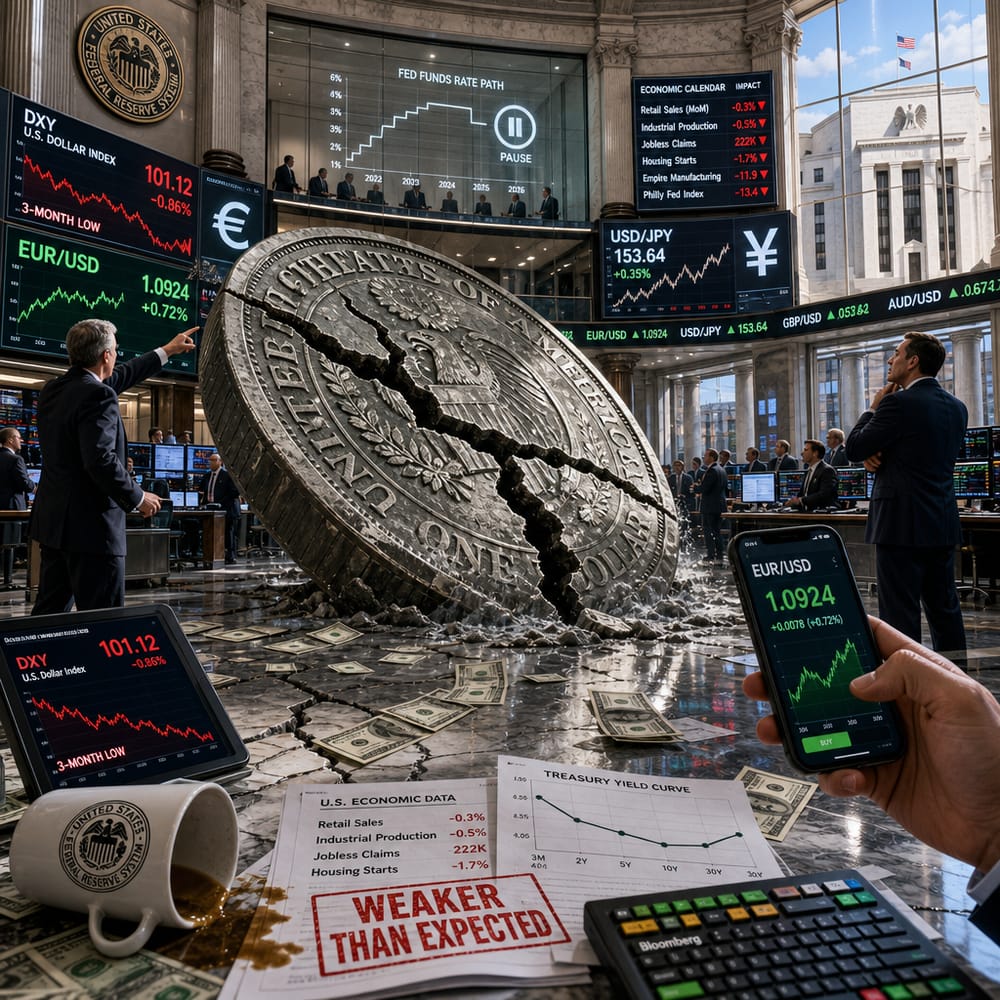
Dollars and Cents: What's Behind the Buck's Recent Slump
In the grand drama of global finance, the U.S. dollar has recently been playing an unexpected role: the underdog. Yes, you read that right. The almighty greenback has been suffering a bit of a bruised ego, sinking to a three-month low. And the reason? A medley of uninspiring economic data and whispers—growing louder by the day—that the Federal Reserve might just take a break from its relentless rate-hiking regimen.
WHY THE DOLLAR MATTERS
Now, you might be wondering, why should I care if the dollar decides to take a little nap? Well, the dollar's movements aren't just about tourist exchange rates or your Amazon shopping spree from Europe. The dollar is the linchpin of global finance. When it sneezes, other currencies catch a cold, economies start reaching for tissues, and capital flows around the world begin to rewrite their travel plans.
The recent dip in the dollar (tracked by the DXY Index, for all you finance whizzes) has the forex market buzzing. The EUR/USD and USD/JPY pairs are watching like hawks, ready to pounce on any opportunity that the dollar's weakness might present.
FEDERAL RESERVE: TO PAUSE OR NOT TO PAUSE?
The culprit behind this drama is the Federal Reserve, the U.S.'s monetary maestro. For months, the Fed's been on a rate-hiking spree, bumping up borrowing costs to keep inflation in check. But with recent economic data playing a somber tune, there's speculation the Fed might hit the pause button on rate hikes.
Enter the economic indicators: inflation figures that seem to be cooling off, an unemployment rate that's not as rosy as it once was, and GDP growth that's more tortoise than hare. These are the breadcrumbs hinting that maybe—just maybe—the Fed will decide to catch its breath.
CENTRAL BANKS: THE WORLD IS WATCHING
But hold on, the Fed isn't the only player at this party. Other central banks are eyeing the Fed's moves like a squirrel eyeing a bird feeder. If the Fed decides to hold still, other central banks might either match the rhythm or set their own beat. For instance, the European Central Bank and the Bank of Japan have their own setlists, and any deviation by the Fed could cause them to adjust theirs, causing ripples through global currency markets.
LONG-TERM IMPLICATIONS FOR THE DOLLAR
So, what happens if the Fed takes this much-speculated pause? Well, in the short term, the dollar might continue to lose a bit of its swagger. But what about the big picture?
A weaker dollar might make U.S. exports more attractive—think of all the American-made goods suddenly becoming irresistible to overseas buyers. However, for the import market, it means Americans might pay a little extra for foreign goods, from Italian leather boots to Japanese electronics. Not to mention, a persistently weaker dollar could nudge investors to look beyond U.S. shores for better returns, potentially reshaping the global investment landscape.
THE WRITING ON THE WALL
While it might seem like a lullaby compared to the firecracker days of rampant rate hikes, the Fed's potential pause is no snooze-fest. Currency traders, multinational corporations, and everyday investors are all tuning their antennas to catch every Fed hint and murmur. And as the dollar waltzes through this period of uncertainty, the global stage will continue to adjust its choreography.
So, keep your eyes peeled and your ears perked for the latest Fed news. Because in the world of finance, being even a step ahead can be the difference between a jackpot and a bust. It's a wild ride, and the stakes are high. But for those who play it smart, the rewards could be substantial. Welcome to the currency markets—grab some popcorn and enjoy the show.
This article is for informational purposes only and is not investment advice. Always do your own research or consult a licensed financial professional before making investment decisions.
© Copyright 2024. All Rights Reserved.
© Copyright 2024. All Rights Reserved.