

Dollar Weakens as DXY Breaches 99.5 After Soft U.S. Data
Friday, August 21, 2026
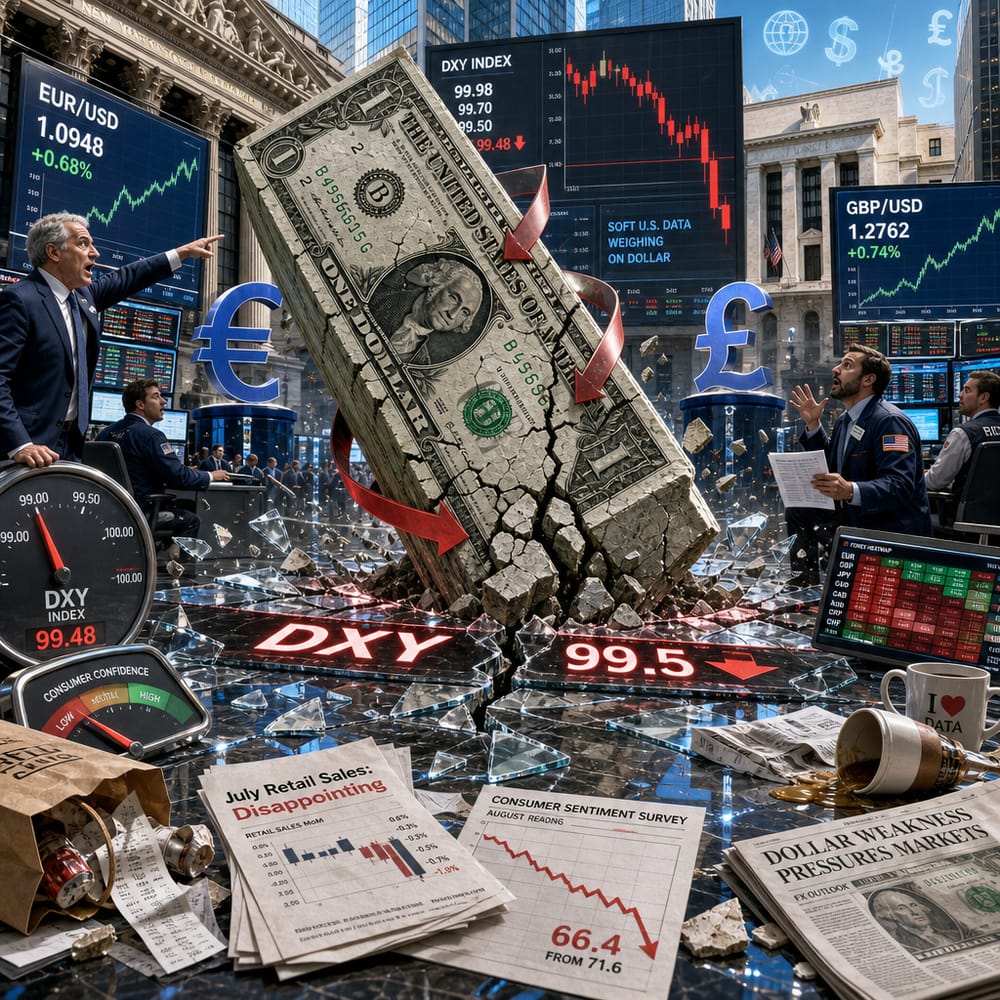
DOLLAR WEAKENS AS DXY BREACHES 99.5 AFTER SOFT U.S. DATA
If you're wondering what's the latest buzz in the land of currency markets, here's the lowdown: the U.S. dollar's been taking a bit of a nosedive. Picture this: the Dollar Index (DXY), the heavyweight champ tracking the greenback against a basket of other major currencies, just slipped below the 99.50 mark. For those keeping count, it opened the day flirting with the number 100.00, but decided to make a dramatic exit. Why all this drama, you ask? Well, it turns out, soft July retail sales and a tank in consumer sentiment have thrown a wrench into the works.
WHY IT MATTERS
So, why should you care? Besides the fact that currency swings can make the world of finance feel like an episode of your favorite reality show, there's a lot riding on the dollar's performance. Especially since it's reshaping expectations for those all-important Federal Reserve rate hikes. If you're scratching your head, here's the scoop: when the dollar weakens, it has a domino effect, impacting currency pairs globally, making the EUR/USD and GBP/USD dance to a different tune.
FED RATE EXPECTATIONS ON THE MOVE
Let’s break down the impact of this soft U.S. data on the Fed's decisions. Traditionally, a strong economy means the Fed might raise interest rates to keep inflation in check. But with retail sales and consumer sentiment taking a hit, it’s like the economic winds are whispering, “Hold your horses!” to the Fed. Investors are now busy recalculating their bets on future rate hikes. The puzzle here is whether the Fed will hit the brakes on hiking rates, possibly leaving rates steady for a while. This shifting narrative makes investors think twice and thrice about where their money should go.
THE DOLLAR'S GLOBAL RIPPLE EFFECT
Hold onto your hats, because the dollar's dive isn’t just a local issue. Currency pairs around the globe are reacting like caffeine-fueled dancers at a techno rave. The EUR/USD, for instance, has been inching up as traders speculate that the Eurozone might outpace the U.S. on the rate front. Similarly, GBP/USD is also making moves thanks to the pound catching its own tailwind from the dollar's dip.
But wait, there's more! A weaker dollar often means that U.S. goods are cheaper abroad, giving American exporters a boost. So, if you're in the business of shipping goods overseas, this might be your new favorite development. Conversely, if you're dreaming of that European vacation, keep an eye on how much those euros will cost you.
WHAT’S NEXT FOR THE GREENBACK?
With the dollar slipping and sliding, the million-dollar question is: where to next? Well, the world is watching the Fed like a hawk. Any sign of policy shifts could make the dollar reverse its course or continue its gentle decline.
Meanwhile, other currencies are basking in the spotlight, and foreign investors might find U.S. assets a bit cheaper and more attractive. It’s like the stock market equivalent of a flash sale, only with more charts and fewer shopping bags.
BOTTOM LINE
In this ever-spinning carousel of global finance, the currency market is proving yet again that it’s the ultimate shapeshifter. With the dollar index dipping below 99.50, all eyes are on the Fed and its next move. Retail investors, as always, should stay agile, keep their eyes peeled, and remember that in the world of finance, change is the only constant.
In the grand scheme of things, the dollar's escapades are a reminder that even the most steadfast elements of the financial world can take unexpected turns. So, whether you're a seasoned trader or a curious onlooker, one thing's for sure: the currency market is anything but predictable. Buckle up, because this ride's far from over.
This article is for informational purposes only and is not investment advice. Always do your own research or consult a licensed financial professional before making investment decisions.
© Copyright 2024. All Rights Reserved.
© Copyright 2024. All Rights Reserved.