

Dollar Weakens Amid U.S. Fiscal Worries
Monday, August 24, 2026
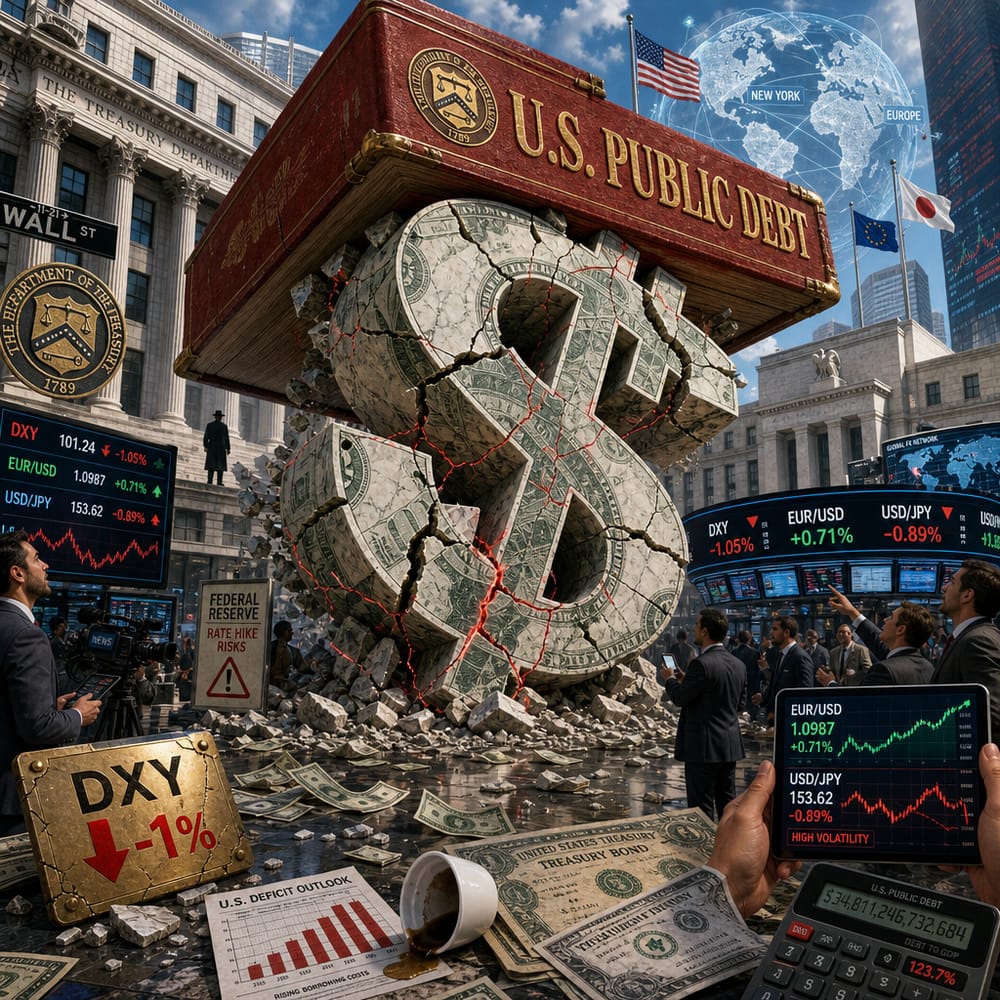
DOLLAR WEAKENS AMID U.S. FISCAL WORRIES
The mighty greenback, once the undisputed king of global currencies, is starting to look a little less regal these days. The U.S. Dollar Index, which measures the dollar against a basket of major currencies, slipped by nearly 1% in recent times, sending ripples across the global economy. While a 1% drop might seem like a minor hiccup, it’s got economists, investors, and anyone with a stake in the global trade game on edge.
Let’s talk turkey: why is the dollar sliding down the slippery slope? You can point a finger at the rising public debt and the potential for more Federal Reserve rate hikes. The U.S. government’s piggy bank is running low, and fiscal worries are casting a long shadow over the currency market. It’s like having an overdrawn bank account—except this time, the penalties are felt worldwide.
The implications of a weakened dollar aren’t just an economists’ puzzle; they’re a real-world conundrum. For starters, a softer dollar means higher costs for imports. That’s right, your favorite French cheese and Italian pasta are about to take a bigger bite out of your wallet. And it’s not just luxury goods—everything from electronics to cars could see price hikes, affecting everyday consumers.
Globally, the dollar’s dip affects trade balances and investment flows. Countries with stronger currencies now have an upper hand, making their exports cheaper and more attractive. Meanwhile, U.S. exports might struggle to compete, potentially widening the trade deficit. It’s a bit like a seesaw; when one side goes down, the other inevitably goes up.
Now, how do potential Fed rate hikes fit into this monetary jigsaw puzzle? The Federal Reserve, the overlord of interest rates, has hinted at future hikes. Higher interest rates typically attract foreign investments looking for a safe and profitable haven, which could bolster the dollar. But here’s the catch: if investors think the U.S. economy can’t handle such hikes, they might start looking for safer pastures elsewhere, causing the dollar to continue its descent.
This fiscal juggling act is further complicated by geopolitical tensions and domestic policies. Take, for instance, the recent trade squabble with Canada. With tariffs flying back and forth like a tennis match, the U.S.-Canada trade war isn’t doing the dollar any favors. And let’s not forget the global tit-for-tat that influences the USD’s standing in currency pairs like EUR/USD and USD/JPY.
Amid this financial kerfuffle, what’s an investor to do? For one, keeping an eye on the U.S. Dollar Index (DXY) is crucial. It’s like your financial weather vane, indicating which way the wind is blowing. Also, paying attention to the Fed’s moves and listening to the market’s whispers about rate hikes can provide valuable clues.
For businesses, especially those heavily reliant on imports or exports, currency hedging might become the name of the game. Protecting against potential losses from exchange rate fluctuations could be key to staying afloat in these turbulent waters.
Ultimately, the weakening dollar serves as a stark reminder of the interconnectedness of today’s global economy. When the dollar falters, the effects are felt from Tokyo to Toronto, impacting everything from multinational corporations to the price of your morning latte.
So, while the dollar’s current dip might not spell doom, it’s certainly a wake-up call. Whether you’re trading stocks, planning your next vacation, or just keeping an eye on the price of goods, the dollar’s trajectory is something to watch. It’s a classic case of fiscal dominoes—one move here can cause a topple there, and everyone’s left scrambling to pick up the pieces.
This article is for informational purposes only and is not investment advice. Always do your own research or consult a licensed financial professional before making investment decisions.
© Copyright 2024. All Rights Reserved.
© Copyright 2024. All Rights Reserved.