

Dollar Weakens After Treasury Boosts Long-Dated Bond Buybacks
Monday, August 24, 2026
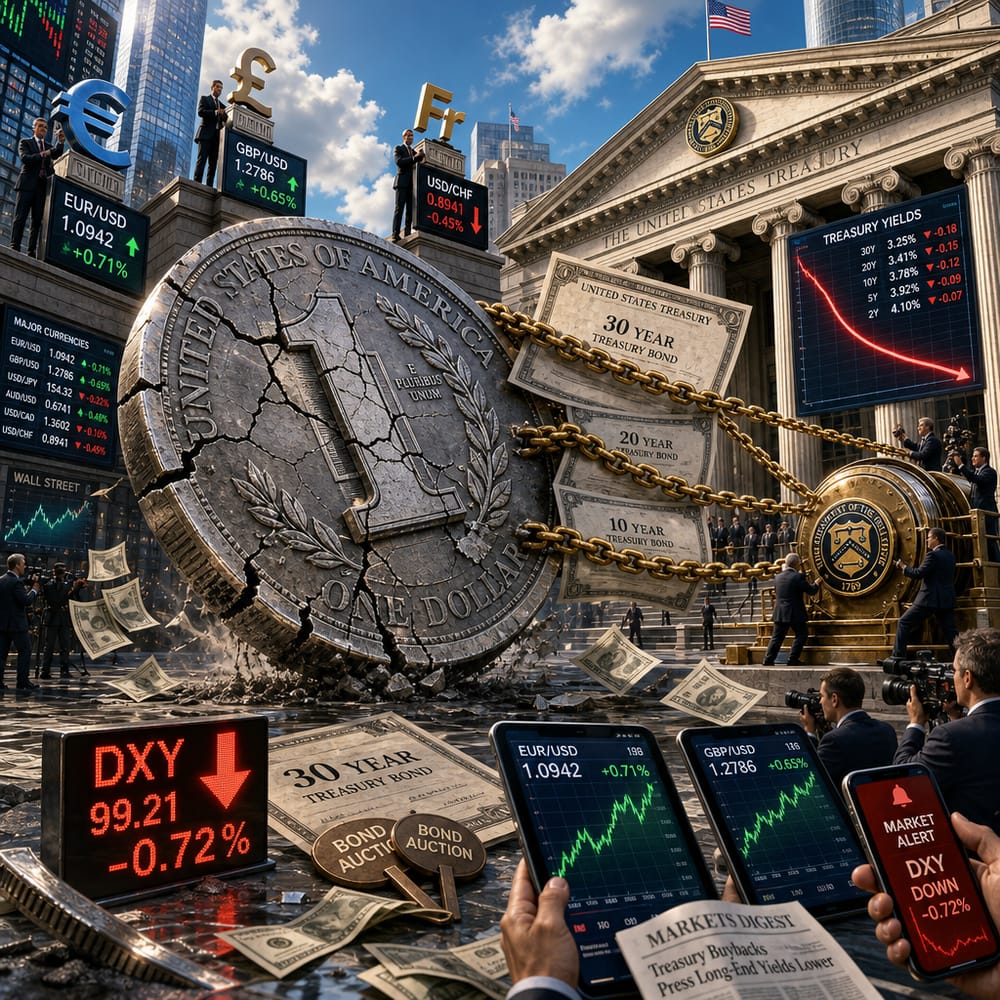
When the U.S. Treasury decides to throw a curveball, you better believe it reverberates across the globe. In a move that's put the market on edge, the Treasury has beefed up its buyback of long-dated bonds. And guess what? The almighty dollar suddenly looks a tad less mighty. So, why should you, dear reader scrolling through this while sipping your morning coffee, care? Because this could be the start of a fiscal policy shift that might just shake up your portfolio.
First, let's break down the basics. Long-dated bonds are like the long-haul truckers of the bond world—designed to go the distance, with maturities stretching to 30 years. When the Treasury buys these back, it effectively reduces the supply, often leading to lower yields (think of yields as the interest you earn when you loan the government your money). Lower yields generally mean lower returns, which can cause the U.S. dollar to stumble. It’s Economics 101: less attractive yields mean folks may start eyeing investments with juicier returns elsewhere.
Now, how do these buybacks affect currency valuations? Picture this: the U.S. dollar is a heavyweight champion in the international arena. When yields dip, the dollar can lose some of its flex, making it less appealing on the world stage. As a result, we’ve seen the dollar slipping against the euro, pound, and the Swiss franc, currencies that have been waiting for any chance to gain some ground.
So, what does this mean for the broader implications of the U.S. dollar's strength? For one, it might give the euro and British pound a bit of a confidence boost, helping them attract more investors. It could even make imported goods a bit pricier for American consumers—unfortunately, more expensive European cheese is a real possibility. But, it also means that U.S. exporters could find their goods cheaper overseas, potentially bolstering international sales.
But here’s the kicker: this shake-up isn't happening in a vacuum. Central banks around the world are watching closely, and this move could influence their next policy steps. For context, let’s hop across the pond to Europe. The European Central Bank (ECB) has been dealing with its own pressures to keep inflation under control. A weaker dollar might give the ECB some breathing room, nudging them towards less aggressive rate hikes in the near term.
Closer to home, the Federal Reserve might have to recalibrate. If the dollar weakens too much, it could complicate the Fed's already intricate dance of interest rate adjustments aimed at taming inflation without stalling economic growth. It's a balancing act worthy of Cirque du Soleil, but one slip, and we might all feel it.
But wait, there’s more! These Treasury buybacks signal something bigger—a potential shift in U.S. fiscal policy. No, this isn’t the government throwing a hail Mary in the bond market. This move suggests that the Treasury Department might be aligning its strategies to manage national debt more effectively or stimulate the economy. How this unfolds could set the tone for how the U.S. engages with global markets moving forward.
As retail investors, these dynamics might have you scratching your head, pondering whether to adjust your investment strategy. Should you pivot towards European stocks? Hedge with gold? Or perhaps sit tight and ride the wave? Here's a tip—keep a keen eye on central bank decisions and market reactions. They’re the tea leaves that could offer clues about what’s next for the dollar and, by extension, your portfolio.
So there you have it—a Treasury move that could shift the balance of financial power, with potential ripple effects on currencies and central bank strategies worldwide. The question is, how will you play your cards in this global game of strategy? Time to put on your thinking cap and stay alert, because in the world of finance, knowledge isn't just power—it's profit.
This article is for informational purposes only and is not investment advice. Always do your own research or consult a licensed financial professional before making investment decisions.
© Copyright 2024. All Rights Reserved.
© Copyright 2024. All Rights Reserved.