

Dollar Underperforms Against G10 Majors as Risk Appetite Improves
Wednesday, August 26, 2026
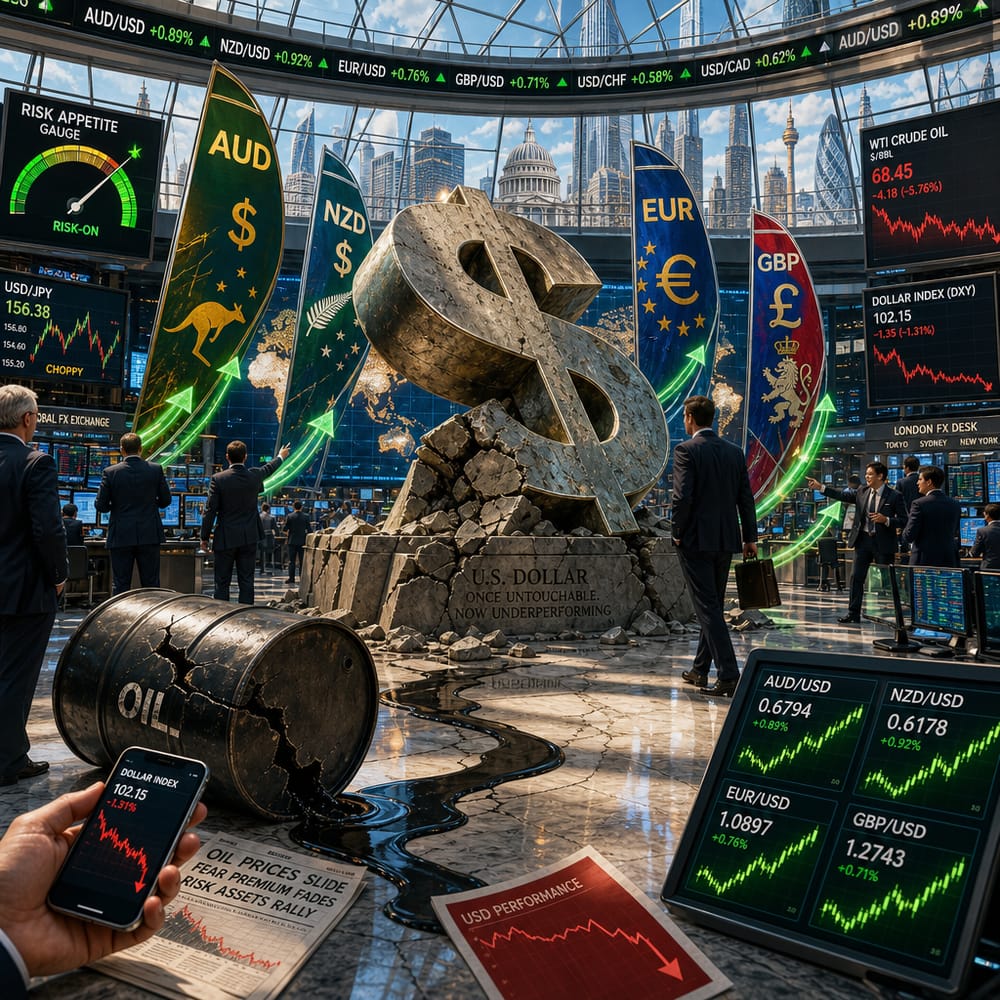
The U.S. dollar has been taking a scenic route downhill recently, underperforming against a bunch of currencies in the G10 club—think of it as the elite group of global currencies where everyone dresses in bespoke suits. The Aussie dollar (AUD), the New Zealand dollar (NZD), the euro (EUR), and the British pound (GBP) are all giving Uncle Sam’s greenback a run for its money. But why the sudden shift? Let’s dive into the rollercoaster that is the forex market and find out why this matters for traders and investors like you.
WHAT’S HAPPENING WITH THE DOLLAR?
First things first, why is the dollar being knocked down a few pegs? Well, it all starts with a story of oil and risk appetite. Recently, oil prices have been on a bit of a decline, much to the relief of anyone who cries a little inside every time they fill up their gas tank. When oil prices drop, it usually signals to investors that maybe, just maybe, things are cooling off a bit on the volatility front.
And when investors feel less like they're about to ride a market bull that's had too much caffeine, they get braver. They start looking at other investments beyond the ol’ reliable U.S. dollar. It's like wearing a seatbelt in a sports car—sometimes you crave the rush without the safety net. With geopolitical tensions simmering rather than boiling over, and some big brains predicting that inflation might finally start behaving itself, investors are warming up to assets they usually avoid when they're feeling skittish.
THE RISK APPETITE SHIFT
This newfound risk appetite is setting currency traders all a-twitter. Suddenly, those “exotic” investment options don’t seem quite so reckless, as traders ride the waves of the AUD, NZD, EUR, and GBP against the dollar. The kiwi and the Aussie bucks, in particular, often get a boost when investors feel more adventurous. Why? Because these currencies are tied to economies that are heavily reliant on commodities—when the global mood lifts, so do commodity prices, and voila, the currencies get a little shine.
Then there’s the euro and the pound, which are bolstered by the relative economic stability across the pond. The European Central Bank (ECB) and the Bank of England aren't exactly slamming on the brakes with interest rates, but they're staying cool, calm, and collected, which is earning them some brownie points with market players.
TAKING A CLOSER LOOK: USD/JPY & EUR/USD
Now, let’s zero in on a couple of interesting currency pairs. The USD/JPY is always a fun one—when the dollar dips, the yen typically has its moment in the sun, given its reputation as a safe-haven currency. But right now, with investors less jittery, the yen isn’t getting the usual flight-to-safety bump it might otherwise enjoy when the dollar wobbles.
Meanwhile, the EUR/USD pair has been enjoying its time atop the pyramid. The euro is loving this risk-on sentiment, and given the relatively upbeat vibes coming from the Eurozone, it’s been easier for traders to latch onto this pair.
WHAT DOES THIS MEAN FOR FOREX TRADERS?
Okay, so what’s the bottom line here for forex traders? The dollar's underperformance is a double-sided coin. On one hand, there’s an opportunity; on the other, risk. Traders with a nose for opportunity are already looking at the potential for gains by betting against the dollar, while others are hedging their bets on USD favorites for when it eventually rallies back.
But here's the kicker: this isn't just about currencies. It's about understanding the broader story—a narrative woven from oil prices, geopolitical shifts, and the ever-present ghost of inflation. Traders are now tasked with the complex dance of balancing risk and reward, as they ride the undulating waves of this shifting sentiment.
IN SUMMARY
The dollar may be having a rough patch, but that doesn't mean it's time to jump ship. Rather, this is a wake-up call for retail investors and traders to sharpen their pencils and keep their wits about them. As the market continues to twist and turn, there's still plenty of room to maneuver—and profit. With a finger on the pulse of oil prices, geopolitical headlines, and economic data, savvy traders can navigate these choppy waters, turning the dollar's momentary slip into a profitable opportunity.
In the fast-paced world of forex, only time will tell if the dollar's current slip is a mere stumble or the start of a new trend. But for those in the know, these are the moments that make headlines—and fortunes. So, eyes on the charts, folks; it’s going to be an interesting ride.
This article is for informational purposes only and is not investment advice. Always do your own research or consult a licensed financial professional before making investment decisions.
© Copyright 2024. All Rights Reserved.
© Copyright 2024. All Rights Reserved.