

Dollar Tree Upgraded—Consumer Staples in Focus
Sunday, August 23, 2026
DOLLAR TREE UPGRADED—CONSUMER STAPLES IN FOCUS
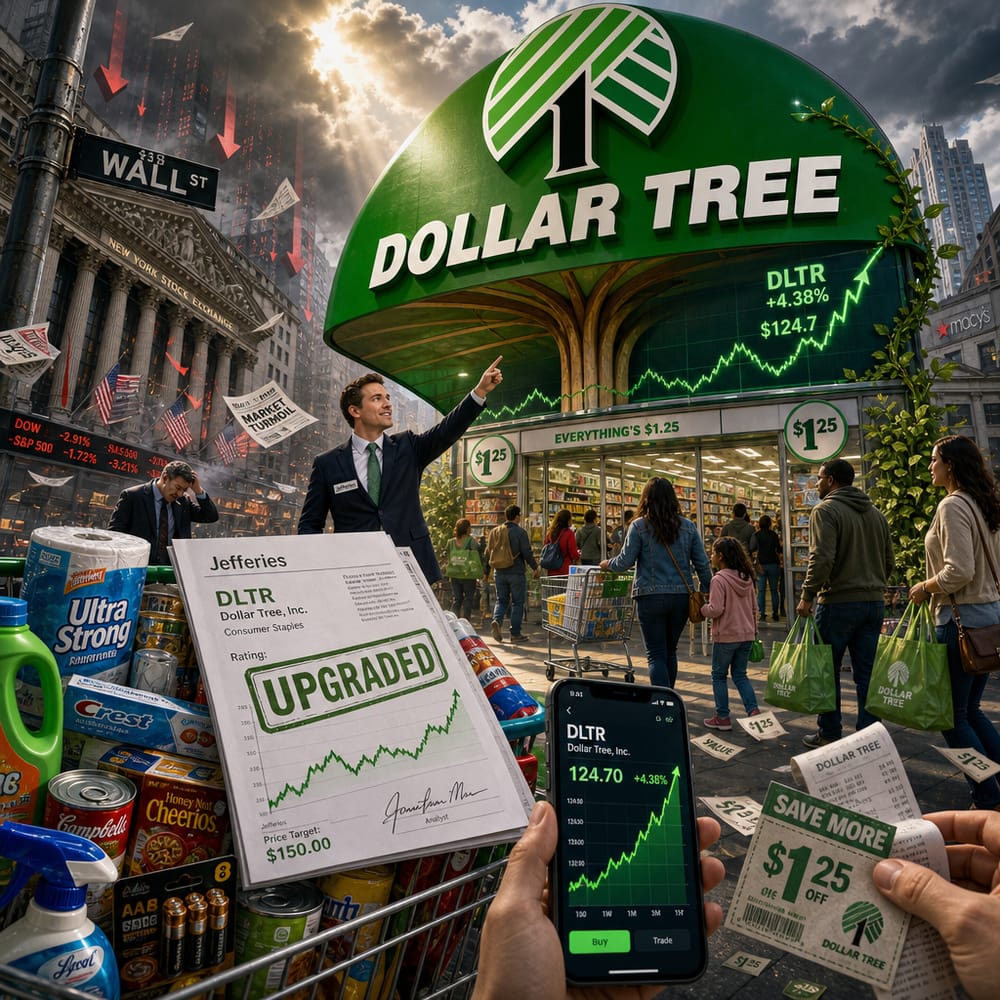
Do you smell that? It’s the scent of opportunity in the air, wafting from the aisles of Dollar Tree. And no, it’s not the fragrance from a $1.25 air freshener. Jefferies has just upgraded Dollar Tree, the discount retail titan known for making wallet-strapped folks feel like royalty with their bargain-basement prices. The news sends ripples through the consumer staples sector like a splash of value-priced cola on a sizzling summer day.
First, let’s talk shop. What’s behind this shiny new upgrade? Jefferies is betting big on a turnaround narrative for Dollar Tree, a retail heavyweight that's been staggering slightly under the weight of rising costs and economic turbulence. But, like a thrifty shopper armed with coupons, Dollar Tree might just have a strategic plan up its sleeve.
WHY THE UPGRADE?
Jefferies’ optimism isn’t pulled out of thin air. The analysts seem to like what they see in Dollar Tree’s efforts to spruce up its store layouts, introduce new products, and expand its snack and beverage lineup—because a little caffeine boost pairs well with bargain hunting. And then there’s Family Dollar, Dollar Tree's sibling that’s been getting a much-needed makeover and a fresh coat of operational efficiency. The hope is that this could be the secret sauce to driving traffic back to these stores.
Dollar Tree’s recent financials have painted a picture of resilience. While the retail sector has been as jittery as a squirrel in a dog park, Dollar Tree’s sales have shown signs of stability. And in a world where inflation seems as inevitable as the sun rising, discount retailers like Dollar Tree are inviting sanctuaries for consumers clutching their purses a little tighter.
PEER PRESSURE: DOLLAR TREE VS. THE REST
Now, is Dollar Tree the only kid on the consumer staples block with potential? Hardly. But compared to its peers, it’s holding its own. The discount retail sector is a mixed bag right now. Take Walmart, for instance—recently hit with its biggest one-day stock drop since 2022. It hints at a rough road ahead, even for those with deeper pockets.
Unlike some of its peers stumbling from markdown woes and supply chain hiccups, Dollar Tree seems to be dancing deftly between the raindrops. But make no mistake, it’s not all sunshine and discounts. The competition is fierce, and shoppers these days are as picky as ever. Still, Dollar Tree's colossal footprint and its dual-brand approach give it an edge that others might envy—or should we say, dollar envy?
THE BIGGER PICTURE: CONSUMER STAPLES TO THE RESCUE?
What does all this mean for the broader consumer staples sector? In times of market volatility, like the current financial rollercoaster with all its loop-the-loops, consumer staples are often where investors hide out, seeking shelter in the reassuring stability of everyday essentials. These stocks historically do a good job of keeping portfolios steady when the economy starts throwing tantrums.
But the stakes are high. Inflation, interest rate hikes, and unpredictable global events are like the wildcard factors in a card game, constantly reshuffling the deck. And while the spotlight shines on Dollar Tree, the consumer staples sector, from groceries to toiletries, is whispering promises of reliability to investors' ears.
So, is Jefferies’ upgrade a signal of overlooked treasure in the consumer staples aisle? Could be. As shoppers flock to these retailers in search of value-for-money, these companies can turn pennies into profits. And for investors, that sound you hear might just be the ka-ching of opportunity knocking.
In the end, if you’re peeking into the world of stocks amid the cacophony of today’s market, think of Dollar Tree and its peers as the sturdy canoes navigating through choppy waters. They’re not flashy yachts, sure, but in unpredictable seas, it’s nice to know there’s a place that’s steady, reliable, and—most importantly—open for business.
This article is for informational purposes only and is not investment advice. Always do your own research or consult a licensed financial professional before making investment decisions.
© Copyright 2024. All Rights Reserved.
© Copyright 2024. All Rights Reserved.