

Dollar Tree Upgraded by Two Firms; Bullish Risk/Reward
Monday, July 13, 2026
DOLLAR TREE DANCES WITH THE BULLS: IS THE PARTY JUSTIFIED?
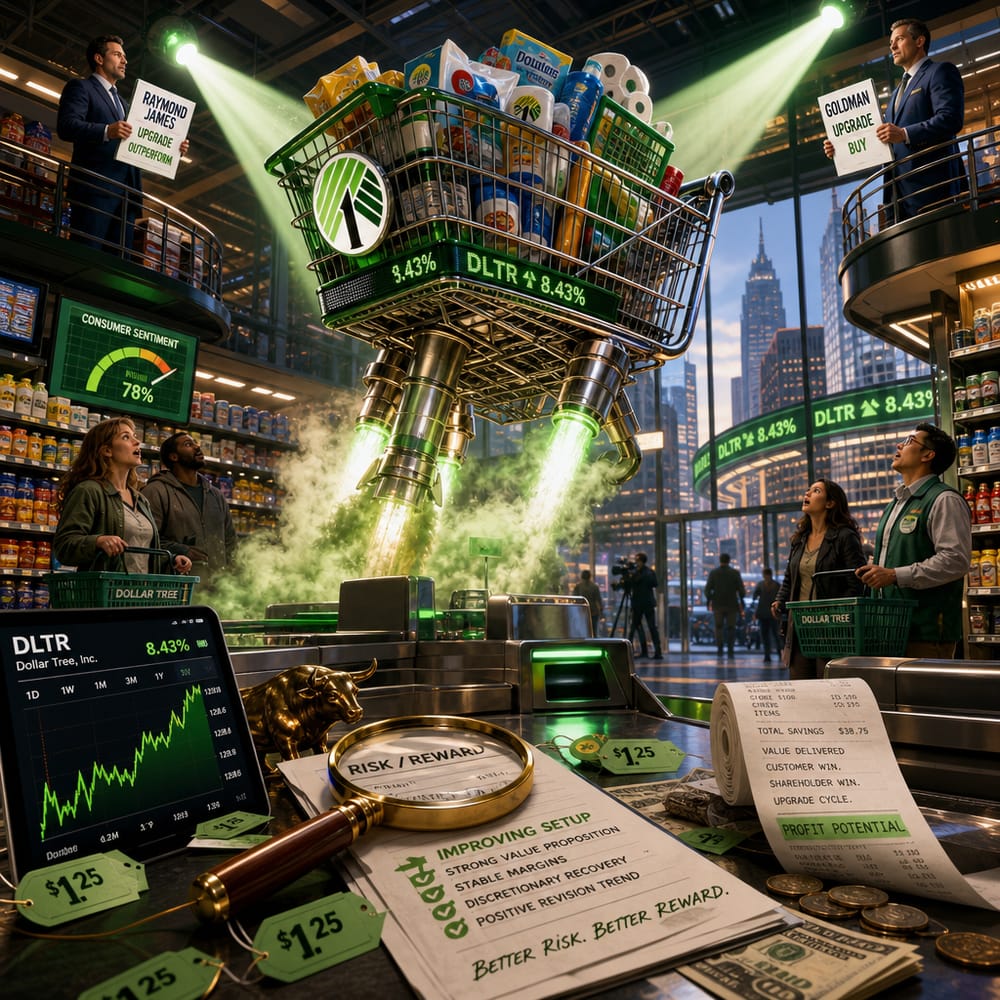
The trading floor just got a bit more theatrical, folks. Picture this: Dollar Tree waltzing into the spotlight of Wall Street, twirling gracefully as two big-league analysts cue up the celebratory music. With nods from Raymond James and Goldman Sachs, Dollar Tree isn't just on the dance floor; it's dominating.
But wait, before you dive headfirst into euphoria—or your stock trading app—let's pause for a second. Why these high-fives from analysts? Are they justified, or are we just caught up in a glittery whirlwind of Wall Street optimism?
RAYMOND JAMES AND GOLDMAN TAG TEAM
First, a little background music. Raymond James and Goldman Sachs don't just hand out upgrades like candy on Halloween. These firms have donned their thinking caps, crunched numbers, and apparently seen a happy ending for Dollar Tree. Goldman's analysts are whispering sweet nothings about Dollar Tree's potential in consumer discretionary—fancy talk for non-essential goods that people buy with their extra cash. Raymond James, on the other hand, sees a favorable risk/reward ratio, suggesting Dollar Tree has more upside than downside, which is market talk for, "Hey, this could pay off."
THE BIG QUESTION: WHY NOW?
So why is Dollar Tree getting this spotlight? Think of it as a shrewd play on the consumer sector tableau. Despite economic turbulence, people still love a bargain, which is why dollar stores have quietly thrived amidst inflation's bluster. Dollar Tree has been riding this wave, seducing budget-conscious shoppers who refuse to give up the thrill of a good deal.
The analysts seem to be betting that Dollar Tree's cost advantage—offering low prices when everyone else is hiking theirs—will keep cash registers ringing. And let's not forget the margin optimism. When your business model is built on making pennies count, every little efficiency tweak can boost profits—music to investors’ ears.
SECTOR-WIDE IMPLICATIONS
Now, what does this mean for the broader consumer sector? If Dollar Tree's rising star indicates broader consumer discretionary optimism, we might see similar sentiments trickling down—or up—to other retailers focusing on value. The cost-conscious consumer isn't going anywhere, and if Dollar Tree can thrive, so might its peers.
But here's the kicker: Don't expect every retailer to ride this wave. Those without Dollar Tree's strategic pricing charms might find it harder to keep customers happy in a pinch-penny environment.
IS THE UPGRADE JUSTIFIED?
Back to the million-dollar question—well, the Dollar Tree question, anyway. Is this upgrade justified? With consumer spending habits shifting and retail landscapes morphing faster than you can say "discount madness," it's not a clear-cut answer. The upgrades suggest a shot of confidence in Dollar Tree's strategy to cater to cost-cognizant shoppers.
Yet, market conditions remain fluid. Economic uncertainties could still throw a curveball at any retail play, big or small. So while the analysts are bullish, it's wise not to lose your head in the excitement. Keep your eyes peeled for quarterly earnings and consumer trend reports that might affirm—or challenge—these optimistic calls.
THE FINAL TWIRL
As Dollar Tree takes its victory lap on Wall Street, remember this: the retail sector is a dance of strategy, timing, and a little bit of luck. Whether you're joining the party or watching from the sidelines, keep your investment strategy as nimble as Dollar Tree's pricing. Because in the markets, as in life, the only constant is change—and maybe the enduring appeal of a good bargain.
This article is for informational purposes only and is not investment advice. Always do your own research or consult a licensed financial professional before making investment decisions.
© Copyright 2024. All Rights Reserved.
© Copyright 2024. All Rights Reserved.