

Dollar Strength Persists Amid Commodity Currency Weakness
Tuesday, November 10, 2026
DOLLAR STRENGTH PERSISTS AMID COMMODITY CURRENCY WEAKNESS
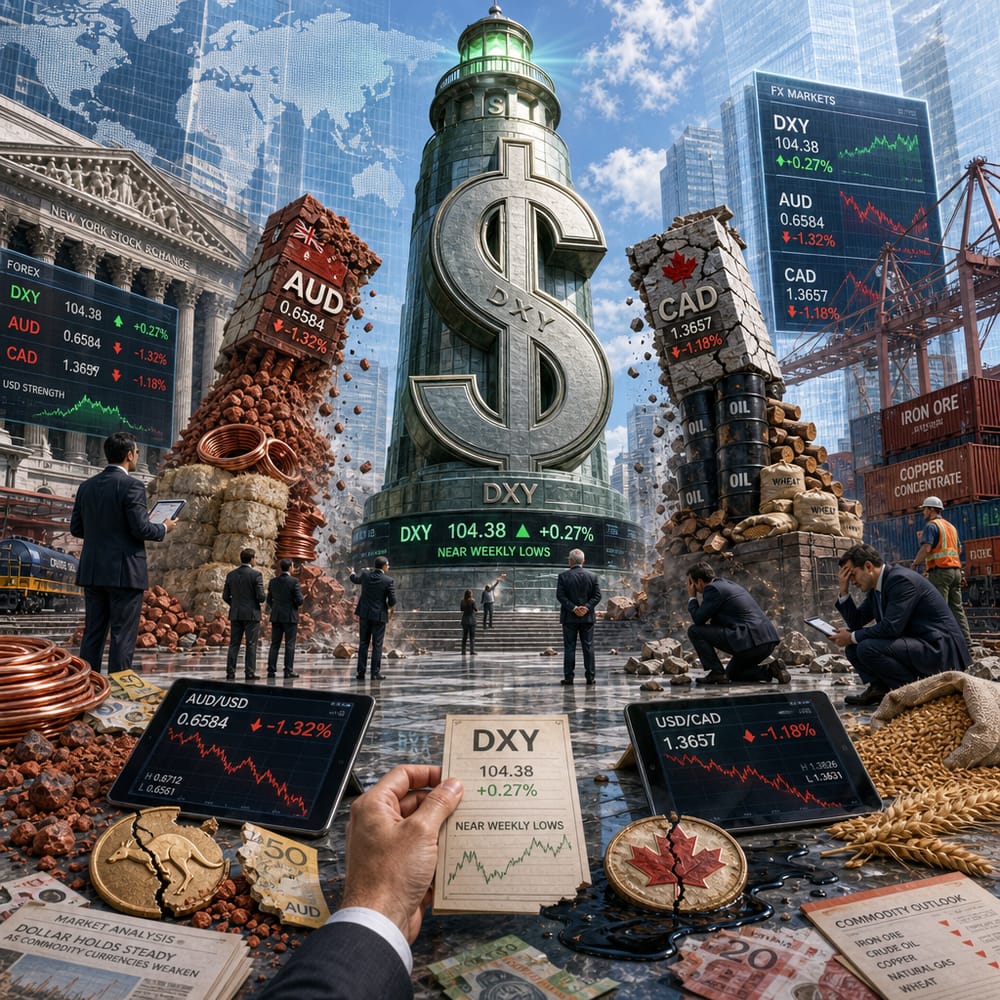
If you’ve been keeping your eye on the dollar, you might be wondering if it’s been chugging energy drinks behind the scenes. The U.S. Dollar Index (DXY) is flexing its muscles, hovering near weekly lows but showing signs of resilience, while commodity-linked currencies like the Australian dollar (AUD) and Canadian dollar (CAD) are getting the short end of the stick.
So why is the greenback refusing to back down when everyone else seems to be flailing? The answer might just be a spicy cocktail of economic factors, with a twist of safe-haven demand.
INFLATION AND INTEREST RATES: THE DOLLAR'S DAILY BREAD
One key player propping up the dollar is the trusty old Federal Reserve and its ever-watchful eye on inflation. The latest consumer price index reports indicate inflation isn’t ready to retreat just yet, which complicates the Fed’s mission of keeping things cool and collected. Higher inflation stats have prompted debates about potential rate hikes, giving the dollar a little extra weight to throw around in the global market.
When inflation starts making noise, the Fed might step in with interest rate hikes to quiet things down. And what do higher interest rates mean for the dollar? You guessed it: a stronger, more appealing currency. It’s like putting a fresh coat of paint on an old house—it just looks better and attracts more attention.
COMMODITY CURRENCIES: A ROUGH ROAD AHEAD
While the dollar is busy showing off, the Aussie and Loonie are feeling the pinch. Commodity-linked currencies like the AUD and CAD are closely tied to the fortunes of raw materials, and right now, their markets aren’t exactly throwing a party.
Brent crude, for example, dipped below $90 per barrel for the first time since August, as hopes for easing tensions with Iran made headlines. Lower oil prices might be great for your gas tank, but they’re no friend to the CAD, which thrives when Canada’s oil exports are raking in the dough.
Similarly, the AUD is taking a hit as global economic uncertainties dampen demand for Australian exports like iron ore and coal. When the world stops buying, the Aussie suffers, making the U.S. dollar look like the safe, reliable choice in a stormy sea.
SAFE HAVEN DEMAND: THE DOLLAR'S SHIELD
In times of uncertainty, investors tend to flock to safe-haven assets like moths to a flame. And right now, the dollar is looking like a pretty cozy haven. With geopolitical tensions and economic uncertainties on everyone’s minds, investors are seeking refuge in the dollar’s perceived stability and safety.
This shift towards safe-haven assets isn’t just about market volatility, though. It’s also about the narrative that the U.S. economy, while not without its challenges, is a more stable place to park money compared to regions grappling with higher risks and instability. It’s like choosing the sturdy, albeit plain, family sedan over the flashy sports car that’s increasingly prone to breaking down.
LOOKING AHEAD: WHAT'S IN STORE?
So, what does this mean for you, the savvy retail investor scrolling through your financial news on a lazy Sunday morning? Understanding these currency dynamics could be your secret weapon for making smart moves in the forex market. Whether it’s adjusting your investment portfolio or keeping an eye on global market trends, knowing why the dollar is holding its ground while others falter can help you make informed decisions.
As always, keep your gaze sharp and your ears tuned to economic indicators and central bank policies. While the dollar might be basking in the spotlight now, the dynamic nature of the forex market means that today’s hero can easily become tomorrow’s underdog.
In the meantime, don’t let the quiet persistence of the U.S. dollar lull you into complacency. It might just be the steady hand you need amid the market’s unpredictable dance moves.
This article is for informational purposes only and is not investment advice. Always do your own research or consult a licensed financial professional before making investment decisions.
© Copyright 2024. All Rights Reserved.
© Copyright 2024. All Rights Reserved.