

Dollar Sinks to Three-Month Low as Treasury Steps In
Friday, August 21, 2026
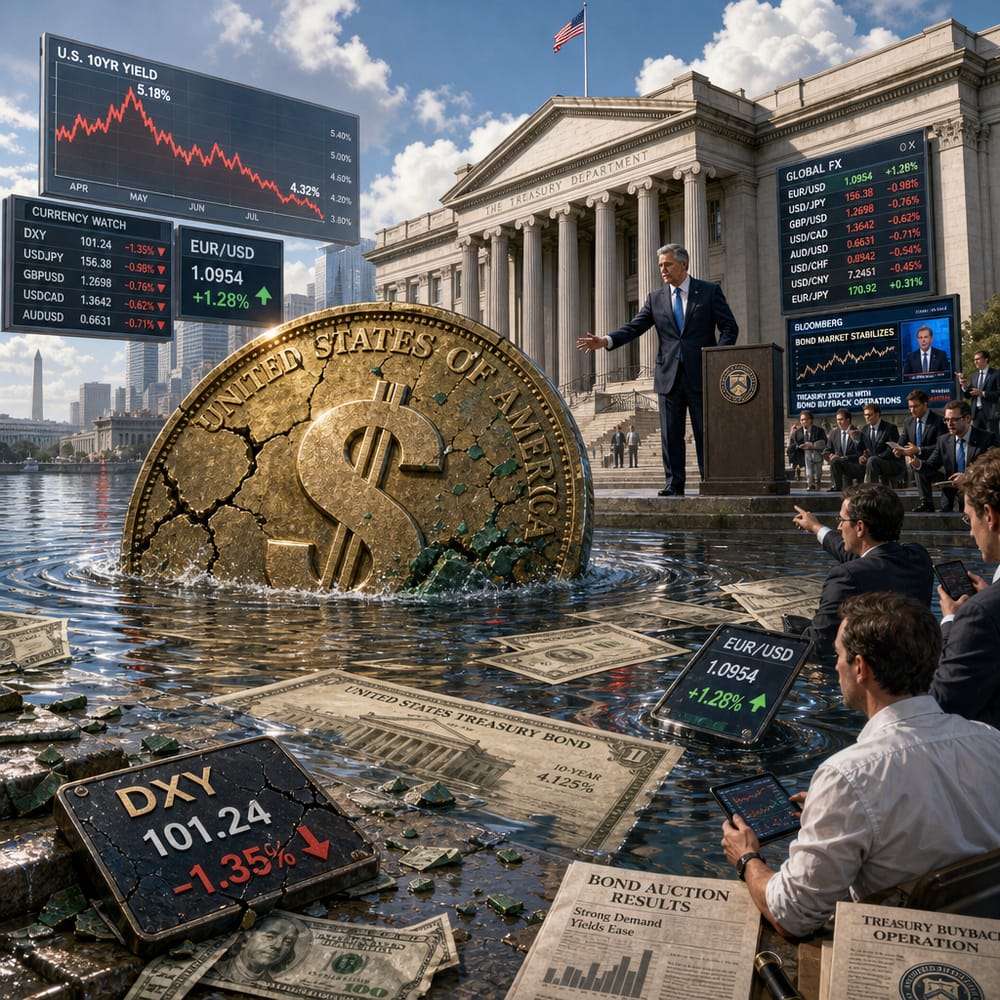
DOLLAR SINKS TO THREE-MONTH LOW AS TREASURY STEPS IN
Picture this: the U.S. dollar, the heavyweight champion of currency, just took a left hook. For the first time since mid-May, it finds itself staggering at a three-month low. If the dollar were a boxer, it’d be sitting in the corner, reeling, wondering what just hit it. Spoiler alert: it was the U.S. Treasury, pulling the strings behind the curtain to stabilize a rollercoaster bond market that's been giving investors a serious case of the jitters.
So what exactly did the Treasury do? They doubled down on buying back long-dated government debt—think of it as a White House-approved shopping spree for their own IOUs. This move was all about keeping those pesky long-term Treasury yields in check. Why does that matter? Well, if yields spike, borrowing money suddenly gets pricier, which sends the stock market into a tizzy like a teenager who's had their phone confiscated.
The Treasury’s intervention did what it was supposed to: it brought yields back down from their dizzying heights. But, the laws of financial physics are clear: an action always has a reaction. Lower yields mean investors are less inclined to hoard dollars, and voila, we see a dip in the greenback's value.
Now, let’s zoom out and see what this means for the rest of us mere mortals and the wider market kaleidoscope. A weaker dollar might sound like an America-first move, but it sets off a domino effect in the global economy. For starters, it makes U.S. exports cheaper and more competitive abroad. American goods become the hot new thing on the international market, like the iPhone of yesteryear—suddenly everyone wants a piece.
But the sword cuts both ways. Imports—those fancy cheeses and cars from Europe, electronics from Asia—start to lighten our wallets even more. When the dollar’s on a diet, everything overseas just became a bit more luxurious, and not in a good way for your budget.
And here’s where it gets spicy for the Federal Reserve, the body responsible for juggling the complex economic circus act of inflation and employment. A weaker dollar can mean higher inflation, as imports get pricier. The Treasury’s intervention might make the Fed rethink its future moves on interest rates. Hiking them could counteract inflation, but it might also cool an economy that policymakers would prefer stayed hot.
While the dollar takes a breather, investors are left to navigate the aftermath. If you're holding USD, you might be wondering whether to ride out the storm or look to currencies like the euro and yen for shelter. The EUR/USD exchange rate is already eyeing these developments with interest, and traders are plotting their next moves like chess players on Wall Street’s board.
The bond market’s recent drama ties into broader market narratives—like whether bitcoin’s recent rally can keep up its momentum or if the S&P 500 will snap back from its latest stumble. Investors are digesting the Treasury’s maneuvers amidst a backdrop of geopolitical fireworks and market uncertainties. It’s like a scene from a high-stakes poker game, with the Treasury holding a wild card that could change the entire play.
So what’s next? Financial markets are like weather patterns: unpredictable with a chance of rain or shine. The Treasury's latest moves could be just a pit stop on the road to more aggressive interventions. And the Fed? Well, they're watching closely, balancing the scales of inflation and interest as delicately as a tightrope walker. Investors and everyday folks alike are left waiting to see if the economy will keep its balance or if it’ll need a net to catch its fall.
In the end, this is capitalism’s grand stage—ironic, unpredictable, and constantly in flux. The dollar will rise and fall, treasures hoarded and spent, but as retail investors, we're here for the spectacle, analyzing each twist and turn, and maybe, just maybe, capitalizing on the chaos. Pull up a chair and stay tuned; the financial theater is just getting started.
This article is for informational purposes only and is not investment advice. Always do your own research or consult a licensed financial professional before making investment decisions.
© Copyright 2024. All Rights Reserved.
© Copyright 2024. All Rights Reserved.