

Dollar's Decline Linked to Soft Treasury Yields and Fed Signals
Wednesday, August 26, 2026
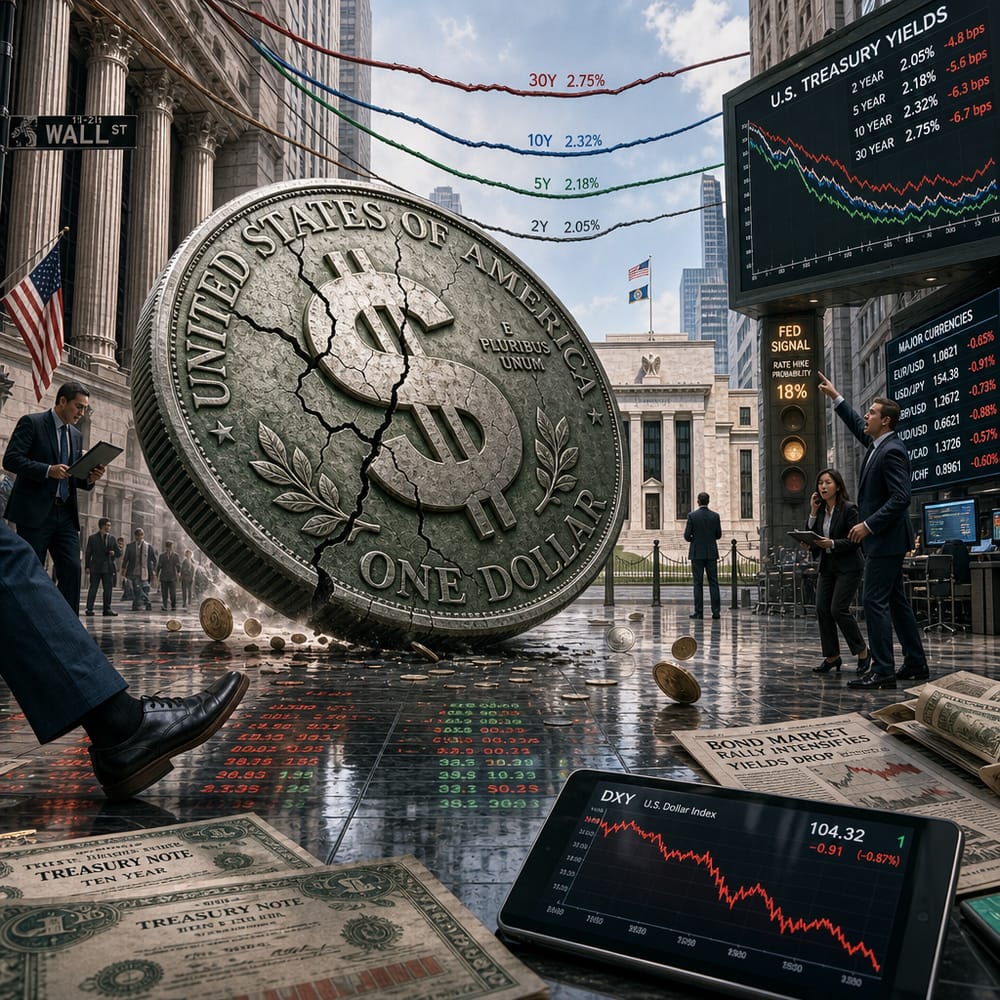
DOLLAR'S DECLINE LINKED TO SOFT TREASURY YIELDS AND FED SIGNALS
The U.S. dollar is feeling a bit under the weather, hanging out around its lowest levels in three months. What's the culprit? A one-two punch from sagging Treasury yields and the Federal Reserve's new "chill" persona on interest rate hikes. If you've ever been curious about the hidden forces driving those greenbacks in your pocket—or at least in your digital wallet—buckle up. This ride's got some twists.
WHO TURNED DOWN THE TREASURY YIELDS?
First off, let's chat about the backbone of the U.S. financial system: Treasury yields. These are basically IOUs from Uncle Sam, and they are looking a bit less attractive these days. Picture them lounging on a deck chair, sipping a piña colada, instead of sprinting down the track. Soft yields signal that investors aren't exactly throwing a rave for future economic growth—or at least, they’re comfortable with today's payouts.
But why should you care about these sleepy yields? Well, when the returns on U.S. government bonds take a nap, the dollar tends to do the same. Higher yields usually pull in foreign investors, eager for those sweet, sweet returns, buying up dollars to grab those bonds. But when yields snooze, that demand takes a hit, and the dollar's beach bod becomes a little less buff.
THE FED'S NEW VIBE: KEEPING IT COOL
Now, let's talk about the Federal Reserve, the institution that, at times, feels like a DJ at a party—everyone waits to see if they'll turn up the volume or mellow out the vibe. Recently, they've sent signals that they're not in a rush to crank up interest rates again. With inflation not throwing a tantrum, they've opted for a more zen approach.
Interest rate hikes are like energy drinks for currency; they tend to pump up the dollar's value. Investors love higher rates because they mean better returns on investments denominated in that currency. But with the Fed playing it cool, there's less of a rush to buy dollars, leaving the currency feeling a bit neglected at the party.
HOW DOES THIS AFFECT YOUR WALLET?
Alright, let's cut to the chase. What's the real-world impact for you, the everyday investor? If you're holding U.S. assets, the softer dollar can be a double-edged sword. On one hand, American companies that export goods might see some gains. When the dollar is less spry, U.S. products become cheaper for overseas buyers, potentially boosting sales abroad.
But—and there's always a "but"—for those investing in foreign assets or traveling overseas, your dollars won't stretch as far. That Parisian croissant might just cost you a tad more.
Moreover, if the portfolio includes international stocks, the currency conversion can eat into those returns. It's a bit like planning for a sunny picnic only to find out there's a 30% chance of rain. Always good to pack that umbrella, just in case.
THE BIGGER PICTURE
Global markets don't operate in isolation, and the dollar's dance can set off a ripple effect. A weaker dollar might give emerging markets a breather, as their debt often priced in dollars becomes more manageable. But it's a delicate balance—too much weakening, and market jitters could set in.
For the savvy investor, this is no time for panic. It's a reminder to stay nimble and diversified, keeping an eye on the horizon while making those tactical maneuvers. Diversifying across geographies and asset classes remains a solid game plan, especially when the currency rollercoaster speeds up.
In these unpredictable times, the dollar's swoon should be less of a shock and more of a gentle nudge. It's an opportunity to reassess strategies and perhaps even find some hidden gems among the chaos. Remember, every market twist is a chance to learn and adapt. Keep those eyes peeled and wallets ready for anything.
This article is for informational purposes only and is not investment advice. Always do your own research or consult a licensed financial professional before making investment decisions.
© Copyright 2024. All Rights Reserved.
© Copyright 2024. All Rights Reserved.