

Dollar Rotation: Five Currencies Lead as USD Weakens—Markets See No Clear Trend
Tuesday, August 25, 2026
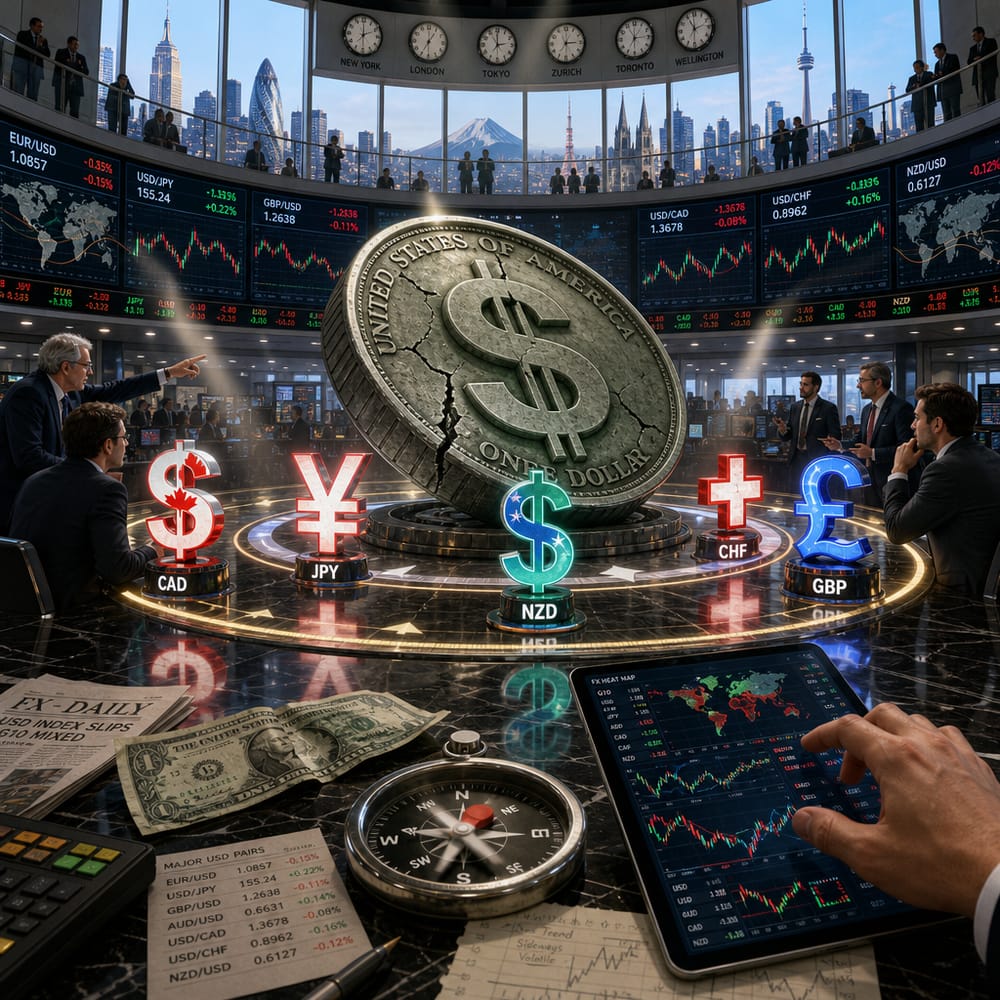
DOLLAR ROTATION: FIVE CURRENCIES LEAD AS USD WEAKENS—MARKETS SEE NO CLEAR TREND
Picture this: The once mighty U.S. dollar, the heavyweight champ of global currencies, is taking a breather on the ropes. And while the greenback collects its thoughts, five contenders from the G10 currency club are taking turns in the limelight, basking in their moment of glory against the reigning king. Welcome to the world of currency rotation, where the plot twists are worthy of a Netflix series, and savvy traders are rubbing their hands together in anticipation.
So, what's driving this currency merry-go-round? It's a cocktail of global uncertainties, economic numbers, and central bank maneuvers. Economic reports are coming in hot, with inflation figures and growth rates swinging like a pendulum. The U.S., with its upcoming inflation data and ongoing trade tiffs with Canada, has created a backdrop that's less than reassuring for dollar enthusiasts. Meanwhile, countries like Canada and Japan are throwing their hats into the ring with their own economic playbooks, providing fresh opportunities for currency traders.
But don't get too comfortable with this storyline just yet. The plot is thicker than a bowl of oatmeal, and it keeps thickening. Traders are watching every market tick, every policy word, looking for the next clue in this monetary whodunit. Recent shifts have seen the Canadian dollar and Japanese yen puffing out their chests, buoyed by policy shifts and economic resilience. The Swiss franc and British pound aren’t far behind, each finding reasons to strut their stuff against the struggling dollar.
So how does one capitalize on this currency tango? Enter the realm of Forex trading, a place where the quick and the clever can harness the nuanced ballet of currency dynamics. Traders are not just watching; they're acting, building strategies around these shifts. They're analyzing inflation trends, central bank hints, and geopolitical whispers. Think of it as a high-stakes poker game where the players are countries, each holding cards they'd rather not reveal too soon.
For the retail investor, understanding these rotations is like getting a peek behind the curtain. Currency pairs are the bread and butter for Forex aficionados, and these fluctuations offer a buffet of trading opportunities. Whether leveraging long or short positions (that’s betting on currencies going up or down, for the uninitiated), traders are pouncing on the volatility to churn out profits. But remember, just as in poker, it's wise to know when to hold 'em and when to fold 'em. Risks abound, especially with currency markets as capricious as they are now.
What does this mean for the future performance of the U.S. dollar? Well, imagine trying to predict the weather in a city with microclimates. It's complex. The Fed's policies, U.S. economic data, and international relations all tie into this intricate web. While the dollar is currently catching its breath, U.S. economic fundamentals still have a say in the game. Fed officials are whispering about debts and future reckonings, and these murmurs could spell future strategies for those with an ear to the ground.
In this dynamic environment, investors should keep an eye on inflation reports and central bank speeches like they’re the latest plot twist in a blockbuster series. The economic climate is as unstable as ever, and market participants would do well to stay nimble and informed. The dollar might be on the ropes now, but it's never out of the game; a heavyweight title fight always has more rounds.
The world of Forex is buzzing with excitement, and the recent currency rotation adds a layer of intrigue to the mix. Armed with the right strategy, traders have a front-row seat to one of the most engaging financial spectacles of the year. The greenback may be down, but this rollercoaster of monetary action is far from over. Welcome to the show—it’s just getting started.
This article is for informational purposes only and is not investment advice. Always do your own research or consult a licensed financial professional before making investment decisions.
© Copyright 2024. All Rights Reserved.
© Copyright 2024. All Rights Reserved.