

Dollar Retreat Signals Fade of Fed Aggression Ahead of Flash PMIs
Monday, November 23, 2026
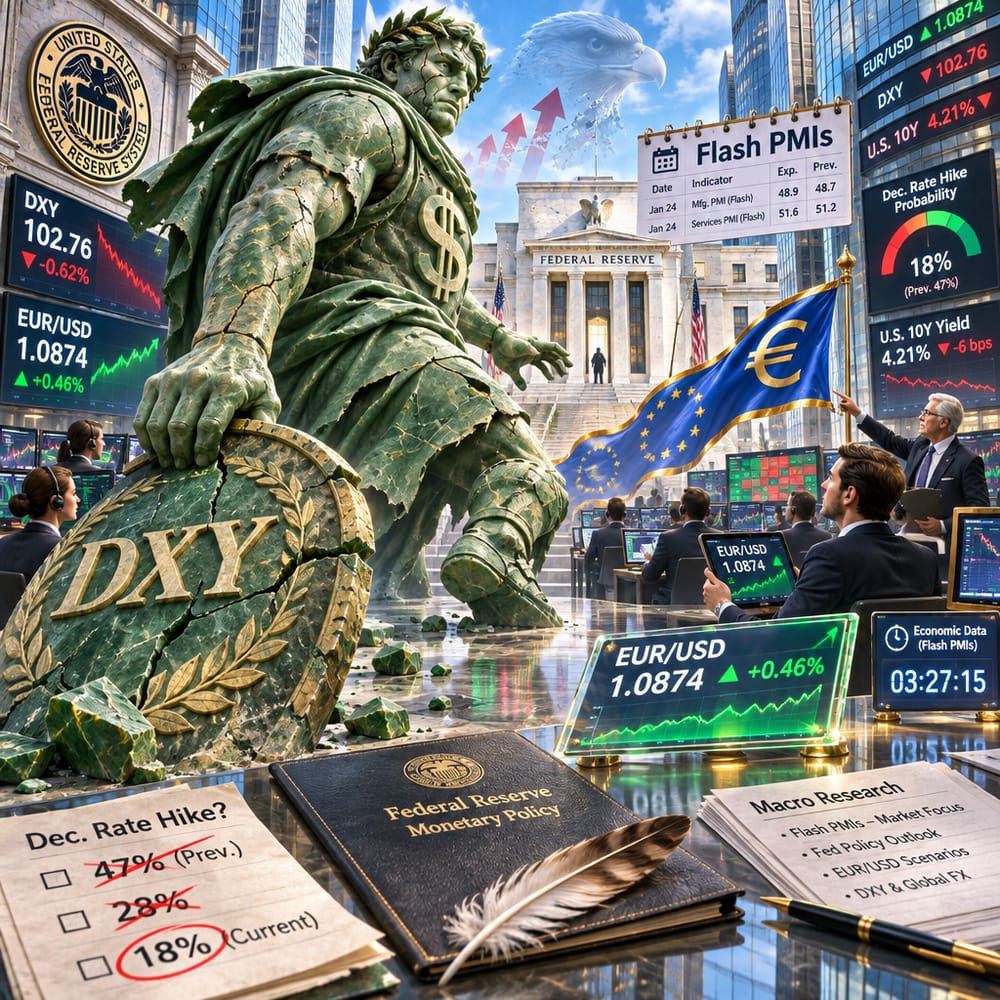
It’s been a wild ride for the U.S. dollar lately, and guess what? The thrill might not be over. The mighty greenback is wobbling, suggesting the Federal Reserve might be ready to ease off its aggressive interest rate hikes. So what’s the buzz about the dollar’s drop, and why should you care? Let's dive in.
First up, the basics. The U.S. dollar has been on a bit of a retreat. After an impressive rally fueled by the Fed’s relentless rate-hiking spree, the currency is now showing signs of softening. The reason? Traders are starting to think the Fed might not be as trigger-happy with rate hikes in December as previously thought. When markets expect fewer rate hikes, the dollar tends to lose some of its shine.
WHY DOES THAT MATTER?
A softer dollar can shake things up across the globe—think of it like a financial butterfly effect. For one, it could make U.S. goods more attractive overseas by lowering prices, potentially boosting exports. That’s good news for American manufacturers. On the flip side, it also means imports could get pricier, which might hit consumers where it hurts: their wallets.
But let’s talk about the euro. If you’re into currency pairs, particularly the EUR/USD, this is where the action’s at. As the dollar dials down its dominance, the euro has been stepping up. A stronger euro against a weaker dollar means things like European vacations could become more expensive for Americans, but it’s a boon for European exporters.
THE PMI FACTOR
Now, you might be asking, “What’s this about flash PMIs?” Good question. PMI stands for Purchasing Managers’ Index, a nifty bit of data that tells you how the manufacturing and service sectors are performing. Think of it as a health check for the economy. The upcoming flash PMI data are like a sneak preview of how well—or not so well—the economy is doing. Traders will be keeping a close eye on these numbers because they could sway the Fed’s next move.
A PMI reading above 50 suggests expansion, while below 50 signals contraction. If the numbers are strong, it could imply that the economy is humming along nicely, possibly giving the Fed a reason to stick to its guns with rate hikes. Conversely, weak PMI data might make the case for a more dovish Fed, adding further pressure on the dollar.
TRADERS’ PLAYGROUND
If you’re trading currencies, technical levels are like your secret map. For EUR/USD, many traders are eyeing the 1.10 and 1.12 levels. If the euro can break through these, we could see some serious momentum, potentially ushering in a new era of euro strength. But should the dollar mount a surprise comeback, the 1.08 level might act as a critical support level, where buyers could step in to prevent further euro declines.
WHAT’S NEXT?
With all eyes on the Fed, and PMI data poised to drop, we could be in for a whirlwind of market activity. If the Fed signals a softer stance or data shows economic cooling, the dollar might continue its downward journey. This scenario could heighten volatility in the forex market, offering both opportunities and risks for traders.
But remember, markets are unpredictable. While analysts and traders may have their eyes on expected trends, surprises can—and often do—happen. Stay informed, keep your strategy flexible, and watch those technical levels like a hawk.
So there you have it. As the dollar dances to the Fed’s tune, the potential for market drama is high. Keep an eye on the numbers, trust your instincts, and maybe, just maybe, you’ll come out on top of this currency caper.
This article is for informational purposes only and is not investment advice. Always do your own research or consult a licensed financial professional before making investment decisions.
© Copyright 2024. All Rights Reserved.
© Copyright 2024. All Rights Reserved.