

Dollar Rebounds on Iran Sanctions and Treasury Buybacks
Tuesday, August 25, 2026
DOLLAR REBOUNDS ON IRAN SANCTIONS AND TREASURY BUYBACKS
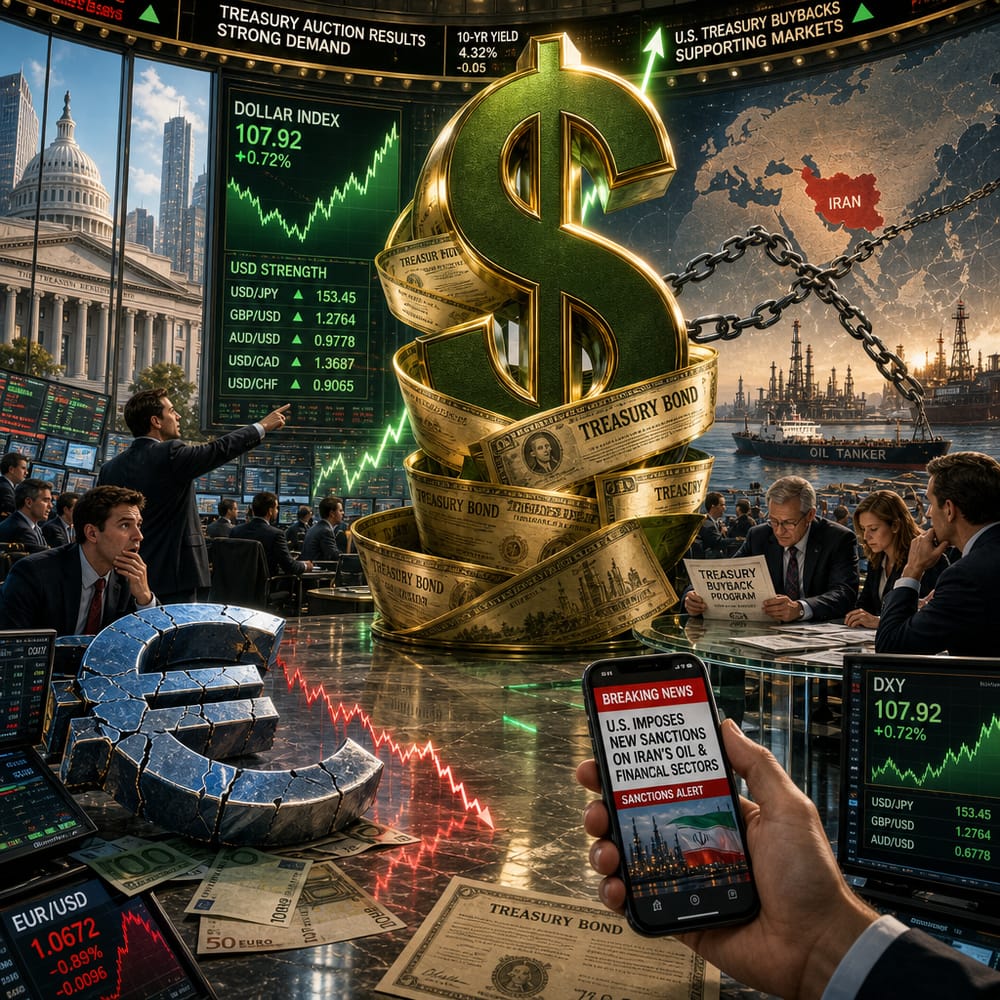
If the U.S. dollar were a person, right now it would be strutting down Wall Street with a swagger. Thanks to a one-two punch combo of fresh sanctions on Iran and an aggressive expansion of Treasury bond buybacks, the greenback is stepping back into the limelight, leaving the euro looking a little weak-kneed. So, why should you, scrolling through this article on your phone while sipping on your overpriced latte, care about the dollar's sudden resurgence? Because what happens to Uncle Sam's currency can ripple through global trade, hit your investments, and maybe even affect the price of that next margarita in Majorca.
First, let's talk sanctions. The U.S. slapped a new round of sanctions on Iran, which isn't just a bit of international saber-rattling; it’s a full-on currency power move. Sanctions are like kryptonite for a country's economy, especially when they restrict access to vital global markets. The more isolated a country like Iran becomes, the more it struggles economically, and let's face it, that turmoil can put the brakes on Iran's currency, making the dollar look like a safe haven by comparison. In the world of currency, safety and stability are as attractive as a limited-edition sneaker drop—everyone wants in.
Then there's the Treasury bond buybacks. If you're wondering what buybacks are, think of them as the U.S. playing a little financial Tetris. The government buys back its own bonds, which are essentially IOUs with interest, to manage debt sustainably. This not only helps keep borrowing costs low but also makes the dollar more desirable. Why? Because fewer available bonds can mean higher bond prices and lower yields, making the dollar more attractive to investors who are essentially saying, "Take my money, please." It's like when your favorite barista suddenly cuts back on that limited-edition cold brew—demand skyrockets.
Now, why is the euro getting knocked around in all this? Well, when the dollar shows off its bulging muscles on the global stage, other currencies like the euro often take a hit. Investors shift their cash into assets tied to the dollar, leading to a dip in demand for the euro. It's like musical chairs, but with money, and when the music stops, the euro finds itself scrambling for a seat.
Geopolitical tensions and fiscal policy are the Clarkson and Hammond of the financial world—dynamic, unpredictable, and capable of creating one heck of a rollercoaster ride for global markets. Each sanction or policy shift can change the game overnight, influencing everything from international trade deals to your favorite tech stock's performance. For retail investors, understanding these moves isn't just about being the smartest person at your next dinner party (though it helps); it's about strategizing your investments smarter.
So, what's the bottom line, the takeaway for you? Keep an eye on the dollar. It might just be the canary in the coal mine, signaling changes in the global economic landscape. Whether you're a savvy investor or just someone who hates surprise fluctuations in your travel budget, understanding why the dollar is on its latest upswing can give you a leg up.
In a world where economic alliances can shift as quickly as TikTok trends, being in the know is half the battle won. So, keep those notifications on and your investment app handy—2026 is turning out to be no snooze fest for the money markets.
This article is for informational purposes only and is not investment advice. Always do your own research or consult a licensed financial professional before making investment decisions.
© Copyright 2024. All Rights Reserved.
© Copyright 2024. All Rights Reserved.