

Dollar Range-Bound as Softer U.S. Data Favors Fed Hold
Saturday, August 22, 2026
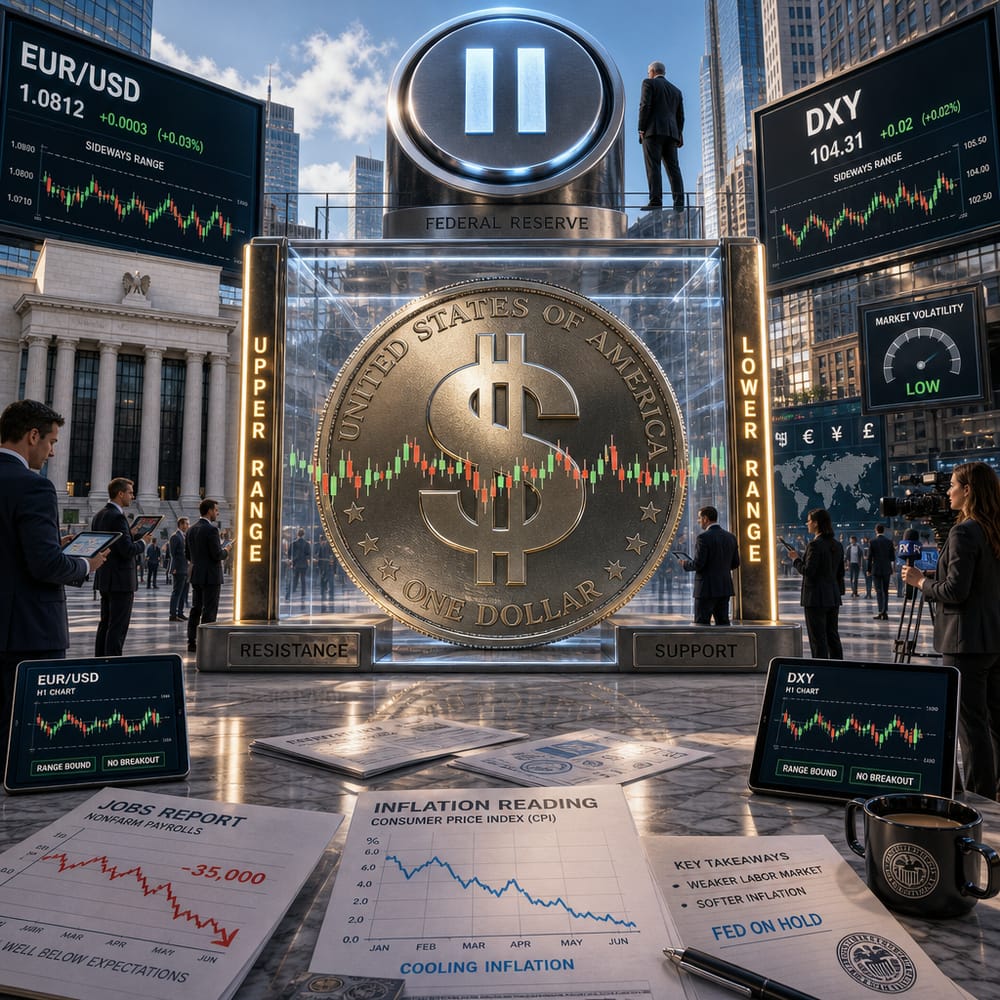
DOLLAR RANGE-BOUND AS SOFTER U.S. DATA FAVORS FED HOLD
In the world of finance, even a whisper can cause a ripple. Right now, the whispers are all about the U.S. dollar—stuck in a tight spot like a rabbit in a magician's hat, wondering if it’ll ever spring free. Recent data, softer than a marshmallow left out in the sun, has put the Federal Reserve in a predicament, and everyone's watching to see if they’ll pull a rabbit or a rock out of their policy hat.
So, what’s the deal with the dollar's current predicament? Well, two little devils—job losses and gentle inflation—are poking it with a pitchfork, lowering expectations that the Fed will raise interest rates anytime soon. The U.S. Dollar Index, a trusty measure of the dollar’s strength against a basket of major foreign currencies, is doing a fair impression of a seesaw at a standstill.
First, let's talk jobs. Recent reports indicate that the U.S. employment scene is looking a bit shaky, like a juggler with one too many balls. Job losses unexpectedly popped up, prompting investors to rethink their bets on the Fed’s next move. Normally, a healthy job market means the Fed could hike rates to keep inflation in check, but with job losses, they might be more inclined to hold their horses, fearing that a rate hike could further dampen the employment picture.
Then there's the inflation situation—so tepid, it’s making an iced latte look spicy. With inflation readings softer than expected, there's less pressure on the Fed to act aggressively. In the world of economics, if inflation isn’t heating up, the Fed can afford to take it easy on interest rates. The cooler inflation data lowers the likelihood of a rate hike, which, in turn, puts a cap on the dollar's strength.
Now, why should you care if the U.S. dollar is feeling as lively as a sloth in a hammock? For starters, a dovish Fed—that is, one that prefers lower interest rates—typically weakens the dollar. And when the dollar is weaker, it impacts everything from your vacation costs abroad to the price of imported goods at your local store. It also sways global trade dynamics, as other currencies adjust in response.
For instance, if you're eyeing the EUR/USD currency pair, a softer dollar could mean your euros get you more dollars. That's good news if you're planning a shopping spree in the States, but it can be a mixed bag for U.S. exporters, suddenly finding their goods more expensive abroad.
But a range-bound dollar isn't all bad. For U.S. businesses that earn in other currencies, a softer dollar means those foreign earnings translate into more greenbacks when they bring the money home. Companies like tech giants and consumer goods powerhouses could see a nice boost in their earnings reports, giving their stocks a little extra pep.
So, what's next for the Fed? They’re headed to Jackson Hole, Wyoming, for their annual symposium, where Chairman Kevin Marsh will take the stage. It's not just a chance for the Fed to enjoy some mountain air; it's a crucial event where they drop hints about future policy decisions. The world will be all ears, hanging on every word like it's the latest episode of a hit drama.
If the Fed signals they'll hold rates steady, expect more dollar doldrums. But if they surprise us with a hawkish tone—hinting at rate hikes—the dollar might just jump out of its range-bound rut. Investors in currency pairs, like EUR/USD, and assets tied to the U.S. dollar will be on high alert.
For now, the dollar's dance remains a cautious shuffle. As the Fed weighs its options, retail investors like you might want to keep an eye on global currency movements and the impact on multinational stocks. After all, in the financial world, today’s whispers often transform into tomorrow's headlines.
In the meantime, whether you’re trading forex or just planning your next European vacation, remember: When the Fed speaks, the world listens. Stay tuned, because when it comes to the dollar's next moves, the only certainty is uncertainty.
This article is for informational purposes only and is not investment advice. Always do your own research or consult a licensed financial professional before making investment decisions.
© Copyright 2024. All Rights Reserved.
© Copyright 2024. All Rights Reserved.