

Dollar Range-Bound as Fed Rate-Hike Bets Diminish
Monday, August 24, 2026
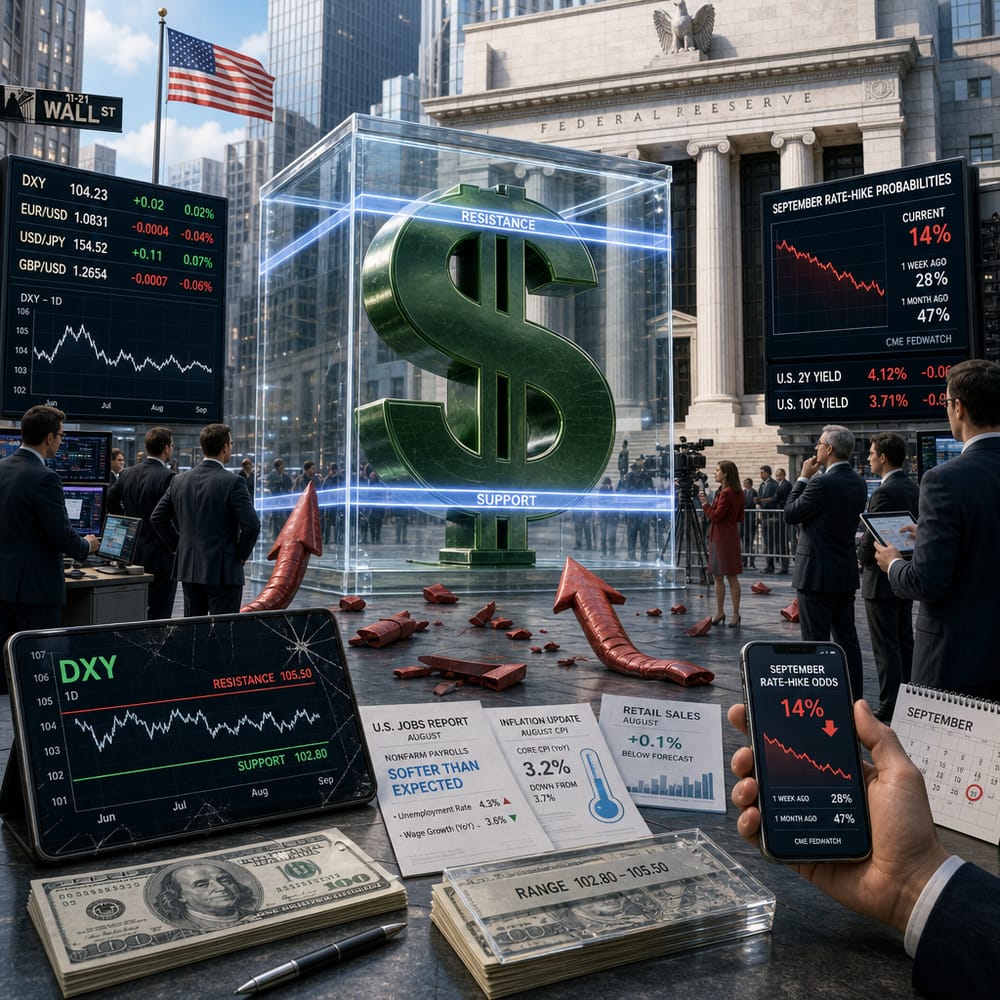
THE DOLLAR'S WILD RIDE: WHY A STUCK GREENBACK COULD CAUSE GLOBAL CURRENCY WHIPLASH
If you thought the dollar's been boring as of late, you're not alone. Like a kid stuck on a carousel, the dollar's been going round and round in a tight little range, not really going anywhere fast. But don’t let that fool you into thinking everything’s peachy in currency land. There’s more lurking beneath the surface than meets the eye.
Picture this: The Federal Reserve, the grand maestro conducting the economic orchestra, is waving its baton less frantically than we all anticipated. The pulse of economic momentum seemed like it was fading, with softer-than-expected data streaming out of the U.S. economy. Consumer prices not soaring like SpaceX rockets. Employment numbers not as dazzling. In other words, the economy seems to be wearing its comfy slippers, taking it easy, and the Fed is taking note. The odds of them cranking up interest rates in September look slimmer by the day.
And why does this matter? Because when the Fed chills out on those rate hikes, the dollar tends to lose its edge. It’s like when your favorite band decides to play a slow ballad instead of their usual head-banging anthem. The excitement fizzles. With the dollar stuck in a range, the currency market is left teetering on the edge of uncertainty.
SO, WHAT’S IN THE FED'S PLAYBOOK?
The Fed's decision-making process isn’t just about flipping a coin. They’re scrutinizing everything from inflation rates to job growth. Recently, signs have been pointing to an economy that's growing but not sprinting, a bit like a tortoise who's happy to take it slow and steady. Inflation's been cooling its jets, and the job market, though robust, isn't overheating like it was post-pandemic. All of these signs compel the Fed to hold its horses on interest rate hikes, lest they spook the gentle economic balance.
But here’s the kicker: This isn’t just about the U.S. What Uncle Sam does with his interest rates sends ripples across the globe. A stagnant dollar doesn't just bore investors — it affects currencies from the yen to the euro. Other central banks, like the European Central Bank and the Bank of Japan, are watching with bated breath, ready to make their moves. A dollar stuck in neutral could prompt them to adjust their own gears to keep their economies humming.
THE DRAMA OF A STABLE DOLLAR
Other currencies might start to steal the show if the dollar remains in neutral. Emerging market currencies, in particular, are like that quirky underdog athlete you never saw coming. Countries like Brazil and Mexico, offering higher yields, are catching investors' eyes as they crave returns that the greenback's just not delivering right now.
And let's not forget about the euro. While the ECB is juggling its own inflation woes, a steady dollar could make the euro look shinier by comparison, enticing investors to make the switch. The same goes for the yen, although Japan’s economic demons — deflation and a multitude of woes — are a different beast altogether.
THE RISKY BUSINESS OF A STAGNANT GREENBACK
There’s more than just a dull market at stake here. A prolonged range-bound dollar means investors are left in a lurch, unsure of where to park their cash. This uncertainty can inflate financial bubbles overseas, as investors look for greener pastures. Emerging markets might see inflows reminiscent of a tidal wave, but the calm before a storm shouldn’t lull anyone into a false sense of security. If the dollar decides to shake off its shackles, these investments could face a rude awakening.
Moreover, a stale dollar can stir up political tensions. With the U.S. under the spotlight for its economic maneuvers, other nations could throw shade or even retaliate through trade tariffs or other economic measures. So, while a tame dollar might seem peaceful, it’s a fragile peace that could shatter with a single headline or policy shift.
In conclusion, the current dollar doldrums might not have all the pizzazz of a fireworks display, but don’t be fooled. The global currency markets are a complex dance, and the dollar is a key partner. As long as the Fed keeps its cool, the world will be watching, waiting, and maybe even holding its breath. The greenback might be stuck for now, but in the financial markets, things can change in the blink of an eye. So, keep your eyes peeled – the dollar’s next move could be just around the corner.
This article is for informational purposes only and is not investment advice. Always do your own research or consult a licensed financial professional before making investment decisions.
© Copyright 2024. All Rights Reserved.
© Copyright 2024. All Rights Reserved.