

Dollar Range-Bound as Fed Holds Steady, Markets Eye BOJ Decisions
Saturday, August 22, 2026
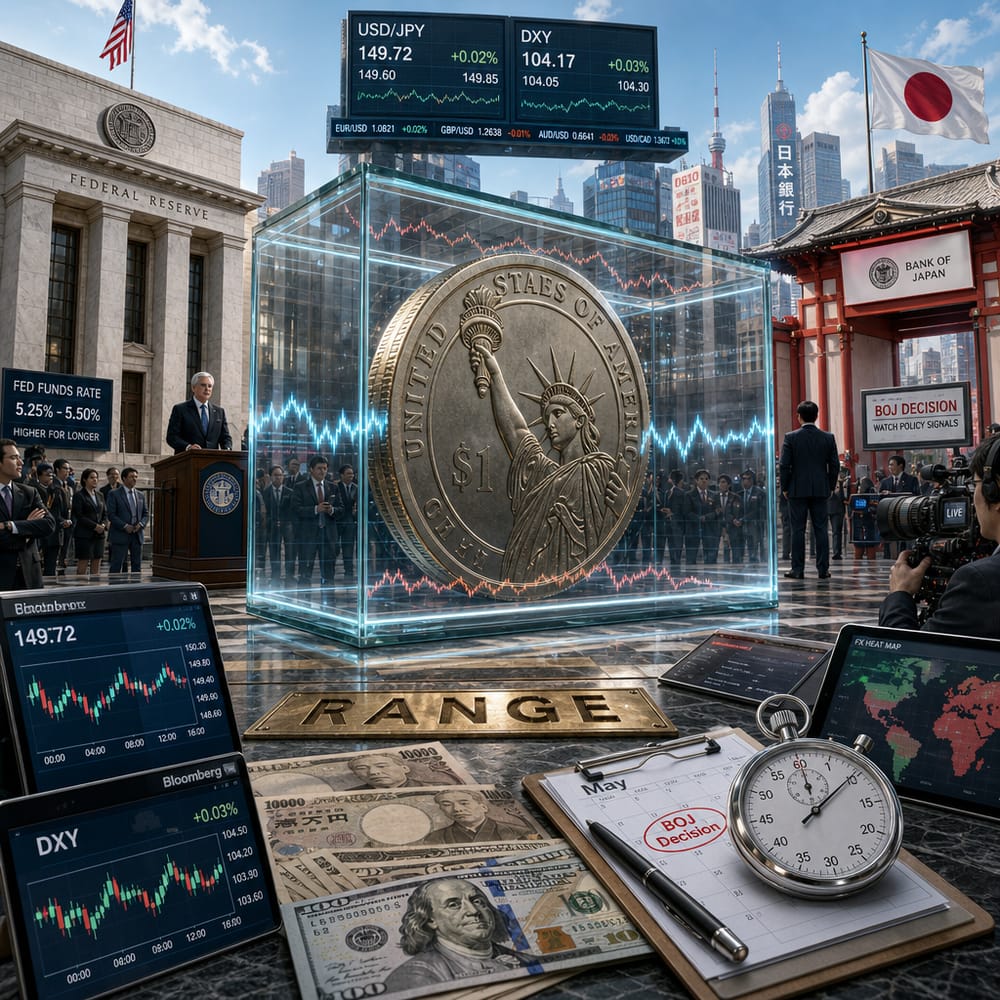
Dollar Range-Bound as Fed Holds Steady, Markets Eye BOJ Decisions
The U.S. dollar is like a cat stuck in a box right now—going nowhere fast, but still managing to be the center of attention. With a tightly range-bound movement, the dollar seems to be playing a game of "wait and see," perched on the edges of global central bank policy shifts, geopolitical tensions, and inflation risks that make your head spin faster than a lazy Susan.
So, what's pinning the dollar down like a butterfly in a collector's display? Well, the Federal Reserve, in its infinite wisdom, has opted for caution. While the market whispers sweet nothings of dovish expectations, the Fed has pressed pause on major rate hikes, preferring a wait-and-see approach. It's like being at a dance and refusing to pick a partner—everyone's awkwardly shuffling in place. The Fed's stance ties their hands, and by extension, the dollar's feet, keeping it locked in a nifty little range.
Meanwhile, across the Pacific, the Bank of Japan (BOJ) is planning its next move like a chess grandmaster considering its options. This isn't just about yen and yang—Japan's central bank has been dropping hints about possible policy tweaks. The markets are salivating, wondering if the BOJ is gearing up to intervene in the land of the rising sun’s currency.
Now, why should you care about this currency circus? Because these central bank policies are the puppet masters of currency stability and market volatility. The dollar-yen pair (USD/JPY) is center stage here. If the BOJ decides to tweak its ultra-loose monetary policy, we might see the yen tightening its belt, potentially sending the dollar on a rollercoaster ride.
The USD/JPY has been the thermometer in the mouth of the global economy—if the BOJ raises rates or reels in their bond-buying, yen could strengthen against the dollar. That might send shockwaves through not just currency values but also the stock market and commodities. Essentially, every financial domino you can think of could be teetering on the edge.
But wait, there’s more. Global inflation risks are playing hide and seek with investors' nerves. Picture this: geopolitical tensions, like the U.S. sanctions on Iran and the rekindled U.S.-Canada trade spat, are swirling around like a tempest. If the market gets wind of spiraling inflation due to oil supply disruptions or tariff-induced price hikes, the dollar could find itself under added pressure.
And let's not forget the U.S. debt, which recently hit a jaw-dropping $40 trillion. For the uninitiated, that's a lot of zeros—and a hefty weight on Uncle Sam's shoulders. This debt load can influence the dollar's appeal, as foreign investors might think twice about scooping up greenbacks if they foresee a debt-driven economic storm brewing.
So where does this leave us? The dollar's range-bound dance reflects a market waiting for cues. With the Fed and BOJ locked in a monetary staring contest, and inflation risks brewing like your third cup of morning coffee, investors are left pondering their next move.
Should you be eyeing the USD/JPY for your next forex trade? Maybe. The dynamic duo of the Fed's cautious stance and potential BOJ changes keeps this currency pair on the edge. And as any savvy investor knows, it's not always about big moves, but about being prepared for when they happen.
So keep your eyes peeled and your strategies agile. After all, in this world of financial intrigue, the only constant is change—and sometimes, a range-bound dollar is just the calm before the storm.
This article is for informational purposes only and is not investment advice. Always do your own research or consult a licensed financial professional before making investment decisions.
© Copyright 2024. All Rights Reserved.
© Copyright 2024. All Rights Reserved.