

Dollar Nears Multi‑Month Lows on U.S. Treasury Debt Buyback Concerns
Sunday, August 30, 2026
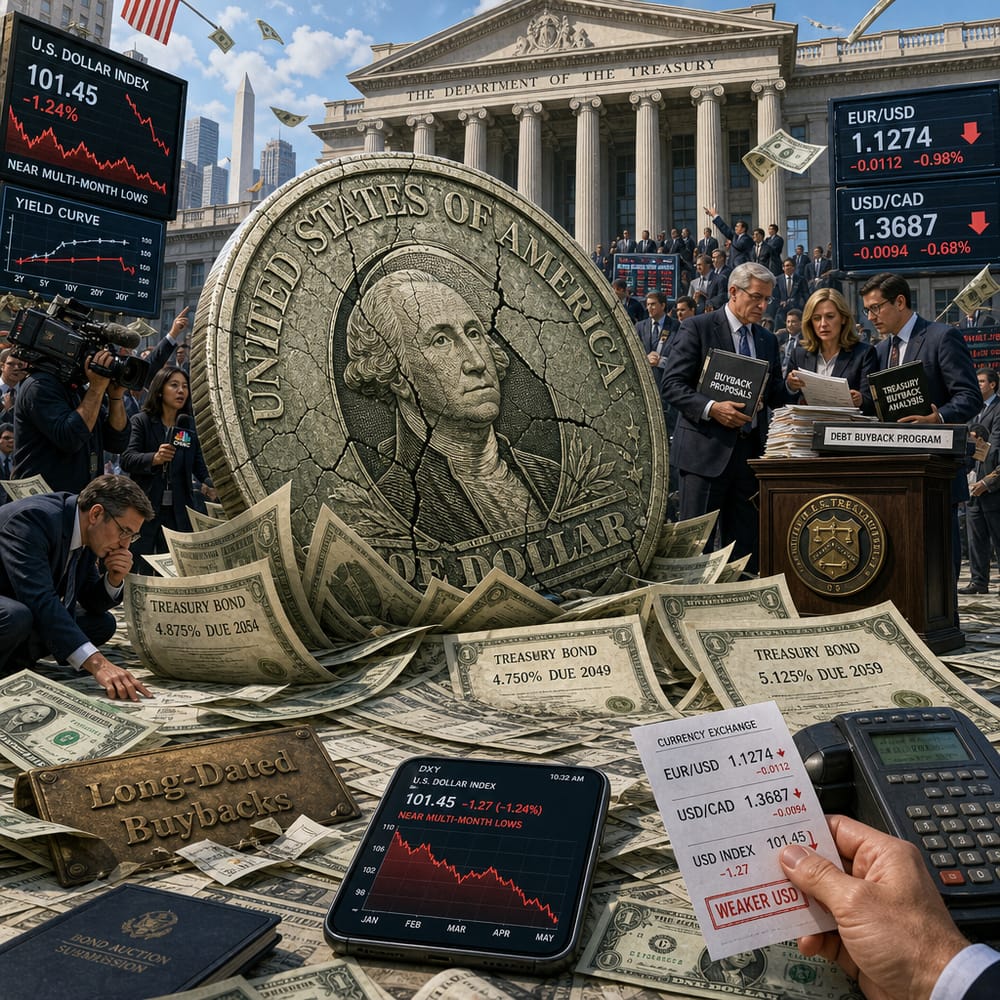
DOLLAR NEARS MULTI-MONTH LOWS: MARKET JITTERS OVER TREASURY'S DEBT BUYBACK PLAN
You might want to sit down for this one: the U.S. dollar is doing its best impression of a shrinking violet. Recently, it’s been hovering near multi-month lows, and the culprit is a curveball from the U.S. Treasury. They’ve announced plans to ramp up buybacks of long-dated bonds, and it’s causing a few butterflies—or rather, hawks—in the forex market. So pull up a chair and let’s chew through what this might mean for your dollars, euros, and loons (that’s Canadian dollars, folks).
First things first: the Treasury’s move to buy back these long-dated bonds sounds about as exciting as watching paint dry, but don't let the snoozy facade fool you. This is a big deal. Think of the Treasury as the world’s biggest financial puppeteer, and right now, it’s pulling strings that could make the U.S. dollar dance—or stumble—as we're seeing. Essentially, when the Treasury buys back bonds, it’s like they're doing a big financial cleanup. They’re trimming the supply of bonds out there, which usually pushes up the price of the remaining bonds. That’s Econ 101: less supply equals higher prices.
But here’s where it gets spicy: higher bond prices typically mean lower yields. And lower yields on U.S. bonds make them about as attractive as a wilted salad to international investors looking for juicy returns. As these foreign investors lose their appetite for U.S. bonds, demand for the dollar tends to dip, and so the greenback finds itself in a bit of a bind.
Now, that’s a solid starting point, but let’s widen the lens. Imagine you’re a trader with euros spilling out of your pockets. You’ve been watching this dollar dance, and suddenly, your euros seem a bit shinier. Enter stage left: the EUR/USD pair. This currency duo is the most traded on the planet, and a weaker dollar means you get more bang for your buck—sorry, euro. This scenario has the euro flashing its best grin, attracting more traders to park their cash in the Eurozone. The ripple effect? The euro gains strength, and that’s exactly what’s been happening.
Meanwhile, across the Great White North, the Canadian dollar (our friendly loonie) is doing its own victory lap against the U.S. dollar. Canada’s economy has had its fair share of challenges, but the country’s rich resources, especially oil, have given it some pep in its step. The USD/CAD pair is one to watch as U.S. fiscal policy plays its hand. If the dollar continues its low-key retreat, the Canadian dollar could come out the winner in this forex rodeo.
Of course, while the Treasury’s buyback program is the talk of the town now, let’s not forget about the long-term play. The U.S. dollar doesn’t just have to deal with domestic policy; it’s also swayed by global sentiment and geopolitics. Right now, it’s facing headwinds from all directions—think high inflation, potential interest rate hikes, and the ever-looming specter of geopolitical tensions.
For everyday investors, this isn’t just a spectacle to watch from the sidelines. If you’ve got some skin in the game with foreign investments or if you’re planning to make moves in forex markets, the dollar’s dance is your cue to pay attention. An eroding dollar could mean different things depending on what colors your portfolio. Stocks and sectors that earn revenue in foreign currencies might benefit, while companies reliant on imports could feel the pinch.
Before we wrap up this currency carnival, let’s throw a little light on the grand chessboard of fiscal policy and currency valuation. The dollar’s recent dip underscores how intertwined these worlds really are. When Uncle Sam tweaks its fiscal policy levers, it's not just bond markets that quiver—currencies do, too. This interconnectedness has the potential to reshape market sentiment more broadly, influencing everything from stock indexes to commodity prices.
So, keep that sharp eye on the Fed, the Treasury, and any fiscal hints they might drop. Each move, each statement, cracks open a window into the future—a future where the dollar might rise, fall, or simply tread water. But whatever happens, one thing’s for sure: the world’s eyes will be glued to that greenback, and we’ll be here, dissecting its every wiggle and waggle.
This article is for informational purposes only and is not investment advice. Always do your own research or consult a licensed financial professional before making investment decisions.
© Copyright 2024. All Rights Reserved.
© Copyright 2024. All Rights Reserved.