

Dollar Near Multi-Month Lows on Debt Concerns and Treasury Buybacks
Wednesday, August 26, 2026
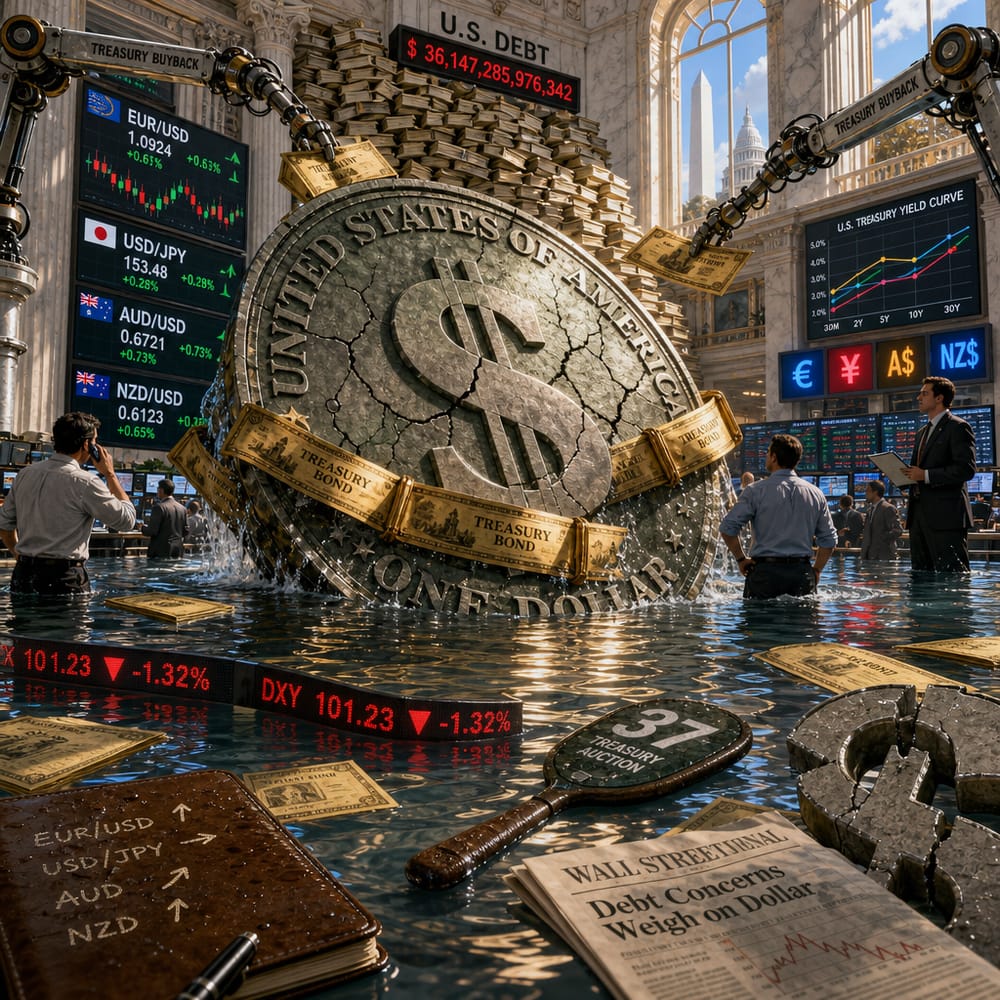
DOLLAR NEAR MULTI-MONTH LOWS ON DEBT CONCERNS AND TREASURY BUYBACKS
The U.S. dollar is looking a little like a deflated party balloon these days—hanging around multi-month lows, as if it's just waiting for someone to pump some life back into it. The culprits? A potent cocktail of debt anxiety and the Treasury's buyback maneuvers, which have market folks scratching their heads and recalibrating their strategies.
The dollar's dip isn't just a blip on the radar; it's a narrative that's gaining traction. For anyone with an eye on the currency seesaw, the greenback has been taking hits from multiple directions. The U.S. Treasury's buyback strategy—fancy jargon for the government buying its bonds back from the market—is one of the key suspects in this storyline. It's like an over-enthusiastic janitor cleaning up a mess but potentially leaving the floor slippery, causing the dollar to lose traction.
The logic behind these buybacks is to stabilize the bond market. But there's a twist. While it's supposed to create some breathing room, in the short term, it sends ripples through the currency markets. Investors are questioning the long-term impact, wondering if this is writing checks that the dollar's strength can't cash.
Now, let's talk about the little guys turning into big winners: commodity currencies. Enter the Aussie and Kiwi dollars, not to mention the euro, which have been feasting on the dollar's weaknesses like seagulls at a picnic. When the dollar wanes, these currencies see an uptick. The Australian dollar, buoyed by strong commodity prices—because yes, the world still needs its iron ore and coal—has been surfing the currency waves with a little more swagger lately. Similarly, the New Zealand dollar is riding the coattails of its agricultural exports.
So, why should you, the savvy investor scrolling through your phone, care? Well, the dollar's sagging might mean a little more than just pricier vacations overseas. If you're invested in commodities or have cross-border interests, this currency shuffle can impact your portfolio. Think of it as the financial version of a global game of Jenga—pulling out one piece could change the whole structure.
But, let’s delve into the risks, shall we? A weaker dollar could spell trouble for U.S. importers. It makes everything from your favorite gadgets to exotic cheese a tad pricier to bring stateside. There's also the specter of inflation lurking in the wings, as a lighter dollar makes imports more costly, potentially pushing prices up across the board.
And here's where it gets juicy for investors: Currency fluctuations aren't just theoretical headaches. They translate to real-world impacts on multinational corporations. If you're betting on companies that do a big chunk of their business overseas, currency swings can impact earnings. For instance, a stronger euro against the dollar could mean heftier profits for European companies operating in the States—or vice versa.
The stage is set for an intriguing balancing act. On one hand, there's the lure of investing in commodity currencies or euro-based assets that might benefit from a wobbly dollar. On the other, there’s the risk that things could escalate if debt concerns spiral, leading to tighter financial conditions or a spike in borrowing costs. It's a dance between risk and reward, and investors have to decide if the music is worth moving to.
So, as the dollar loiters at its current lows, the broader question remains: Is this a temporary blip or a more enduring trend? With the federal debt mountains looming and fiscal strategies under the microscope, it’s crucial to keep a close eye on how these dynamics play out. The consequences could ripple far beyond Wall Street, affecting global trade balances and economic policies worldwide.
For now, the market waits with bated breath to see if the Treasury's buyback strategy is a stroke of genius or a shaky gamble. Either way, savvy investors will continue to ride the waves, keeping their eyes peeled for opportunities and risks in this currency conundrum. As always in the financial world, the drama is just getting started. Buckle up, because this could be one wild ride.
This article is for informational purposes only and is not investment advice. Always do your own research or consult a licensed financial professional before making investment decisions.
© Copyright 2024. All Rights Reserved.
© Copyright 2024. All Rights Reserved.