

Dollar Near Multi-Month Lows Amid Treasury Buybacks and Iran Sanctions
Friday, August 28, 2026
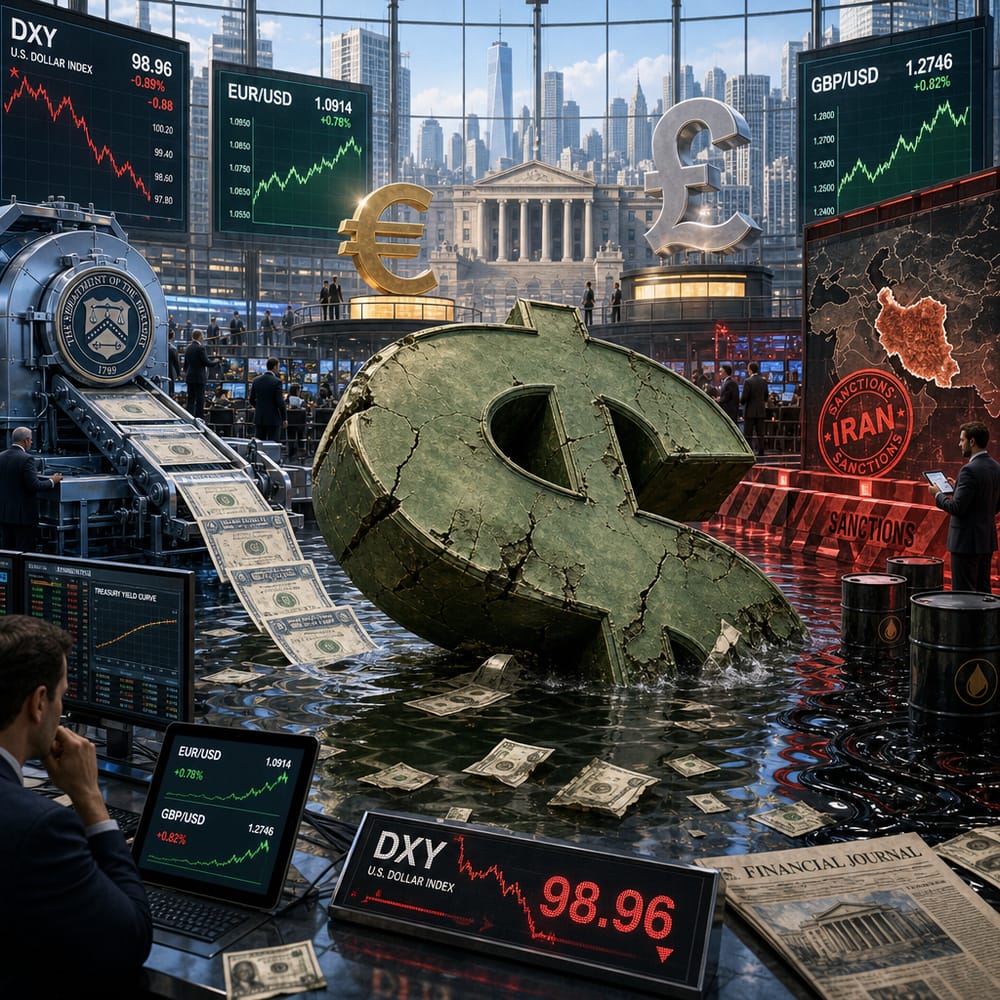
DOLLAR NEAR MULTI-MONTH LOWS AMID TREASURY BUYBACKS AND IRAN SANCTIONS
If you feel down about your financial portfolio lately, take solace in knowing that you're not alone. The U.S. dollar is also having a rough time, lounging at near multi-month lows like a couch potato in a marathon TV binge session. Only instead of potato chips, it's a heady mix of U.S. Treasury buybacks and international sanctions breathing down its neck.
The dollar index, that handy tool we use to measure the greenback against a basket of other currencies, is hovering around 98.96. This is its lowest level in months, thanks to a one-two punch from Washington's fiscal policies and those ever-confounding international sanctions on Iran. But before we get carried away in the melodrama, let's dig into why all this matters.
THE FISCAL POLICY KITCHEN
Let's start with the U.S. Treasury's debt buyback program. Imagine Uncle Sam digging through the couch cushions for extra change, except the cushions are trillion-dollar debt piles, and the change is the global bond market. The aim? To manage the nation's debt in a way that doesn't send investors running for the hills. But, plot twist: buybacks can also tip the scales on currency valuations. When the government buys back its own debt, it can drive up the prices of bonds, squeezing yields. The result? Investors might find themselves less attracted to the U.S. dollar as returns dwindle, driving it further south.
If fiscal policy was a pop song, the dollar often dances to its rhythm. When the Treasury implements policies that lower bond yields, the dollar can lose its luster like a disco ball with a burnt-out bulb. Lower yields mean investors get less bang for their buck, leading them to seek greener pastures elsewhere (read: the euro and sterling, which are currently more vibrant on the dance floor).
SANCTIONS, STRAITS, AND TANKERS
Then there's the Iran saga. The Trump administration's sanctions have added another layer of intrigue to this currency drama. With Iran's oil exports slashed due to a naval blockade, the global oil market has been thrown into a frenzy akin to a reality show finale. Oil is to Iran what spinach was to Popeye, a crucial source of strength and revenue. With Tehran's crude shipments down by over 80%, the ripple effects are being felt far beyond the Strait of Hormuz.
When international sanctions enter stage left, they can send shockwaves through currency markets. They're like the strict parents of the geopolitical world, trying to enforce rules and behavior changes. These sanctions can constrain the economic capabilities of nations like Iran, but they also introduce uncertainty into the markets. Investors, wary of geopolitical risks, might shift their capital around, causing currencies to wiggle in unexpected ways.
IMPACT ON TRADE AND INVESTMENT FLOWS
So why should you, the everyday retail investor, care if the dollar's feeling a little under the weather? Well, the dollar plays a starring role in international trade and investment flows. A weaker dollar can make U.S. exports cheaper and more competitive on the global stage, boosting industries that thrive on overseas sales. But there's a flip side—imports become more expensive, which can inflate prices at home. Imagine your favorite avocado toast suddenly costing a few extra bucks because importing those green gems got pricier.
Furthermore, currency swings can influence investment decisions. A weaker dollar might make investing in U.S. assets less attractive to foreign investors, potentially impacting everything from stocks to bonds. It’s a complex dance where everyone from Wall Street brokers to Main Street investors are watching each other's moves.
CURRENCY MARKETS: A GLOBAL STAGE
The euro and sterling, meanwhile, are enjoying their moment in the spotlight. With the dollar taking a break from its earlier heights, these currencies are gaining ground, thanks to relatively stable economic conditions in Europe and the UK. For now, they're the reliable understudies stepping into the lead role, attracting investors with the prospect of higher returns.
In the grand operatic production that is the global economy, currency markets are the orchestra pit. They're constantly tuning and adjusting based on the cacophony of fiscal policies, international tensions, and economic indicators. Each note can influence how investors perceive risk and opportunity.
As you sip your morning coffee and scroll through market news, remember this: currency values might seem like abstract figures, but their impact is very real. Whether it's how much you pay for that next international vacation or how your investment portfolio performs, these numbers have a way of making themselves known. So keep an eye on the dollar, because in this global financial play, it's never just background noise.
This article is for informational purposes only and is not investment advice. Always do your own research or consult a licensed financial professional before making investment decisions.
© Copyright 2024. All Rights Reserved.
© Copyright 2024. All Rights Reserved.