

Dollar Index Slumps to Three-Month Low Amid Treasury Bond Backstops
Friday, August 21, 2026
THE U.S. DOLLAR TAKES A TUMBLE: HERE'S WHAT'S REALLY GOING ON
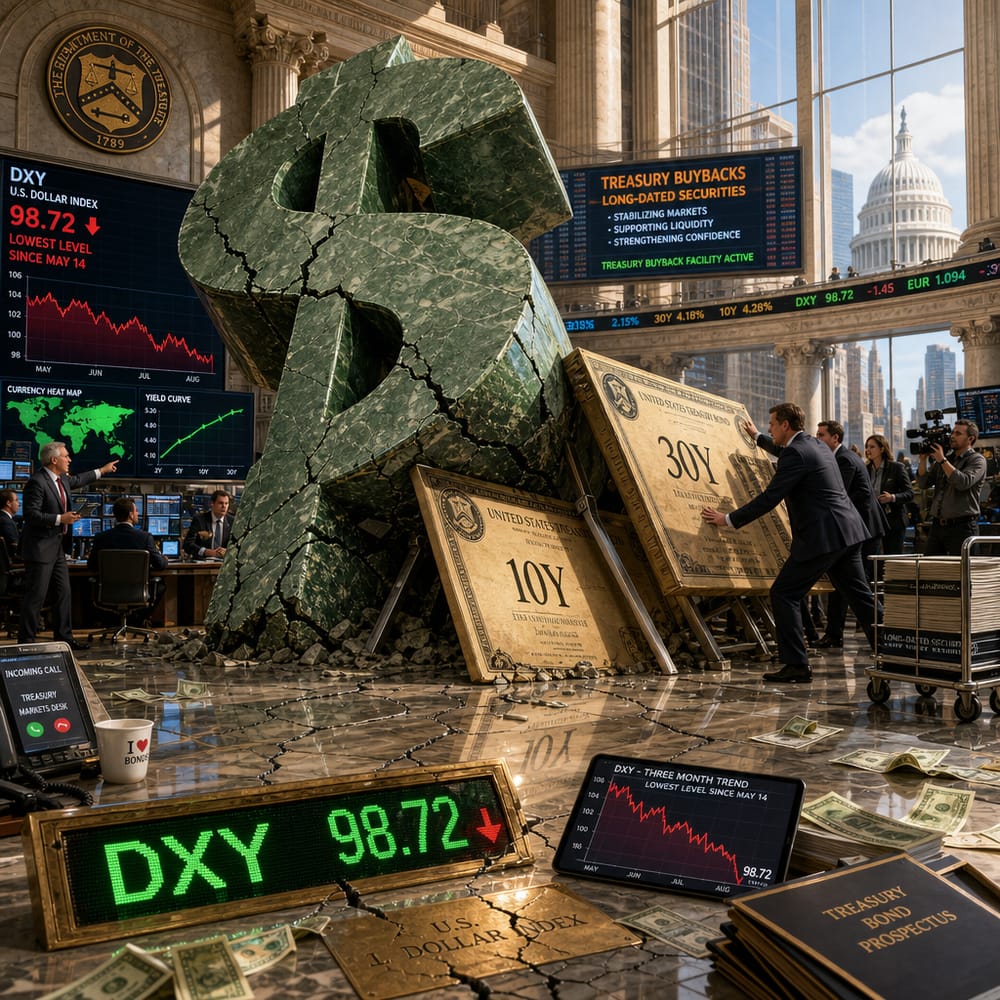
The U.S. Dollar Index, always the life of the economic party, has stumbled into the early hours of Saturday morning as if groggy from a three-month bender. Trading at approximately 98.72, its lowest since mid-May, the dollar seems to be feeling the pinch of some U.S. fiscal intervention. Specifically, the Treasury Department's announcement that it's going to buy back some long-dated Treasury securities. So, what does this mean for our greenback, and should you be worried about the contents of your piggy bank?
THE BACKSTORY
The U.S. Treasury recently announced they'd be doing a little shopping spree — not for the latest gadgets, but for long-dated Treasury securities. It's like bringing out the defibrillator paddles for the bond market. The goal? Pump some life into the economy and prevent a further sell-off. But here's the twist: This maneuver may not be the lifeline the dollar hoped for.
HOW BUYBACKS AFFECT THE DOLLAR
Now, if you're thinking, "Treasury bond buybacks, what's the big deal?" Let's break it down. When the Treasury buys back bonds, it’s essentially reducing the supply of these securities in the market. This action, in theory, should push up bond prices and lower yields. But this isn't all rainbows and unicorns for the dollar.
Lower yields make the U.S. less attractive for foreign investors looking for juicy returns. Picture this: You're standing at a buffet, but the best dishes are only half full. Would you stick around? Not likely. Foreign investors might feel the same about U.S. assets, and when they take their money elsewhere, the dollar feels the chill.
THE RIPPLE EFFECT
The dollar's slump isn't just a headline; it has real consequences for currency-linked assets. First, let's chat exchange rates. A weaker dollar means imports get pricier. So, if you’ve been eyeing that European vacation or craving French wine, brace yourself for sticker shock.
For investors, this scenario can be both a curse and an opportunity. On one hand, U.S. multinational companies might see a boost in their earnings as their foreign revenues translate into more dollars. On the other hand, investors holding dollar-denominated assets could watch their value erode like a sandcastle at high tide.
MARKET VIBES
This dollar dip has also opened the door for mood swings across the broader markets. Risk sentiment is shifting faster than your favorite TV drama. Stocks have had a bumpy ride, with some sectors like healthcare seeing a bit of love, while others are suffering from a hot-and-cold relationship with investors.
And let’s talk crypto for a second. Bitcoin’s been partying like it’s 2021, making a solid 23% weekly gain. Crypto-related stocks like Robinhood and Coinbase are riding the wave, basking in the glow of the dollar’s stumble.
LOOKING FORWARD
So, what's next? As retail investors, keeping an eagle eye on the dollar’s dance can give you clues about broader market sentiment. The Treasury’s interventions might be a short-term fix, but the long-term implications for U.S. fiscal policy, inflation expectations, and global investor confidence are still up in the air.
Investors holding currency-linked assets should be ready for a rollercoaster ride. The broader implications of fiscal intervention mean you might need to review your portfolio's exposure to international markets and currency fluctuations.
THE BOTTOM LINE
The U.S. Dollar's current waltz with fiscal intervention showcases the intricate tango between policy, market sentiment, and economic strategy. If you're invested in currency-linked assets, this is your cue to stay informed, keep nimble, and maybe even do a little profit dance at the right opportunity. Whether this is a gentle stumble or the start of a new rhythm for the dollar remains to be seen, but one thing's clear: it's time to watch closely and, as always, expect the unexpected.
This article is for informational purposes only and is not investment advice. Always do your own research or consult a licensed financial professional before making investment decisions.
© Copyright 2024. All Rights Reserved.
© Copyright 2024. All Rights Reserved.