

Dollar Index (DXY) Holds Just Below 100
Friday, August 21, 2026
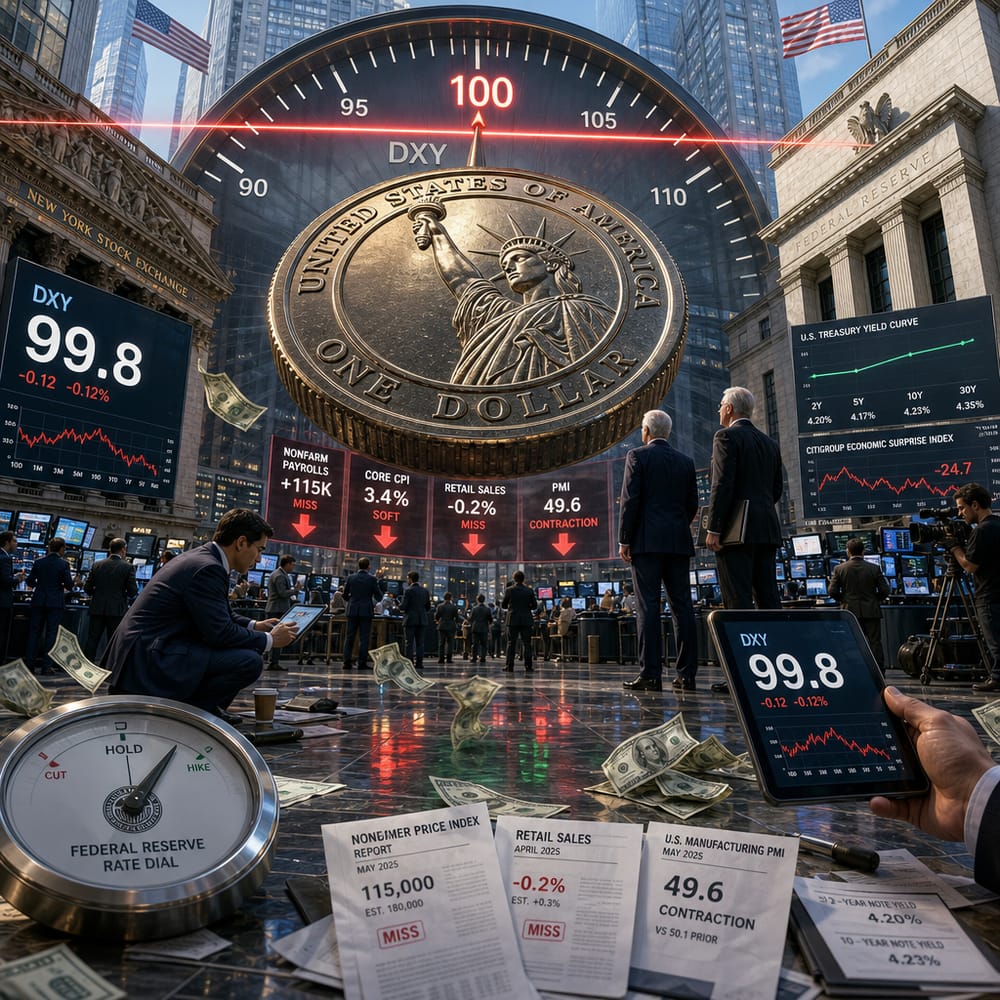
IS THE DOLLAR INDEX DANCING ON A KNIFE EDGE?
The dollar, once again, finds itself in the spotlight, doing its best impression of a tightrope walker, teetering just below the 100-mark on the Dollar Index (DXY). For those who prefer spending their weekends doing things far more exciting than currency watching, let me catch you up. The DXY is like the pulse of the U.S. dollar against a basket of six major world currencies. And right now, its fluttering heart is feeling the pressure of a not-so-sunny economic outlook in the U.S. and some feverish dreams about future interest rate hikes from the Federal Reserve.
If you think this is just another highbrow tussle of money markets, think again. The DXY’s performance is a barometer of sorts, one that measures how fragile or robust market sentiment is. And right now? Let’s just say it’s wearing its fragile hat.
WHAT'S DRIVING THE DOLLAR'S DRAMA?
To understand the DXY's precarious position, we have to play detective with some key economic indicators. First up, the U.S. economy's mixed report card. Recent data has been a bit of a snooze-fest, with inflation growing at a much slower pace than some would like and retail sales giving off mild vibes. It’s like having a house party with lukewarm snacks—nobody's thrilled, but everyone’s still sipping their drinks, waiting for something more exciting to happen.
Meanwhile, the Federal Reserve is caught between a rock and a hard place, trying to decide whether to hike rates or hold steady. If the Fed leans towards caution, keeping rates where they are, it could cool the dollar's heels even further. But if they opt for another hike to rein in inflation, we might see the dollar flex its muscles again.
THE INFLATION WILD CARD
Now, let’s talk about the upcoming U.S. inflation data—cue the suspenseful music. Inflation has been a slippery fish, resisting the Fed's attempts to net it. The numbers coming in will be scrutinized like a celebrity's Instagram feed, and they could play a pivotal role in where the DXY heads next.
If inflation decides to throw a curveball and comes in higher than expected, the Fed might just have to sharpen their interest rate hiking tools, giving the dollar a leg up. But if inflation continues its sleepy stroll, the dollar might remain on its current course—or even falter a bit more.
GLOBAL RIPPLE EFFECTS
While the DXY is holding its breath, the implications stretch far beyond U.S. borders. In the global currency markets, a weaker dollar could be an invitation for other currencies to play the leading roles. Already, the yen and the euro are waiting in the wings, ready to seize their moment if the dollar decides to take a breather.
Countries with hefty dollar-denominated debts might find themselves let out a sigh of relief if the greenback weakens. Meanwhile, commodity markets, which tend to move inversely to the dollar, could find themselves on the upswing. It’s a complex dance of give and take, and everyone—from traders to policymakers—is watching the DXY’s every move like it’s the final scene of a thriller.
SO, WHAT NOW?
As we stand on the edge of the next U.S. inflation release, the DXY's position is like a canary in a coal mine, singing a tune of economic caution. For investors, it means embracing a bit of uncertainty and being ready to pivot based on the next data drop.
Is the dollar going to rally back with a vengeance, or are we in for a period of gradual decline? That’s the million-dollar question, and one that will keep traders and investors glued to their screens in the coming weeks.
In the end, the DXY’s dance just below the 100-mark is more than just a snapshot of currency movement—it’s the story of an interconnected economic world waiting to see if the U.S. dollar will reclaim its swagger or continue its cautious waltz. Stay tuned, because this story is far from over.
This article is for informational purposes only and is not investment advice. Always do your own research or consult a licensed financial professional before making investment decisions.
© Copyright 2024. All Rights Reserved.
© Copyright 2024. All Rights Reserved.