

Dollar Index (DXY) Eyes Technical Test: 200-Day MA Under Pressure
Sunday, August 23, 2026
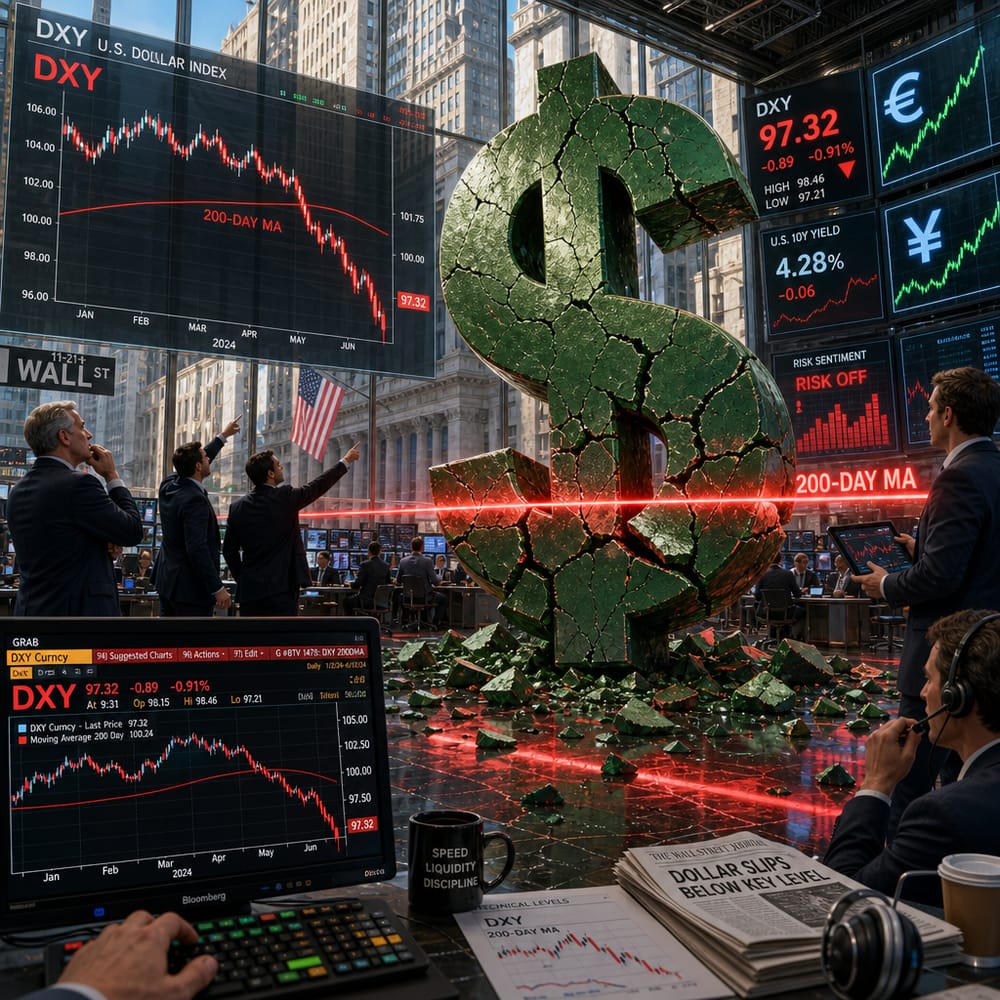
DOLLAR DRAMA: WHY THE DXY'S DROP IS CAUSING GLOBAL RIPPLES
In the rollercoaster world of finance, there's one ride that has everyone tightly gripping the safety bar: the U.S. Dollar Index (DXY). Recently, this ticker, which measures the greenback against a basket of major currencies, performed a not-so-graceful swan dive below its 200-day moving average. And just like that, Wall Street’s alarm bells started ringing louder than a New York City cabbie's horn in rush hour.
So what does this technical tumble mean for you, dear reader, lounging on your couch with your smartphone? If you're even slightly invested in anything from tech stocks to Treasury bonds, it might mean more than you think.
WHAT'S IN A NUMBER?
First, let's unpack the jargon. The 200-day moving average is like the streetlight on the financial highway; when prices dip below it, it usually marks a shift from "bullish" to "bearish" — think of it as moving from full steam ahead to hitting the brakes. So, the DXY, which has been cruising like a muscle car with a full tank, now finds itself sputtering just a little.
But why has the dollar taken a breather? It all comes down to sentiment and a pinch of panic. Recent global events—like sanctions on Iran and a melodic dance between inflation and interest rates—have investors sweating bullets. With the Federal Reserve contemplating interest rates like a school kid deciding whether to skip class, the dollar has lost some of its swagger.
THE GREAT GREENBACK DIVERSION
What does this mean for global asset flows? Picture a financial game of musical chairs. As the dollar loses its seat at the party, investors may start eyeing other currencies or commodities. This can lead to a chain reaction: shifting capital flows into emerging markets, a beefing-up of gold holdings, and perhaps a flirty glance at cryptocurrencies. If the DXY continues its nosedive, don't be surprised if you see more investors trading in their dollars for euros or yen, like swapping a stale donut for a fresh croissant.
IMPLICATIONS FOR THE U.S. ECONOMY
Here on home turf, the ripple effects could get interesting. A weaker dollar makes American goods cheaper abroad. In theory, this boosts exports like a caffeine shot for the economy. However, before you pop the champagne, remember that it also makes imports pricier. This means your favorite European cheese or Asian tech gadget might start pinching your pocketbook.
Moreover, the national debt party is in full swing with Uncle Sam's tab ballooning past $40 trillion. A softer dollar makes paying off that debt more daunting, potentially tossing the U.S. economy into a financial wrestling match it might not be prepared for.
WHAT'S NEXT?
The million-dollar question (pun intended) is, where do we go from here? Technical indicators are suggestive, not fortune tellers. Much like a fortune cookie, they can offer insight but not guarantees. Analysts are divided: some see this as a hiccup, while others forecast stormy skies. Investors will be watching the Fed's next moves like hawks eyeing a mouse.
For the retail investor, the advice is simple: keep your ear to the ground and your portfolio diversified. With markets as volatile as ever, flexibility is your best friend. Hedge your bets, explore international opportunities, and perhaps sprinkle in some commodities to cushion against dollar downfall.
In conclusion, the DXY's dance with its 200-day moving average is more than just a technical tidbit; it's a potential pivot point for global markets. Whether it's a fluke or the start of a trend, one thing is for sure: the currency stage is set for some high drama. So, grab your popcorn, keep your financial toolkit handy, and stay tuned. This is one show you won't want to miss.
This article is for informational purposes only and is not investment advice. Always do your own research or consult a licensed financial professional before making investment decisions.
© Copyright 2024. All Rights Reserved.
© Copyright 2024. All Rights Reserved.